Brexit
#Brexit: ‘The UK argue that one can leave the single market and build a customs union to achieve "frictionless trade" – that is not possible’ - Barnier


The EU’s Chief Brexit negotiator addressed the European Economic and Social Committee today (6 July). On the clear disputes that are starting to emerge from within the British cabinet, Barnier said it was not his job to speculate, writes Catherine Feore.
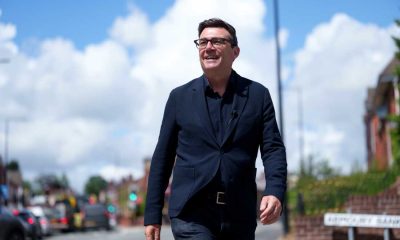
Answering questions from members of the European Economic and Social Committee – a EU consultative body made up of trade union, business and civil society representatives – Michel Barnier (pictured) made it clear that it was not his business to speculate about what the UK wants.
He represented the sequence of questions that he put to the Brexit Minister David Davis, in a way that was redolent of an Archbishop asking for the renewal of baptismal promises: “We asked him [David Davis] if he wanted to leave the EU, he said yes. We asked him if he wanted to leave the single market, he said yes. We asked him if he wanted to leave the customs union, he said yes.” One half expected him to say: “We asked him if he rejected Satan and all his ways.”

So Michel Barnier acknowledged the clear message from London: “The UK will become a third country at the end of March 2019.” He reported that the UK’s red lines for any future relationship were: no more free movement of EU citizens; full autonomy over UK laws and no role for the European Court of Justice, and; autonomy to conclude own trade agreements.
On a future free-trade agreement – given that the UK had ruled out all other options – Barnier pointed out that it might be easier for the UK to reach an agreement as it was already fully integrated with EU norms. He pointed to the EU’s 30 free trade agreements to date and said that the difficult negotiations were always about regulatory convergence. The problem will be to verify over time if the UK takes action that amounts to social dumping, lower environmental standards and tax dumping – for example. He pointed to his visits to member states and said this was an important issue and explained why he was also meeting business, civil society and trade unions on his visits.
Barnier repeated that on the EU side, three things were clear:
“The free movement of persons, goods, services and capital are indivisible. We cannot let the single market unravel.
“There can be no sector by sector participation in the single market: you cannot leave the single market and then opt-in to those sectors you like most – say the automobile industry and financial services. You cannot be half-in and half-out of the single market.
“The EU must maintain full sovereignty for deciding regulations: the EU is not only a big marketplace. It is also an economic and social community where we adopt common standards. All third countries must respect our autonomy to set rules and standards. And I say this at the moment when the UK has decided to leave this community and become a third country.”
Barnier said that though these three points have been repeatedly made clear by the European Council he was “unsure if they had been fully understood across the Channel”.
He noted that he had encountered those in the UK who argue that one can leave the single market and keep all of its benefits, his retort was simple, “this is not possible”. Likewise, those who argue that you can leave the single market and build a customs union to achieve "frictionless trade" are wrong.
Barnier emphasised that this was based on a decision – that he personally regretted – that the British had made: “There is no punishment for Brexit. And of course no spirit of revenge.”
Barnier urged business to assess, with lucidity, the negative consequences of the UK's choice on trade and investment. And prepare to manage them. Pointing out that the cost of Brexit was also a cost for business in the EU27.
In response to questions on financial services Barnier said that UK financial institutions would lose passporting rights as a result of this choice. As the Commissioner for Financial Services during the ‘Great Financial Crisis’ Barnier said he had not forgotten the irresponsible behaviour of certain bankers and his efforts through 41 pieces of legislation to piece financial stability back together again. He said, “We didn’t do this to allow risks with financial stability, I say this to the UK and the United States.”
Share this article:
EU Reporter publishes articles from a variety of outside sources which express a wide range of viewpoints. The positions taken in these articles are not necessarily those of EU Reporter. Please see EU Reporter’s full Terms and Conditions of publication for more information EU Reporter embraces artificial intelligence as a tool to enhance journalistic quality, efficiency, and accessibility, while maintaining strict human editorial oversight, ethical standards, and transparency in all AI-assisted content. Please see EU Reporter’s full A.I. Policy for more information.






European operation dismantles €10 million illicit cigarette network in Spain

Energy Union Task Force takes stock of oil and gas security of supply in the EU

Srebrenica's lesson is prevention. Why isn't the world applying It to Kashmir?

AIFC to host Astana Finance Days 2026 in September

ALROSA Re-elects Supervisory Board with Minimal Changes

EU launches a Team Gaza Initiative to support early recovery in Gaza with an initial amount of nearly €900 million

Joint statement by High Representative/Vice-President Kallas and Commissioner Kos on the 31st anniversary of the Srebrenica genocide

EU clarifies rules to allow continued waste recovery shipments to Switzerland

Starmer’s problem? 'He is not a politician'

Why a Brussels–Nicosia–Eastern Mediterranean strategic affairs platform would benefit the European Union

Albania's Vlora airport standoff tests investor confidence as EU accession clock ticks

ECR MEPs question the European Commission on cardiovascular health and diet promoting the Mediterranean diet as an alternative to ultra-processed foods as key to tackling obesity

Kazakhstan's fixed capital investment tops 9.5 trillion tenge in H1 2026

Commission adopts simpler rules for EU agri-food promotion policy

Commission approves €659 million German state aid for four new semiconductor facilities

EU law on nitrates pollution remains effective, with scope for smarter implementation

Kazakhstan reforms under scrutiny at Brussels Press Club round table

Japan should face up to history and contribute more to regional peace

Ambassador calls for 'speeding up' of co-operation between EU and Kazakhstan

Timur Turlov at Smart Moves Summit 2025: How chess can transform global education

Shevtsova’s case: Out-of-court sanctions dismantling trust in Ukrainian cause

The future of European transport

Trump Vs Trueman

US 'no longer' an 'unconditional ally' for Europe - MEP
-
 Cigarettes5 days ago
European operation dismantles €10 million illicit cigarette network in Spain
-
 Energy market4 days ago
Energy Union Task Force takes stock of oil and gas security of supply in the EU
-
 Kashmir5 days ago
Srebrenica's lesson is prevention. Why isn't the world applying It to Kashmir?
-
 Kazakhstan4 days ago
AIFC to host Astana Finance Days 2026 in September