EU
Ideal of creating a better future still inspires EU, says Irish #Taoiseach


The Taoiseach (Prime Minister) of Ireland Leo Varadkar began a series of Future of Europe debates between EU leaders and MEPs during the plenary session in Strasbourg.
Welcoming the Taoiseach, Parliament’s President Antonio Tajani said: “I have insisted, from the day I was elected exactly one year ago, on the importance of bringing Europe closer to its citizens. They are looking to us to deliver solutions to create jobs, manage migration flows and strengthen our security and defence. Open debate between MEPs and EU leaders paves the way for crucial dialogue and understanding that will benefit our citizens across the continent. It puts the European Parliament - the only directly-elected EU institution - where it has to be, at the heart of the debate on the future of Europe."
Varadkar said: "The European ideal has always been inspired by a spirit of optimism and a belief in a better future. That ideal has been tested, but has not been broken. Based on the achievements of the past, we have a renewed appetite to face the challenges of the future."
Laying out his vision for the future of Europe, the Taoiseach highlighted the need to improve democracy in the EU through EU-wide voting lists, completing the Economic and Monetary Union and ensuring that big corporations pay their fair share of tax. In the month marking 45 years of Irish membership of the EU, he also expressed his gratitude to MEPs for their support and solidarity in the Brexit negotiations, stressing the importance of ensuring that what has been promised in theory is delivered in practice.
A vast majority of Parliament’s group leaders welcomed Varadkar’s call for a more democratic Union, that takes concrete steps to protect citizens’ way of life, security, values and identities and secures social welfare and prosperity jointly in a globalized world. Most stressed that EU member states and citizens are stronger together than apart. Like Ireland in the past, the EU should be able to transform and adapt itself to tackle new challenges to the benefit of all citizens. MEPs also reiterated their firm pledge to stand by Ireland in the Brexit negotiations so as to ensure full respect for the Good Friday agreement.
The European Parliament was the first EU institution to initiate this reflection on the future of Europe. At the start of 2017, it voted proposals encouraging broad reflection, both within and beyond the Lisbon Treaty framework, and taking the lead in rethinking the European Union to make it respond better to citizens’ concerns.This open exchange of views with Taoiseach Varadkar opens a series of plenary debates with EU heads of state or government on the future of the European Union.
Click on the name of the speaker to replay individual statements.
Leo Varadkar Opening statement
Jean-Claude Juncker Opening statement
Manfred Weber (EPP, DE)
Jeppe Kofod (S&D, DK)
Peter van DALEN (ECR, NL)
Guy Verhofstadt (ALDE, BE)
Gabrielle Zimmer (GUE/NGL, DE)
Philippe Lamberts (Greens/EFA, BE)
Nigel Farage (EFDD, UK)
Marcel de GRAAFF (ENF, NL)
You can watch and download the rest of the debate here.
Further information
Share this article:
EU Reporter publishes articles from a variety of outside sources which express a wide range of viewpoints. The positions taken in these articles are not necessarily those of EU Reporter. Please see EU Reporter’s full Terms and Conditions of publication for more information EU Reporter embraces artificial intelligence as a tool to enhance journalistic quality, efficiency, and accessibility, while maintaining strict human editorial oversight, ethical standards, and transparency in all AI-assisted content. Please see EU Reporter’s full A.I. Policy for more information.



Open letter to president of the European Commission on the Schengen Entry/Exit System (EES)

EU policy toward Azerbaijan: Why Brussels must move beyond political dialogue

The Iran war changed Pakistan's strategic value, not its political trajectory

PMI defends AI consultation tool as scrutiny grows over EU tobacco rules review

Democracy cannot be selective: Why Europe must apply the same standards abroad that it demands at home

Civil society from across the EU gathers in Cork to reinforce Europe’s sustainability agenda

Majority think EU is a 'place of stability in a troubled world'

Rating of American Express casino sites in the UK

Can the EU resist US pressure on medicine prices?

Energy Union: New Spain-Portugal electricity interconnection inaugurated

Timing of the publication of the EU ETS auction calendar

Commissioner Šuica travels to Cairo to strengthen euro-mediterranean parliamentary cooperation and youth engagement

Commission seeks feedback on targeted amendment of EMFAF

Commission proposes five joint defence projects to strengthen Europe's industrial capabilities

Study: Europe's defense runs on American servers

The ancient myths that tourism boards (and slot designers) can't stop selling

Kazakhstan reforms under scrutiny at Brussels Press Club round table

Japan should face up to history and contribute more to regional peace

Ambassador calls for 'speeding up' of co-operation between EU and Kazakhstan

Timur Turlov at Smart Moves Summit 2025: How chess can transform global education

Shevtsova’s case: Out-of-court sanctions dismantling trust in Ukrainian cause

The future of European transport

Trump Vs Trueman

US 'no longer' an 'unconditional ally' for Europe - MEP
-
 Schengen5 days ago
Open letter to president of the European Commission on the Schengen Entry/Exit System (EES)
-
 Azerbaijan5 days ago
EU policy toward Azerbaijan: Why Brussels must move beyond political dialogue
-
 Iran5 days ago
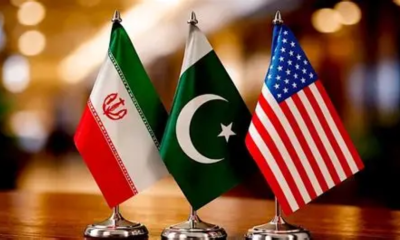
The Iran war changed Pakistan's strategic value, not its political trajectory
-
 European Commission5 days ago
PMI defends AI consultation tool as scrutiny grows over EU tobacco rules review