Brexit
Scotland 'will not consent to #Brexit bill after latest UK offer'


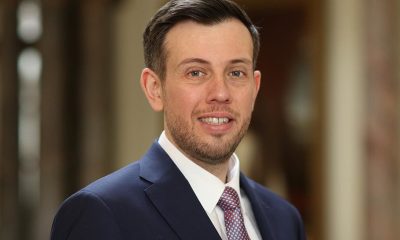
Scotland’s First Minister Nicola Sturgeon (pictured) said on Tuesday (27 February) that the devolvedScottish parliament would not consent to legislation necessary to keep Britain’s Brexit plans on track, presenting another thorny issue for the government to surmount, writes Elisabeth O'Leary.
Prime Minister Theresa May’s government on Monday (26 February) indicated that it would go no further in offering concessions to Scotland, Wales and Northern Ireland, who are concerned that they will lose powers in a constitutional realignment after Britain leaves the European Union.
“I will not sign up to something that effectively undermines the whole foundation on which devolution is built,” Nicola Sturgeon, whose party supports independence for Scotland, told BBC radio. As things stand, her government could not recommend consent for the bill, she said.
Cabinet Minister David Lidington said on Monday that most currently devolved powers would now automatically stay in Edinburgh, Cardiff and Belfast, the devolved nations’ capitals, after Britain leaves the European Union.
But the British government would make exceptions if it believed that would damage the UK as a whole, he said, comments that raised hackles in Scotland and appeared to overturn progress made between the sides last week.
The British government needs a deal before the summer in order to pass the European Union (Withdrawal) Bill in Britain’s national parliament. The bill will formally sever the UK’s ties to the EU and “copy and paste” EU legislation into British law.
Share this article:

EU Reporter publishes articles from a variety of outside sources which express a wide range of viewpoints. The positions taken in these articles are not necessarily those of EU Reporter. Please see EU Reporter’s full Terms and Conditions of publication for more information EU Reporter embraces artificial intelligence as a tool to enhance journalistic quality, efficiency, and accessibility, while maintaining strict human editorial oversight, ethical standards, and transparency in all AI-assisted content. Please see EU Reporter’s full A.I. Policy for more information.



Protect children from online sexual abuse: Call for urgent negotiations and permanent solution

Astana's congress of world religions: A global platform for dialogue in an age of division

Solana company partners with Kazakhstan on $6B Alatau Crypto Megacity

Will the Gulf monarchies rise above internecine disputes in the interest of collective security?

Europe must double down on nuclear progress to achieve its long-term ambitions

International Plastic Bag Free Day – from single use to reuse

Study: Europe's defense runs on American servers

MEPs supportive of draft Biotech report, but divisions over incentives remain

Quarterly reports show a surge in solar energy and e-vehicles, with record highs in 2025

EU deploys wildfire support to face multiple fires across Portugal and France

New EU plan to address the risks and opportunities of advanced AI for cybersecurity

Portugal achieves major milestone with permit for offshore aquaculture facility

Setting sustainable livestock farming on a strong footing

Competition policy: Enforce without fear

Friedman Institute and Trends Group at the Italian parliament: Countering the Muslim brotherhood

How hair extensions can transform your look naturally

Kazakhstan reforms under scrutiny at Brussels Press Club round table

Japan should face up to history and contribute more to regional peace

Ambassador calls for 'speeding up' of co-operation between EU and Kazakhstan

Timur Turlov at Smart Moves Summit 2025: How chess can transform global education

Shevtsova’s case: Out-of-court sanctions dismantling trust in Ukrainian cause

The future of European transport

Trump Vs Trueman

US 'no longer' an 'unconditional ally' for Europe - MEP
-
 Child sexual abuse3 days ago
Protect children from online sexual abuse: Call for urgent negotiations and permanent solution
-
 Kazakhstan3 days ago
Astana's congress of world religions: A global platform for dialogue in an age of division
-
 Kazakhstan3 days ago
Solana company partners with Kazakhstan on $6B Alatau Crypto Megacity
-
 Iran3 days ago
Will the Gulf monarchies rise above internecine disputes in the interest of collective security?