EU
European political parties: Deal on new #PoliticalFunding rules


New rules to ensure proper use of public money when funding European political parties and foundations were informally agreed by MEPs and Council on Tuesday (27 February).A delegation of MEPs and Council representatives agreed on Tuesday evening that individuals should no longer be able to create a European party – only national parties can do so. This is to avoid individual members of a national party participating in the formation of more than one European party in order to maximize access to public funds. The European Parliament should be able to recover amounts unduly paid and individuals guilty of fraud would become liable to pay back misspent funds. The European Public Prosecutor’s Office, yet to officially start, will be called on to investigate alleged abuses in the future. Should a European party and its affiliated foundation fail to live up to the necessary sponsoring requirements, or provide false information when registering, the independent Authority for European Political Parties must de-register it, negotiators also decided. Stricter transparency and fairer share of funds Negotiators also agreed that national parties should display the logo and political manifesto of their affiliated European party on their websites as a condition to access funds. This is to be done by member parties at least 12 months before the funding applications are submitted. Finally, the revised regulation would reduce the share of funding that is currently equally allocated to all European parties from 15 to 10%. The remaining 90 percent is to be distributed in proportion to each party’s share of elected MEPs. “The institutions have worked together well to close loopholes which, until now, allowed a European Political Party to be created only for financial reasons. Cross-party membership will not be possible anymore and funding will be linked more precisely to actual voting results at EU level, making European political parties more European and, as more logos will be published online, more visible at the national level,” said lead MEP Rainer Wieland (EPP, DE). “We have adapted the current regulation to the latest developments and needs of European politics. By lowering the threshold for distribution of funds and focussing on visibility of national member parties, we have enhanced the democratic representation of European political parties and foundations, through financing which is truly proportionate to their presence in the European Parliament,” said lead MEP Mercedes Bresso (S&D, IT). Next steps The informal deal will be put to a vote in the Constitutional Affairs Committee in due course. If approved, the deal will be put to a vote by Parliament as a whole as well as the Council of Ministers. The Parliament wants to have the new rules in force before the end of June this year, when the call for applications for funding in 2019 (European election year) is due to be published. |
||
|
Share this article:
EU Reporter publishes articles from a variety of outside sources which express a wide range of viewpoints. The positions taken in these articles are not necessarily those of EU Reporter. Please see EU Reporter’s full Terms and Conditions of publication for more information EU Reporter embraces artificial intelligence as a tool to enhance journalistic quality, efficiency, and accessibility, while maintaining strict human editorial oversight, ethical standards, and transparency in all AI-assisted content. Please see EU Reporter’s full A.I. Policy for more information.



Open letter to president of the European Commission on the Schengen Entry/Exit System (EES)

EU policy toward Azerbaijan: Why Brussels must move beyond political dialogue

The Iran war changed Pakistan's strategic value, not its political trajectory

PMI defends AI consultation tool as scrutiny grows over EU tobacco rules review

Democracy cannot be selective: Why Europe must apply the same standards abroad that it demands at home

Civil society from across the EU gathers in Cork to reinforce Europe’s sustainability agenda

Majority think EU is a 'place of stability in a troubled world'

Rating of American Express casino sites in the UK

Can the EU resist US pressure on medicine prices?

Energy Union: New Spain-Portugal electricity interconnection inaugurated

Timing of the publication of the EU ETS auction calendar

Commissioner Šuica travels to Cairo to strengthen euro-mediterranean parliamentary cooperation and youth engagement

Commission seeks feedback on targeted amendment of EMFAF

Commission proposes five joint defence projects to strengthen Europe's industrial capabilities

Study: Europe's defense runs on American servers

The ancient myths that tourism boards (and slot designers) can't stop selling

Kazakhstan reforms under scrutiny at Brussels Press Club round table

Japan should face up to history and contribute more to regional peace

Ambassador calls for 'speeding up' of co-operation between EU and Kazakhstan

Timur Turlov at Smart Moves Summit 2025: How chess can transform global education

Shevtsova’s case: Out-of-court sanctions dismantling trust in Ukrainian cause

The future of European transport

Trump Vs Trueman

US 'no longer' an 'unconditional ally' for Europe - MEP
-
 Schengen5 days ago
Open letter to president of the European Commission on the Schengen Entry/Exit System (EES)
-
 Azerbaijan5 days ago
EU policy toward Azerbaijan: Why Brussels must move beyond political dialogue
-
 Iran5 days ago
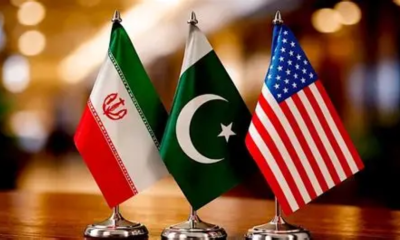
The Iran war changed Pakistan's strategic value, not its political trajectory
-
 European Commission4 days ago
PMI defends AI consultation tool as scrutiny grows over EU tobacco rules review