EU
Understanding and fighting #Disinformation - Commission's €9 million call for national fact-checking hubs


The Commission has launched a call for proposals for €9 million to further strengthen its support to fact-checkers and researchers, as foreseen in the recent Joint Communication to reinforce actions against disinformation. It will extend the reach of the European Digital Media Observatory through the establishment of national fact-checking hubs. These hubs will analyse disinformation campaigns and their impact on society, promote media literacy and monitor online platforms' policies.
Values and Transparency Vice President Věra Jourová said: “A resilient and critical society is what we need to fight against disinformation. This is an important strand of our strategy and for this, we need to support free and independent media, fact checkers and researchers. We will do so by reinforcing the European Digital Media Observatory, backing the development of national digital media research hubs that will improves our ability to understand the spread of online disinformation.”
Internal Market Commissioner Thierry Breton added: “I welcome the launch of this call to establish national fact-checking hubs to support and extend the work of the European Digital Media Observatory. False and misleading information takes different national nuances from one member state to another. That is why EU funds are need to help tackle false information not only at an EU level, but also on a national level.”
The observatory kick-started its activities on 1 June 2020 and supports the creation and growth of a multidisciplinary community composed of fact-checkers, academic researchers and other relevant stakeholders with expertise in the field of online disinformation. As such, it contributes to a deeper understanding of disinformation relevant actors and dynamics, as well as their impact on society. This second phase of the project is funded through the Connecting Europe Facility financing programme. The deadline for submissions is 5 November 2020. To learn more, click here.
Share this article:
EU Reporter publishes articles from a variety of outside sources which express a wide range of viewpoints. The positions taken in these articles are not necessarily those of EU Reporter. Please see EU Reporter’s full Terms and Conditions of publication for more information EU Reporter embraces artificial intelligence as a tool to enhance journalistic quality, efficiency, and accessibility, while maintaining strict human editorial oversight, ethical standards, and transparency in all AI-assisted content. Please see EU Reporter’s full A.I. Policy for more information.




Survey on an EU Blueprint for intellectual property licensing and spinoff creation

Burnham as PM? 'Wait and see'

Setting a new benchmark in premium travel

Rule of law report strengthens EU democracy and fundamental rights

Statement by the Ministry of Foreign Affairs of the Republic of Kazakhstan

Ban on destruction of unsold clothes and shoes enters into application

Rome–Washington Axis: Italian Diplomat Zanardi Landi to Help Save Bosnia

Kazakhstan and Belgium: Building a Partnership for the Future

Become a European Commission trainee – applications are now open

Commission outlines measures to strengthen Europe's banking sector and support growth

British political shifts and the future of UK-China ties

The South Caucasus at a historic turning point: Between lasting peace and renewed confrontation

As Ireland chairs the EU Presidency, what impact has over fifty years of EU membership had on Ireland

The Digital Markets Act Is Hurting Europeans. It’s Time to Put Progress, Free Markets, and Competition First

From Ukraine to Suez: Why the Mediterranean has become the strategic centre of gravity

Commission sends Statements of Objections to several companies and trade associations in suspected construction chemicals cartel

Kazakhstan reforms under scrutiny at Brussels Press Club round table

Japan should face up to history and contribute more to regional peace

Ambassador calls for 'speeding up' of co-operation between EU and Kazakhstan

Timur Turlov at Smart Moves Summit 2025: How chess can transform global education

Shevtsova’s case: Out-of-court sanctions dismantling trust in Ukrainian cause

The future of European transport

Trump Vs Trueman

US 'no longer' an 'unconditional ally' for Europe - MEP
-
 Intellectual Property Rights4 days ago
Survey on an EU Blueprint for intellectual property licensing and spinoff creation
-
 Labour4 days ago
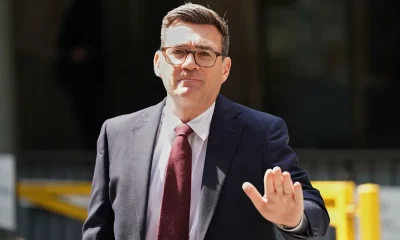
Burnham as PM? 'Wait and see'
-
 Aviation/airlines4 days ago
Setting a new benchmark in premium travel
-
 EU law4 days ago
Rule of law report strengthens EU democracy and fundamental rights