EU
#Health: Italy event flags up needs of cancer patients

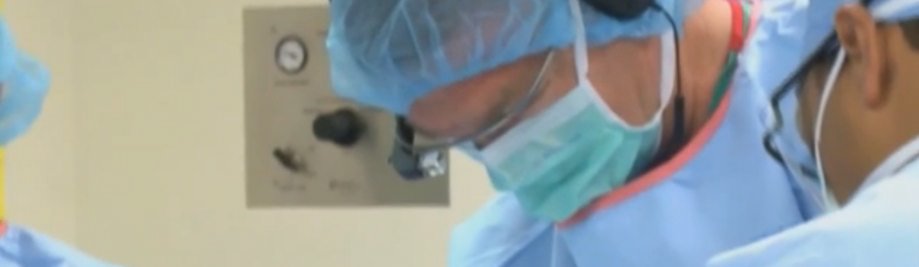
From now until the end of the weekend, the XI National Day of the Oncology Patient is being celebrated in Rome. Francesco De Lorenzo, President of the European Cancer Patient Coalition (ECPC) and who recently spoke at launch of the Italian Alliance for Personalised Medicine meeting in Milan, is the main driving force behind the event on behalf of the Italian Federation of Volunteer-based Cancer Organisations (FAVO), writes European Alliance for Personalised Medicine (EAPM) Executive Director Denis Horgan.
Both of the organizations mentioned above are, in turn, active members of the EAPM. The gathering opened with the presentation of the 8th Report on the welfare condition of cancer patients, at the Parliament of the Library of the Senate. It continued with in-depth sessions at the Congress Centre Events Rome.
In 2006, FAVO requested and obtained from the Prime Minister's Office the establishment of the National day of the Oncology Patient, which is celebrated every third Sunday of May.
This year will touch upon some of the key issues in Italian oncology: the patient's oncology nutrition, the survivorship care, cancer pain, the state of breast centres, the immuno-oncology, colon-rectal diseases, and much more. These issues comes in the wake of the setting up of the Italian Alliance for Personalised Medicine (IAPM, which is also an EAPM member) that took place in March at an EAPM SMART Outreach event in Milan. IAPM operates primarily at national level but, due to its links with EAPM, is able to step up to EU level, putting the concerns of Italian patients and oncologists in front of top-level decision makers.
ECPC, meanwhile, was officially launched in 2003 and the aim of ECPC, under the motto “Nothing About Us, Without Us!”, is to represent the views of cancer patients in the European healthcare debate and to provide a forum for European cancer patient organisations to exchange information and share best practices.
By 2009, ECPC had played a key role in the preparation and launch of the Cancer Plan by the European Commission and helped in promoting the role of patients. In Rome, FAVO states that today, it is possible to be cured of cancer. Despite the increasing rate of incidence of the disease (or diseases, as we now know), the increasing effectiveness of therapies and participation in screening programmes for early diagnosis have significantly changed the prognosis of cancer.
There has been a gradual and steady growth in the number of chronically ill and people being cured. A report published by AIRTUM in 2015 spells it out: in 2010 there were 2,587,347 people living in Italy after a cancer diagnosis, and that’s 4.4% of the resident population. Patients with an expectation of living comparable to that of people not suffering from cancer, or cured, were 704,648. This represents 27% of all patients.
Altogether, one-in-four cancer patients can expect to be cured. These data represent a trending reversal of the stigma - unfortunately still widespread - that cancer equals death.
But a number of questions arise about the situation faced by cured patients, from the health point of view, as well as the social and economic. These people, together with the chronic cancer patients today, represent a new mass disability with a series of needs (expressed and unexpressed) and need to see recognised targeted legal protections to the peculiarity and complexity of neoplastic pathologies. This helps to avoid the pain of marginalisation that is all-too-often generated by ignorance.
The work of FAVO, ECPC, IAPM and their coming together with the European Alliance for Personalised Medicine, is helping to fulfil the needs of cancer patients, and survivors, not just in Italy but in the hallways of Brussels and beyond.
Share this article:
EU Reporter publishes articles from a variety of outside sources which express a wide range of viewpoints. The positions taken in these articles are not necessarily those of EU Reporter. Please see EU Reporter’s full Terms and Conditions of publication for more information EU Reporter embraces artificial intelligence as a tool to enhance journalistic quality, efficiency, and accessibility, while maintaining strict human editorial oversight, ethical standards, and transparency in all AI-assisted content. Please see EU Reporter’s full A.I. Policy for more information.



Can digital sovereignty survive an open trading system?

Friedman Institute and Trends Group at the Italian parliament: Countering the Muslim brotherhood

From a remote island to shelves around the world: The story of Azorean canned fish

Can the EU resist US pressure on medicine prices?

EU deploys wildfire support to face multiple fires across Portugal and France

Europe’s job market is shifting, and EURES is ready to lead the way into 2030

EU agricultural markets remain robust despite uncertainties and rising input costs

Commission report highlights achievements of EU rules on animal health

EU foreign ministers to discuss options for restricting trade with Israeli communities in Judea and Samaria

Safer cars, safer roads: New rules take effect

Survey of city economic experts: Cities are driving Draghi’s competitiveness agenda, but need EU recognition to scale action

Europe's Cloud moment: The DMA must now deliver

EU-Mexico: While others build walls, Europe builds bridges

New EU strategy must help farmers move toward a more humane food system

Kashmir's 9,765 missing women and girls demand international attention

Quarterly reports show a surge in solar energy and e-vehicles, with record highs in 2025

Kazakhstan reforms under scrutiny at Brussels Press Club round table

Japan should face up to history and contribute more to regional peace

Ambassador calls for 'speeding up' of co-operation between EU and Kazakhstan

Timur Turlov at Smart Moves Summit 2025: How chess can transform global education

Shevtsova’s case: Out-of-court sanctions dismantling trust in Ukrainian cause

The future of European transport

Trump Vs Trueman

US 'no longer' an 'unconditional ally' for Europe - MEP
-
 Digital economy4 days ago
Can digital sovereignty survive an open trading system?
-
 Islam4 days ago
Friedman Institute and Trends Group at the Italian parliament: Countering the Muslim brotherhood
-
 Maritime4 days ago
From a remote island to shelves around the world: The story of Azorean canned fish
-
 Health5 days ago
Can the EU resist US pressure on medicine prices?