coronavirus
#Germany says Russian #COVID-19 vaccine has not been sufficiently tested


German Health Minister Jens Spahn (pictured) said on Wednesday (12 August) that Russia’s COVID-19 vaccine had not been sufficiently tested, adding the aim was to have a safe product rather than just being first to start vaccinating people, writes Michelle Martin.
President Vladimir Putin announced on Tuesday that Russia had become the first country to grant regulatory approval to a COVID-19 vaccine after less than two months of human testing.
Moscow’s decision to grant approval before final trials have been completed has raised concerns among some experts.
“It can be dangerous to start vaccinating millions, if not billions, of people too early because it could pretty much kill the acceptance of vaccination if it goes wrong, so I’m very sceptical about what’s going on in Russia,” Spahn told radio broadcaster Deutschlandfunk.
“I would be pleased if we had an initial, good vaccine but based on everything we know - and that’s the fundamental problem, namely that the Russians aren’t telling us much - this has not been sufficiently tested,” he added.
Spahn said it was crucial, even during a pandemic, to carry out proper studies and tests and make the results public to give people confidence in the vaccine.
“It’s not about being first somehow - it’s about having an effective, tested and therefore safe vaccine,” he said when asked about Russia’s vaccine, which will be called “Sputnik V” in homage to the world’s first satellite launched by the Soviet Union.
Only about 10% of clinical trials are successful and some scientists fear Moscow may be putting national prestige before safety.
Putin and other officials have said it is completely safe. Government officials have said it will be administered to medical personnel, and then to teachers, on a voluntary basis at the end of this month or in early September. Mass roll-out in Russia is expected to start in October.
Share this article:

EU Reporter publishes articles from a variety of outside sources which express a wide range of viewpoints. The positions taken in these articles are not necessarily those of EU Reporter. Please see EU Reporter’s full Terms and Conditions of publication for more information EU Reporter embraces artificial intelligence as a tool to enhance journalistic quality, efficiency, and accessibility, while maintaining strict human editorial oversight, ethical standards, and transparency in all AI-assisted content. Please see EU Reporter’s full A.I. Policy for more information.






ECR MEPs question the European Commission on cardiovascular health and diet promoting the Mediterranean diet as an alternative to ultra-processed foods as key to tackling obesity

Falling in love with the Maldives

Kurmuk gold project highlights Africa’s changing investment landscape

Albania's Vlora airport standoff tests investor confidence as EU accession clock ticks

EU steps up international support for Palestinians with major initiative for Gaza's early recovery and stronger international coordination

Commission adds exemptions to rules on removability of portable batteries

Iran’s regime in crisis: Negotiations, internal divisions and growing resistance

Natura 2000 Network offers opportunities for sustainable tourism across Europe

Kazakhstan and Belgium: Building a Partnership for the Future

New court ruling questions 'proportionality' of Mayor Erion Veliaj’s detention

Rome–Washington Axis: Italian Diplomat Zanardi Landi to Help Save Bosnia

Burnham as PM? 'Wait and see'

Ban on destruction of unsold clothes and shoes enters into application

Survey on an EU Blueprint for intellectual property licensing and spinoff creation

Rule of law report strengthens EU democracy and fundamental rights

EU launches Ukraine defence industrial partnership, Drone Deal and disburses €1 billion for drones *

Kazakhstan reforms under scrutiny at Brussels Press Club round table

Japan should face up to history and contribute more to regional peace

Ambassador calls for 'speeding up' of co-operation between EU and Kazakhstan

Timur Turlov at Smart Moves Summit 2025: How chess can transform global education

Shevtsova’s case: Out-of-court sanctions dismantling trust in Ukrainian cause

The future of European transport

Trump Vs Trueman

US 'no longer' an 'unconditional ally' for Europe - MEP
-
 Italy3 days ago
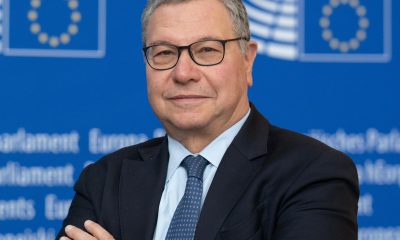
ECR MEPs question the European Commission on cardiovascular health and diet promoting the Mediterranean diet as an alternative to ultra-processed foods as key to tackling obesity
-
 Tourism5 days ago
Falling in love with the Maldives
-
 China5 days ago
Kurmuk gold project highlights Africa’s changing investment landscape
-
 Albania3 days ago
Albania's Vlora airport standoff tests investor confidence as EU accession clock ticks