Health
Ovik Mkrtchyan: Virus inactivation method - Innovations in disrupting transmission mechanisms


The issue of medical facility infection is both long-standing and ongoing. It is well-documented that infections caused by particularly dangerous pathogens are a major cause of fatal outcomes. Each year, Europe alone witnesses a substantial number of such cases, with an even greater incidence in poorer countries around the world.
However, modern advancements still leave us with the opportunity to significantly prevent, and thereby interrupt, the transmission of highly dangerous infections during medical procedures by upholding higher standards of hygiene and disinfection among healthcare professionals and their tools. Despite this, the scale of the problem and outdated disinfection methods frequently fall short, highlighting the urgent need for safer medical practices.
The scope of the problem indicates the limited effectiveness of current methods in combating highly dangerous infections, as these infections mutate and new forms emerge. This situation necessitates new and viable approaches to address various challenges in tackling this issue. Bold and impactful solutions are imperative.
One potential solution in this context is the application of virus inactivation methods, which effectively sterilise highly dangerous medical instruments, thereby making them considerably safer to use. Little wonder, then, that the viral inactivation market is expected to go from being worth around $654 million globally in 2023 to a projected $1.915 billion by 2033. North America is predicted to continue dominating the market over the next 10 years, followed by Europe. However, the Asia Pacific region is forecast to see the fastest growth rates during that same time frame.
New Concepts – Changing the Rules for the Better
A report put together by the World Health Organization (WHO) in 2022 recorded that roughly seven in 100 patients treated in acute-care hospitals in high-income countries acquired at least one healthcare-associated infection (HAI). That figure rose as high as 15 per 100 patients being treated in comparable facilities in low to middle-income countries. According to WHO, on average, infections acquired in healthcare settings proved fatal for 1 in 10 infected patients.
There is no doubt that an infected individual poses a potential threat to those in close contact with them, particularly those in high-risk groups. This generally includes healthcare workers at the facility where the infected patient was treated, as well as the patient’s family, close friends, colleagues, and others. As a result, there is an urgent need to develop and implement effective, innovative methods in healthcare settings that can break the chain of infection transmission and prevent its spread. Thus, the fight to prevent the spread of highly dangerous infections by disrupting transmission mechanisms becomes a priority in the development of innovative solutions.
Ovik Mkrtchyan and New Medical Technologies
It was with this goal in mind that Ovik Mkrtchyan founded New Medical Technologies (NMT) to develop and implement innovative methods in the field of medicine. In a truly belt and braces approach, he also initiated the creation of new medical equipment to ensure the sterility of clinical instruments. The early stages involved scientific and practical research on the reliable detection of lymphotropic viruses and the assessment of their viability, as well as methods for inactivating DNA and RNA-containing viruses, bacteria, fungi, and endospores present on surgical equipment. This research produced some groundbreaking results in medical treatment.
The developments, led by the company’s founder Ovik Mkrtchyan, have been recognized by various patent organizations worldwide, with more than 30 patents granted and classified as inventions. Ovik Mkrtchyan is confident that virus inactivation represents a significant step forward in combating highly dangerous infections in medical and healthcare facilities. These innovations will make a considerable contribution to the fight against the spread of harmful infections.
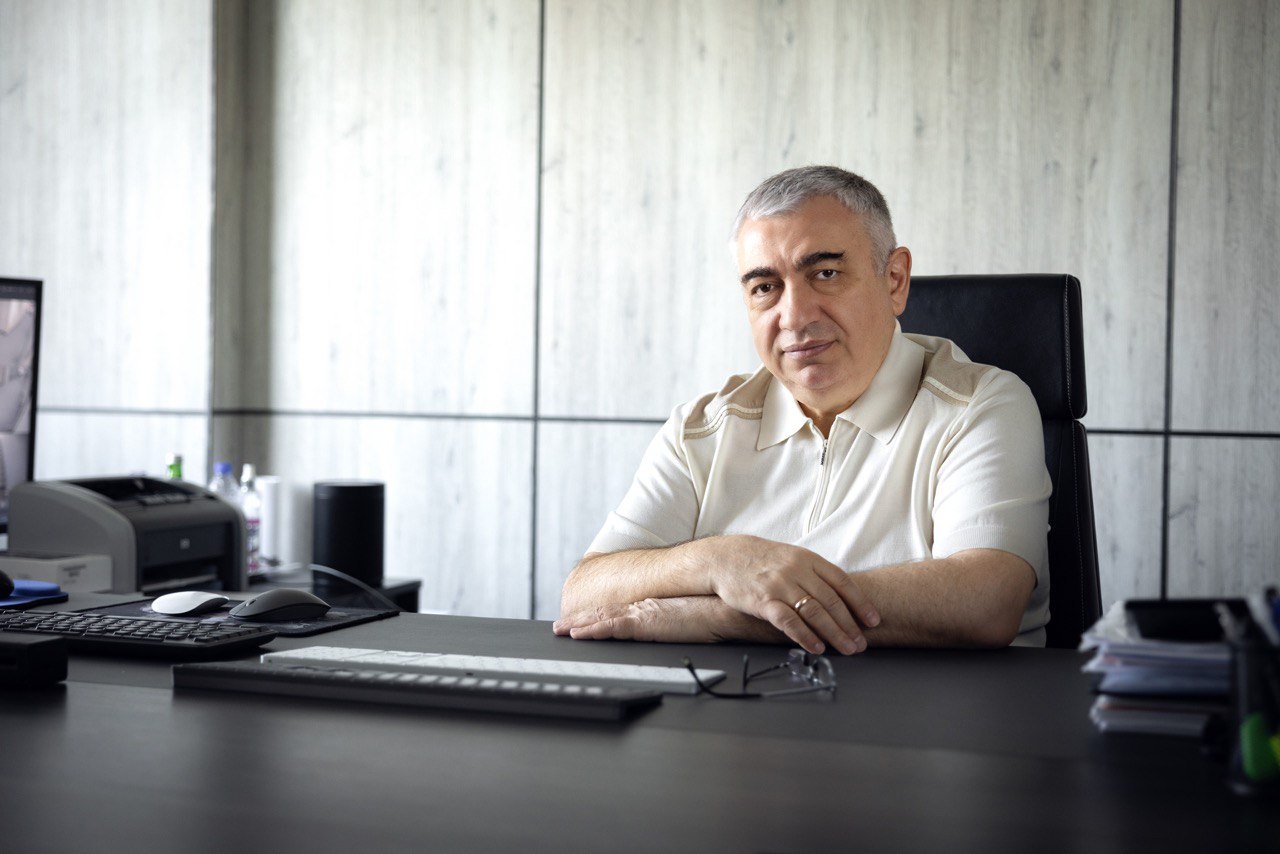
Ovik Mkrtchyan, New Medical Technologies founder
“I think it’s vitally important for entrepreneurs like myself to take seriously issues like HAI that affect millions of people globally every year. This is a clear and well-understood problem that requires an urgent solution. I would be truly pleased if our developments could serve as a meaningful, albeit modest, contribution to improving public health. My hope is that these innovations will prove beneficial, find increasing practical application, and continue to make a positive impact.”
Raising Awareness
The impact of the COVID-19 pandemic has led governments worldwide to recognise the vital importance of combating highly dangerous infections, highlighting the need for decisive and comprehensive measures to prevent the spread of harmful microorganisms. The pandemic, which caught everyone off guard, demonstrated this at the cost of many lives.
The WHO has been eager to raise awareness of the cost-effective ways in which medical professionals can reduce the number of HAIs they could inadvertently be responsible for. To that end, the organisation initiated events such as World Hand Hygiene Day and emphasised just how dangerous HAIs are, with intensive care patients and newborn babies always among those most at risk. It also firmly advocated for the urgent need to take immediate action to prevent pandemic outbreaks and minimise associated risks wherever they may arise.
Enhancing infection prevention in surgery
Research from the European Centre for Disease Prevention and Control (ECDC) suggests that the most frequently identified HAIs are respiratory tract infections. However, surgical site infections, bloodstream infections and gastro-intestinal infections are also commonly identified. Among these, surgical site infections are particularly relevant, as this is an area where virus inactivation methods could be effectively applied, especially for disinfecting instruments using chemical methods.
Medical instruments can be cleaned and disinfected using high temperatures and strong chemicals, but these methods are not always effective and can have negative side effects. In some cases, instruments lose their functionality and quickly become unsuitable for medical procedures due to corrosion, loss of reflectivity, sharpness, and other issues. Virus inactivation method, like the one patented by Ovik Mkrtchyan, as a photodynamic disinfection technique, can effectively neutralise harmful microorganisms on medical instruments when thermal and chemical methods are not feasible. This ensures a reliable interruption of the transmission and spread. It offers a consistent and dependable level of infection prevention when preparing instruments for a wide range of medical procedures, including dentistry, gynaecology, and cosmetology. Ultimately, the innovations of New Medical Technologies significantly reduce risks to patients.
“We’ve created a unique installation that utilises a photodynamic method for virus inactivation, using methylene blue as a photosensitiser activated by monochromatic light,” explains Ovik Mkrtchyan. “Our installation is specifically designed for the inactivation of viruses on medical instruments. This inactivation method can be used more commonly as a means of preventing the spread of infections in places where medical procedures are routinely performed.”
Resistance to antibiotics
Another important part of the picture is that a significant proportion of the infections happening in medical facilities involve bacteria resistant to commonly used antibiotics. Indeed, the ECDC has said that roughly one in three of the microorganisms detected in cases of HAI in Europe fall into that category, which inevitably limits treatment options and increases risks to patient safety and well-being.
The same body estimates that 71 percent of infections involving antibiotic resistant bacteria are accounted for by HAI, and that includes bacteria resistant even to “last-resort” antibiotics, such as carbapenem-resistant Enterobacterales. Given which, it is of increasingly critical importance for patient wellbeing that opportunities to limit instances of infection transmission be taken wherever possible, including through innovations around virus inactivation.
Healthier outcomes on the horizon
Looking ahead, Ovik Mkrtchyan remains optimistic about the prospects for implementing the company’s developments. The research and developments are grounded in a detailed analysis of current challenges, with strategies in place for future solutions. He is confident that these innovations will have a significant positive impact in practice, stating: “It should all be part of a multi-modal strategy for preventing HAIs globally in years to come, of course, but I do believe that the inactivation of DNA- and RNA-containing viruses, bacteria, fungi, and endospores will play a key role in preventing the spread of harmful infections.”
“My vision of the future for NMT is that we can help initiate a sea change in how these issues are understood and addressed in different parts of the world. We have patents in place that demonstrate the novelty and potential of our innovations, and we fully expect to be at the forefront of this trend in the field of medical science. It’s one that will, I believe, have a huge impact on the well-being of potentially millions of patients worldwide over the next few decades,” he concluded.
Share this article:
EU Reporter publishes articles from a variety of outside sources which express a wide range of viewpoints. The positions taken in these articles are not necessarily those of EU Reporter. Please see EU Reporter’s full Terms and Conditions of publication for more information EU Reporter embraces artificial intelligence as a tool to enhance journalistic quality, efficiency, and accessibility, while maintaining strict human editorial oversight, ethical standards, and transparency in all AI-assisted content. Please see EU Reporter’s full A.I. Policy for more information.








Kashmir's 9,765 missing women and girls demand international attention

New EU strategy must help farmers move toward a more humane food system

EU foreign ministers to discuss options for restricting trade with Israeli communities in Judea and Samaria

EU-Mexico: While others build walls, Europe builds bridges

Europe's Cloud moment: The DMA must now deliver

Srebrenica's lesson is prevention. Why isn't the world applying It to Kashmir?

European operation dismantles €10 million illicit cigarette network in Spain

Survey of city economic experts: Cities are driving Draghi’s competitiveness agenda, but need EU recognition to scale action

EU weighs age-13 limit for 'social media plus'

ALROSA Re-elects Supervisory Board with Minimal Changes

Public consultation on Joint Undertakings, Art. 185 initiatives, and thematic priorities for European Partnerships under Horizon Europe 28-34

Poland sees new research and changes to policies on migrant integration

EU launches a Team Gaza Initiative to support early recovery in Gaza with an initial amount of nearly €900 million

NESBp: Strengthening maritime spatial planning across the North Sea and Baltic Sea

Energy Union Task Force takes stock of oil and gas security of supply in the EU

AIFC to host Astana Finance Days 2026 in September

Kazakhstan reforms under scrutiny at Brussels Press Club round table

Japan should face up to history and contribute more to regional peace

Ambassador calls for 'speeding up' of co-operation between EU and Kazakhstan

Timur Turlov at Smart Moves Summit 2025: How chess can transform global education

Shevtsova’s case: Out-of-court sanctions dismantling trust in Ukrainian cause

The future of European transport

Trump Vs Trueman

US 'no longer' an 'unconditional ally' for Europe - MEP
-
 Kashmir4 days ago
Kashmir's 9,765 missing women and girls demand international attention
-
 Animal welfare4 days ago
New EU strategy must help farmers move toward a more humane food system
-
 Israel2 days ago
EU foreign ministers to discuss options for restricting trade with Israeli communities in Judea and Samaria
-
 Mexico4 days ago
EU-Mexico: While others build walls, Europe builds bridges