Belgium
Belgian tourist attraction lands major award

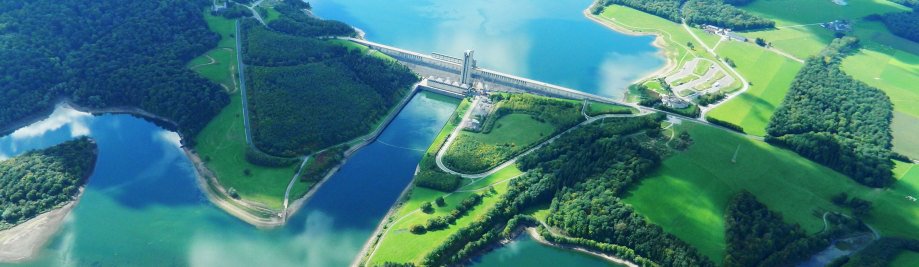
A Belgian tourist attraction has been hailed as a “model” for sustainable development after being awarded a prestigious award by the European Union. Les Lacs de l’Eau d’Heure, in Wallonia, has been designated by the EU as a European Destination of Excellence (EDEN), a project that promotes sustainable tourism development models across the EU.
It is one of just five destinations in Wallonia and less than 98 in the whole of Europe to be given such recognition.
The EU-funded EDEN project is based on national competitions that take place annually and result in the selection of tourist "destinations of excellence" for each participating country.
According to the Walloon Regional Government, the EDEN designation illustrates how the site has become a genuine “benchmark for good practice in sustainable, balanced tourism in Belgium.”
A spokesman said: "The lakes are a real tourist destination with a full range of tourist and water activities. They are characterised by a careful examination of all aspects of the sustainable model and the engine of economic development of an entire region."
The first holiday village at Les Lacs de l’Eau d’Heure opened back in 2003 and the EU and Walloon Region have been in collaboration for some 20 years with the aim being to create a tourist resort. It is now the number one tourist attraction in Wallonia.
Nestled around five picturesque lakes, Les Lacs de l’Eau d’Heure is the biggest nautical complex in Belgium and, says the EU, is notable not just as a tourist destination but also as an energy provider and on economically and environmental grounds.
It serves a practical purpose, featuring a hydro-electric power station which produces “green energy” and the biggest dam in Belgium which helps maintain levels of both the River Sambre and the Brussels-Charleroi canal.
In an area blighted in the recent past by the demise of the coal and steel production, the whole site is widely credited also with generating much needed business for the whole area.
The 1,800 hectare site is overseen by Les Lacs de l’Eau d’Heure ASBL, a not for profit organisation, and funded both by the European Union and the Wallonia Region.
The EU-Wallonia connection is but one example of the public-private partnership philosophy it encourages.
Located between the rivers Sambre and Meuse, the lakes of l'Eau d'Heure is seen as being a flagship of Walloon tourist heritage. Artificially created in the 1970s to establish a water reserve for maintaining the level of the Sambre, the largest lakes in Belgium soon became a top tourist attraction.
With its 1,800 hectares divided into 600 hectares of lakes and the same surface of forests and grasslands it also has 50 kilometres of “coastline” – longer than the Belgian coast.
The complex hosts more and more new leisure activities and accommodation opportunities for the tourists' and visitors, mostly from the Netherland, Belgium and France.
The EU source said it protects its natural resources, the main asset of the site, in a “sustainable way”. It currently attracts 1 million visitors annually but the aim to increase this number (and double the current 3,000 beds available at its two holiday villages) with some exciting plans in the pipeline designed to make that happen.
These include construction of a 90-bedroom hotel and conference centre. Due to open next year, this will help attract the all-important business trade and, being privately built but publicly funded by the EU and Walloon region, is another example of the PPP initiative that underpins the thinking behind Les Lacs de l’Eau d’Heure.
The site includes two holiday complex, including the 'Golden Lakes Village' comprising villas located to the banks of Lac de la Plate Taille, which, at a depth of 52m and covering some 352 hectares, is the largest of the five lakes.
Europe and the Walloon Region have, in fact, been working together for years to create a major tourist resort on the site of Les Lacs de l’Eau d’Heure and the impressive results are now clearly visible with 200,000 overnight stays in the past 12 months.
Eden was set up by the Commission in 2006 with the aim of promoting sustainable tourism development models across the EU by encouraging countries to implement sustainable alternatives as part of their tourism policy.
The Eden project aims to bring "visibility" to quality destinations that are environmentally friendly, unspoiled, often lesser known or in any case "non traditional".
Les Lacs de l’Eau d’Heure is one of five destinations in Wallonia now acknowledged to be 'Destinations of Excellence' in Belgium.
Ever since it started back in the 1970s, this place has commendably been flying the flag for regional tourism but it has also sought to generate much needed business for what has been a desperately struggling local economy.
A spokesman for the Wallon government said: “The whole community benefits heavily from the improved infrastructure at Les Lacs de l’Eau d’Heure.”
Share this article:
EU Reporter publishes articles from a variety of outside sources which express a wide range of viewpoints. The positions taken in these articles are not necessarily those of EU Reporter. Please see EU Reporter’s full Terms and Conditions of publication for more information EU Reporter embraces artificial intelligence as a tool to enhance journalistic quality, efficiency, and accessibility, while maintaining strict human editorial oversight, ethical standards, and transparency in all AI-assisted content. Please see EU Reporter’s full A.I. Policy for more information.



EU foreign ministers to discuss options for restricting trade with Israeli communities in Judea and Samaria

European operation dismantles €10 million illicit cigarette network in Spain

Srebrenica's lesson is prevention. Why isn't the world applying It to Kashmir?

ALROSA Re-elects Supervisory Board with Minimal Changes

AIFC to host Astana Finance Days 2026 in September

Energy Union Task Force takes stock of oil and gas security of supply in the EU

Joint statement by High Representative/Vice-President Kallas and Commissioner Kos on the 31st anniversary of the Srebrenica genocide

Commission preliminarily finds the addictive design of Instagram and Facebook in breach of the Digital Services Act

Britain’s leadership crisis is a symptom, not the disease

Chinese “leadership and coordination”

Shared commitment to advance EOSC through new EOSC Nodes and EOSC projects

Why young jobseekers struggle to find roles abroad that fit their expertise

Farmers, fair markets and consumers: new report highlights the role of EU competition rules in agriculture

EU and South Africa kick off intergovernmental dialogue on Clean Trade and Investment Partnership

Seveso - 50 years on: EU strengthens its commitment to industrial safety in a changing landscape of risk

Commission opens formal investigation into possible gun jumping in XXXLutz's acquisition of Porta

Kazakhstan reforms under scrutiny at Brussels Press Club round table

Japan should face up to history and contribute more to regional peace

Ambassador calls for 'speeding up' of co-operation between EU and Kazakhstan

Timur Turlov at Smart Moves Summit 2025: How chess can transform global education

Shevtsova’s case: Out-of-court sanctions dismantling trust in Ukrainian cause

The future of European transport

Trump Vs Trueman

US 'no longer' an 'unconditional ally' for Europe - MEP
-
 Israel3 days ago
EU foreign ministers to discuss options for restricting trade with Israeli communities in Judea and Samaria
-
 Cigarettes3 days ago
European operation dismantles €10 million illicit cigarette network in Spain
-
 Kashmir3 days ago
Srebrenica's lesson is prevention. Why isn't the world applying It to Kashmir?
-
 Economy1 day ago
ALROSA Re-elects Supervisory Board with Minimal Changes