Maritime
Blending business and research: Fishing vessels to collect data for the Copernicus Marine Service

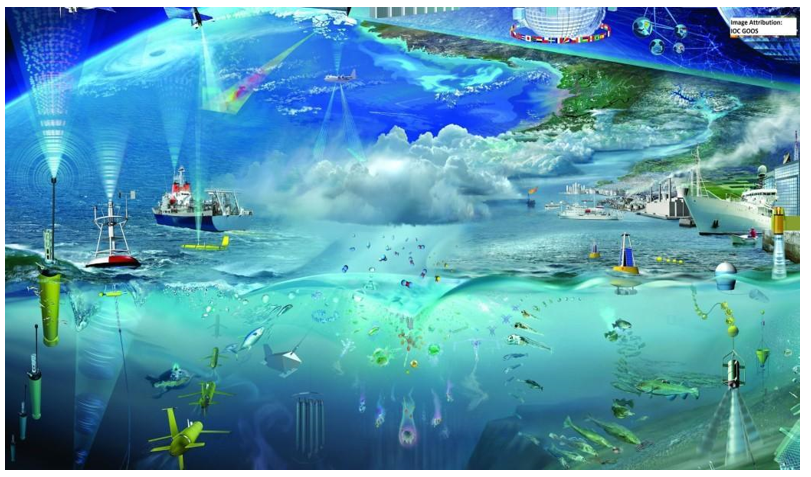
The Copernicus Marine Service and Mercator Ocean International are using fishing vessels in the North Sea to obtain data on essential ocean and climate variables in areas that are otherwise hard to reach.
The Copernicus Marine Service (CMEMS), implemented by Mercator Ocean International on behalf of the European Commission, is harnessing fishing vessels to obtain crucial in-situ data in areas of the North Sea, which are notoriously hard to reach in other ways. The data collected by the vessels are helping Copernicus Marine to expand coverage of the ocean where existing infrastructure or data-sharing networks are lacking.
By collaborating with Berring Data Collective (BDC), a start-up dedicated to ocean observation, Copernicus Marine scientists found an innovative way to gather data from fishing vessels. The data products collected are then made available by Copernicus Marine’s In Situ Thematic Assembly Centre (INS TAC) which draws from a wider network of data producers to provide high-quality multi-source data. This allows users, including Copernicus marine monitoring and forecasting centres, to validate their studies, optimise their models and gain a deeper knowledge of the marine environment.
Collecting this new data is important as many parts of the ocean are hard to monitor such as the rapidly-changing coastal and shelf regions – which is where much fishing activity takes place. For example, fishing net sensors provide an effective way to collect data across the entire water column – both on their way to the seafloor and back up to the surface. Fishing vessels are also ideal for monitoring essential climate and ocean variables in terms of weather as well (air temperature and humidity), and biology (catch and by catch), and sensing at both the sea floor and surface (salinity and currents). As multiple datasets can be sourced from the same vessel, the resulting modelling can be developed for longer-range forecasting.
Vessels currently routinely being used for this new way of collecting marine data include a small Danish gill net vessel fishing out of Sletten Havn in Denmark, a Belgian beam trawler collecting data mainly for the fishing industry and fisheries science applications for the Flemish Institute for Agricultural, Fisheries and Food Research, as well as Dutch beam trawlers from industry-driven projects and initiatives.
Sylvie Pouliquen, Head of Copernicus Marine’s In Situ TAC led by Ifremer, France, comments: “It’s always an exciting challenge to establish a new data flow – and this initiative is especially exciting as we’re inviting the marine and fishing industries to contribute directly to marine monitoring. So far the project is going extremely well.”
“By enhancing our knowledge of coastal regions in particular, we can work together towards open science and a better understanding and respect of our ocean,” she adds.
In collaboration with BDC, Copernicus Marine plans to add 50 more vessels by the end of 2021 and expand the network further to coastal seas across the globe by 2022.
Cooper Van Vranken, founder of BDC, comments: “We are thrilled with how the data flow has been going. Integrating ocean observation with fishing is the perfect collaboration to fill the gaps where data are not only lacking, but most needed by many Member States. It is a win-win for all involved and brings a host of interdisciplinary benefits beyond physical oceanography, from fisheries science to smart, sustainable fishing. While there is still work to be done, this could make the North Sea the most observed shelf region anywhere.”
About the Copernicus Marine Service
The Copernicus Marine Environment Monitoring Service (CMEMS, also referred to as Copernicus Marine Service) is dedicated to ocean observation, monitoring and forecasting. It is funded by the European Commission (EC) and implemented by Mercator Ocean International, a centre for global ocean analysis and forecasting. The Copernicus Marine Service provides regular and systematic reference information on the state of the physical and biogeochemical ocean at the global and European regional scale. It provides key inputs that support major EU and international policies and initiatives and can contribute to: combating pollution, marine protection, maritime safety and routing, sustainable use of ocean resources, developing marine energy resources, blue growth, climate monitoring, weather forecasting, and more. It also aims to increase awareness amongst the general public by providing European and global citizens with information about ocean-related issues.
About Mercator
Mercator Ocean International was selected by the European Commission (EC) to implement the Copernicus Marine Service in 2014. Based in France, Mercator Ocean International is a non-profit organisation providing oceanographic products covering the global ocean. Its scientific experts design, develop, operate and maintain state-of-the-art numerical modelling systems that describe and analyse the past, present, and near-future state of the ocean in 4D (reanalyses, hindcasts, near-real time analyses and forecasts). It has also been selected by the EC as one of three implementers of the Copernicus WEkEO DIAS cloud computing platform.
The Copernicus Marine Service website.
The website of Mercator Ocean International.
More information on the Copernicus programme.
Follow Copernicus Marine on Twitter: @CMEMS_EU
Follow Copernicus Marine on LinkedIn.
Share this article:
EU Reporter publishes articles from a variety of outside sources which express a wide range of viewpoints. The positions taken in these articles are not necessarily those of EU Reporter. Please see EU Reporter’s full Terms and Conditions of publication for more information EU Reporter embraces artificial intelligence as a tool to enhance journalistic quality, efficiency, and accessibility, while maintaining strict human editorial oversight, ethical standards, and transparency in all AI-assisted content. Please see EU Reporter’s full A.I. Policy for more information.



Astana's congress of world religions: A global platform for dialogue in an age of division

How Schuman lost Its way

Protect children from online sexual abuse: Call for urgent negotiations and permanent solution

Solana company partners with Kazakhstan on $6B Alatau Crypto Megacity

Will the Gulf monarchies rise above internecine disputes in the interest of collective security?

Kyrgyzstan launches Tamchy SFIT: A new international jurisdiction as a gateway to Eurasia

Kazakhstan’s dombyra: The two-stringed instrument that carries the soul of the steppe

International Plastic Bag Free Day – from single use to reuse

Deposits to Swiss banks from Bangladeshi nationals nearly tops all time peak

EU agricultural markets remain robust despite uncertainties and rising input costs

Commission report highlights achievements of EU rules on animal health

EU deploys wildfire support to face multiple fires across Portugal and France

Europe’s job market is shifting, and EURES is ready to lead the way into 2030

From a remote island to shelves around the world: The story of Azorean canned fish

Can digital sovereignty survive an open trading system?

Can the EU resist US pressure on medicine prices?

Kazakhstan reforms under scrutiny at Brussels Press Club round table

Japan should face up to history and contribute more to regional peace

Ambassador calls for 'speeding up' of co-operation between EU and Kazakhstan

Timur Turlov at Smart Moves Summit 2025: How chess can transform global education

Shevtsova’s case: Out-of-court sanctions dismantling trust in Ukrainian cause

The future of European transport

Trump Vs Trueman

US 'no longer' an 'unconditional ally' for Europe - MEP
-
 Kazakhstan2 days ago
Astana's congress of world religions: A global platform for dialogue in an age of division
-
 Brussels5 days ago
How Schuman lost Its way
-
 Child sexual abuse2 days ago
Protect children from online sexual abuse: Call for urgent negotiations and permanent solution
-
 Kazakhstan2 days ago
Solana company partners with Kazakhstan on $6B Alatau Crypto Megacity