Uncategorized
Ukraine - Legislator must continue the positive trend in the development of the country's financial market


The European Union and Ukraine signed a memorandum of understanding in 2018, as well as loan agreement on the provision of macro-financial assistance for 1 billion euros. According to the euro politicians, Ukraine will remain an important strategic partner, and the country continues to receive the financial support, despite the fact that the EU is going through hard times.
The European Parliament allocates significant sums to the maintenance of the oligarchic Ukrainian regime, not particularly interested in the internal cuisine of Ukrainian politics and the steps to legalize corruption schemes through the adoption of laws that directly contradict EU law.
Take a look for example the bill number 2413 which the Verkhovna Rada of Ukraine (the main legislative body of the country) is planning to adopt on this Thursday, November 22.
This bill proposes to transfer the reins of the financial services market into the hands of the main bank of Ukraine. Such a decision could lead a monopoly decision on financial structures and open the way to the legalization of corruption schemes and pressure on business. As a result, this may lead to the redistribution of the main players in the financial services market of Ukraine. Many companies, due to financial and rehearsal risks following the adoption of the above-mentioned law, now are leaving the territory of Ukraine.
Law No. 2413 contradicts the Constitution of Ukraine, where it is clearly established that the laws of Ukraine define the limits of authority, according to which state bodies can act. The legislation of the European Union provides for the elimination of any mechanisms for monitoring the actions of National Banks as a regulator.
The ECHR has repeatedly stated in its decisions: “National legislation should provide adequate legal protection against arbitrariness and with sufficient clarity indicate the limits of authority granted to the competent authorities and the method of their implementation.”
During the years of financial and economic crisis in Ukraine, the national currency has fallen by more than 3 times, many of the depositors have lost their deposits as a result of the collapse of the banking system. The question still remains. Is it worth transferring control of the financial market to a structure with such performance results?
It is necessary to pay tribute to Europe, which quickly responded to the 2014 crisis in Ukraine, by allocating generous funding for macroeconomic stabilization measures. Since then, the EU has allocated € 3.4 billion (more than $ 4.2 billion) as part of three macro-financial assistance packages (IPF) for Ukraine, € 600 million of which are still on hold. This is the largest amount of IPA that the EU has ever provided to the non-EU state. An additional € 2 billion by the IPP was promised during the Eastern Partnership Summit in December 2017, which will increase total aid to € 15 billion.
But the really good Samaritan in the figure of European politicians now is wondering whether it is worth further supporting the country, which itself consistently destroys first the banking system, and now the insurance one. After all, pouring finance into a country that occupies the shameful 130th place in the rating of corruption Transparency International is fraught with financial and reputational losses.
About the financial market corruption in Ukraine
Now the entire financial services market in Ukraine can be called bank centric: over 75% of the assets of this market are in the hands of state and private banks.
If we take the information for 2017, the volume of funds attracted by banks to the accounts of residents increased by 8.6%, reaching 778.3 billion hryvnia (about 29 billion US dollars). The majority of this growth was created by an increase in corporate sector accounts (+ 10.1%), which is not surprising, given the continuing inflation in Ukraine, which amounted to 13.67% in 2017. We see that the growth of corporate clients ’funds in their accounts at banks does not exceed the annual rate of inflation. The unstable exchange rate of the national currency, in turn, led last year, a decrease in deposits of the business sector in foreign currency by 2.8%, or by 147 million US dollars. Ukrainian households continue the trend established for the business sector: their annual growth was 4.5%.
There is also an increase in lending activity: the volume of loans issued in the corporate sector amounted to 825.9 billion hryvnia (+ 2.3%). At the same time, the volume of foreign currency loans decreased by 12.8% in dollar terms.
The growth of attracted funds in insurance companies continued. Under life insurance contracts, insurance companies accumulated almost 2 billion hryvnia insurance premiums, which ensured their growth by 0.5 billion hryvnia, and under a universal insurance contract, assets grew by 2.6 billion hryvnia.
Almost without any change, in a state of lethargic sleep, is the Ukrainian stock market. On it, for the past few years, there have been no serious trend movements. In 2016, 107 issues of bonds of Ukrainian enterprises in the amount of UAH 6.26 billion were registered (a decrease of 4.08 billion hryvnias, compared with 2015). At the same time, during the year 98 issues of shares were carried out in the amount of UAH 53.67 billion, which amounted to an increase of 5.46 billion UAH.
Even sadder is the situation in other sectors of the financial market, which cannot be “born” as independent market segments and find their potential and relevant clients. The reason is the general distrust of Ukrainians in any institutions of the financial market, the idea of its tools as “the bait of fraudsters and robbers”.
European ambitions of Ukrainian finance
Speaking about the development of the financial market in Ukraine, we must be clear that the overwhelming majority of agents operating in this market are focused on participating in the present or in the near future, in the united European financial market, on attracting, on the one hand, large European players on its own market, and on the other, on attracting European corporate and private agents as consumers of their own services.
The market, mainly during 2000-2010 and 2014-2016, was followed by the Ukrainian authorities in matters of state regulation of the financial market, the interaction of state and market institutions and enterprises. As a result, a fairly modern diversified system of regulation of the financial services market was created in Ukraine.
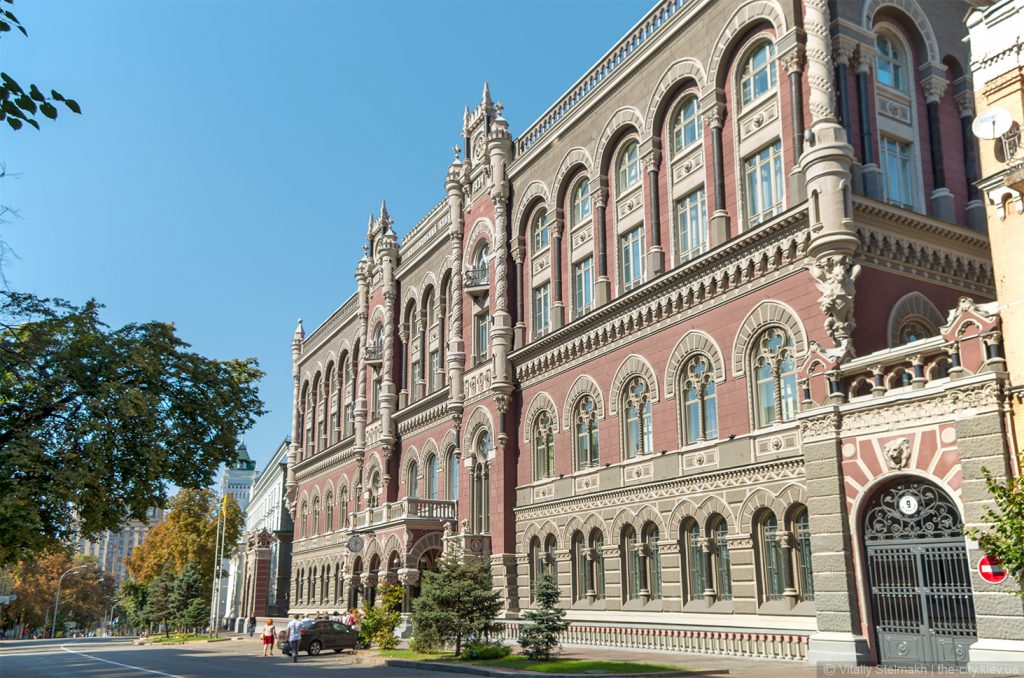
National Bank of Ukraine
Currently, government regulation of the financial services market is carried out by several institutions. Namely:
on the market of banking services, - National Bank of Ukraine;
on the securities market and derivative securities, - the State Commission on Securities and Stock Market;
on other types of financial services markets (first of all, the insurance market), - specially created by the Decree of the President of Ukraine No. 297/2003 dated April 4, 2003, the State Commission for Regulation of Financial Services Markets (Financial Services Commission).
According to the current legislation, the main tasks of the Financial Services Commission are: carrying out a unified and effective state policy in the provision of financial services; development and implementation of a financial services market development strategy; implementation of state regulation and supervision over the provision of financial services and compliance with legislation in this area; protecting the rights of consumers of financial services by applying measures to prevent violations of the law in the financial services market and terminating them, summarizing the practice of applying the legislation of Ukraine on the functioning of the financial services market, developing and making proposals for its improvement implementation of internationally recognized rules for the development the financial services market; promoting integration into the European and global financial services markets.
When resolving them, the Financial Services Commission of Ukraine relies both on the national legislation on the European integration of Ukraine and the EU, and on the European legislation itself. Speaking about the Ukrainian regulatory field, we are talking about a number of legislative and program-declarative documents. Legislative acts include the Constitution of Ukraine, the Law of Ukraine “On the National Bank of Ukraine”, the Law of Ukraine “On Financial Services and State Regulation of Financial Services Markets”, as well as a number of other legislative acts and acts of the Cabinet of Ministers. The second group includes: the Agreement on Cooperation between Ukraine and the EU, the Memorandum on Economic and Financial Policies, the Comprehensive Program of the Financial Sector up to 2020, and the Program of Activities of the Cabinet of Ministers of Ukraine up to 2020.
If we talk about European legislation, we are also talking about the implementation of the provisions of the EU Directive 98/78 EC of the European Parliament and the Council of Europe dated October 27, 1998, which establishes additional supervision procedures and mechanisms for regulating the activities of insurance companies and organizations of the non-banking sector of the financial market. However, the implementation of European legislation in Ukraine does not take into account the fact that in the European Union the formation of an integrated European financial market and a unified legal system, processes of financial liberalization and deregulation, the pressure of European Commission directives led to a combination of different institutional approaches to regulation, despite the existence of a different traditional model. This is due to the fact that in Ukraine the model of the financial market and generally accepted traditions of activity in this market simply did not exist.
The formation of Ukrainian legislation on financial markets pursued two, to a certain extent, contradictory goals: the development of the financial market infrastructure and the growth of resources accumulated and redistributed by its institutions, and the revival of trust in financial institutions by the business environment and households. It is necessary to recognize that, to a certain extent, these goals were achieved at the level of rulemaking, but remained unfulfilled in practical actions.
However, already in 2015, the dangerous trend of slowing down the reform of the financial sector, increasing the statutory fixed state presence on it began to appear. In particular, there is a systematic policy of increasing the regulatory impact of the National Bank of Ukraine and the actual monopolization of the provisions of the main regulatory body of the financial market.

Megaregultor or market clearing
5 moments from temnik
The existence of this tendency and the attempts to implement it in the legislation is indicated by the analysis of draft law No. 2413а “On introducing changes in certain legislative acts of Ukraine on the consolidation of the functions of state regulation of financial services markets”.
The idea of adopting this legislation was expressed in 2015 by the President of Ukraine, Petro Poroshenko. According to the draft law, it provides for the transfer of the functions of regulation and supervision of the market for non-banking financial services into the hands of the National Bank of Ukraine and the actual abolition of the National Commission for State Regulation of Financial Services Markets (Financial Services). Adoption of the bill in the form in which it approached the second reading in the Verkhovna Rada actually introduces the monopoly position of the National Bank in the market, opens up broad opportunities for arbitrary and adventurous actions of the mega-regulator and the spread of various corrupt and fraudulent acts in the market. In fact, the adoption of this bill negates all the positive things that were done earlier for the civilized regulation of the financial market in Ukraine. In addition, the adoption of this bill will undoubtedly have a negative impact on the entry of European companies into the Ukrainian market (especially insurance, as well as brokerage and deposit).
Such a legislative decision also has certain positive aspects, on which its authors and lobbyists are oriented.
The first positive aspect is that the NBU has much more opportunities to influence the financial market, it has at its disposal tools developed for years of influence on the market, experience in exercising supervisory functions, introducing reports, numerous staff of fairly well-trained and experienced employees.
The second positive aspect consists in a greater degree of elaboration of banking legislation, its compliance with a number of international agreements, the presence of a sufficiently large amount of national and international administrative and judicial practice of considering controversial issues of its application.
However, it is necessary to say about the negative aspects of making such a decision. Moreover, in our opinion, these negative aspects are more significant for making a final decision on this issue.
The first negative circumstance is directly related to the fact of making such a decision and is that its implementation will take quite a long time, during which the probability of uncontrollable behavior of market participants increases significantly, the number of cases of violation of the rights of consumers of financial services increases.
The second circumstance is that, the National Bank of Ukraine, based on its current legal status, will not be able to adequately respond to complaints from consumers of financial services and take appropriate administrative actions on them. In addition, the very fact of the transfer of a large number of institutions under its regulation will be critical for the NBU. We are talking about more than 2000 economic entities with various forms of ownership and organizational and legal forms. At present, the NBU has neither the proper experience nor the personnel capacity to accomplish this task.
The third significant negative point is that the proposed legislative innovation takes the institutions of the non-banking sector of the financial market out of the legal framework on licensing, regulation, conducting inspections, and providing administrative services.
The fourth negative circumstance is that the draft law gives the NBU the authority to determine its regulatory and supervisory issues with its regulatory and legal acts. This provision is in clear contradiction with the principles of legal regulation, proclaimed in Ukraine and generally accepted in the EU, and also reduces the transparency of the regulatory mechanism and activities of the NBU. This circumstance is also associated with the risk of serious political consequences, since the NBU becomes a body that regulates not only its own activities, but also receives almost full control over the entire economy of the country in its own interests. For examples of such a negative transformation of the activities of national banks in the post-Soviet space, there is no need to go far: Russia, Uzbekistan, Tajikistan.
The fifth circumstance causing a negative assessment of the proposed bill is its corruption nature. In fact, it legalizes the implementation of licensing, inspections, provision of administrative services at the discretion of the NBU, without establishing any procedures or restrictions. At the same time, today, these relations are clearly regulated by laws, certain transparent procedures, which the regulator must act on. Decisions will be made at the discretion of the official, whom the law does not limit. The text of the new law provides for the establishment, instead of an exhaustive list of the grounds for unscheduled inspections, their open list, which contradicts the general European trends in lawmaking. The text of the law excludes an indication of the maximum time for conducting inspections, canceled the procedure established by law to conduct them. The norm of the new law, which states that the results of the audit will not be drawn up as an act of verification, but a report of the auditor, which will only reflect his position, indicates a significantly lower level of legal technology.
The seventh reason for making at least adjustments to the text of the new law is the violation of the principles of banking and trade secrets by its norms. Namely, the new law provides unlimited powers for access to information of non-banking financial institutions. The draft law establishes the obligation for non-bank financial institutions in conducting inspections to provide representatives of the NBU with “access in a viewing mode to all information systems, sampling and uploading the necessary information for further analysis”. This creates the conditions for the uncontrolled use of the obtained information, which is a commercial secret.
The eighth omission, or a deliberate decision to slow down the reforms of the European integration of Ukrainian financial legislation, is a significant reduction in the ability to appeal against the actions of the NBU, to bring its employees to justice for illegal actions. The bill actually transfers the functions of state regulation and supervision of non-bank financial institutions from the National Financial Services Committee (a state body whose activities are clearly regulated by law) to one of the NBU committees. The NBU Board will receive the right to create a Committee on the Supervision and Regulation of Non-banking Financial Services Markets, Supervision (Oversight) of Payment Systems. At the same time, the law does not define the procedure for forming a Committee and the requirements for persons who may be members of it, the procedure for its activities, decision-making, and their appeal. As a result, the Committee will be empowered to apply coercive measures, including the decision to revoke licenses, and to recognize non-bank financial institutions as insolvent. Whereas for banks, such issues are exclusively within the competence of the NBU board and cannot be delegated to the committees. The law also establishes that the decision of the NBU Committee will be final. Market participants may appeal against it in court, however, according to Part 2 of Art. 74 of the Law "On the NBU", appealing a decision, act or action of the NBU does not suspend their execution. In addition, the bill provides the decision of the Committee to impose a fine on the status of the executive document, enters into force 30 calendar days from the date of its adoption. The absence of appeal procedures in the draft law makes market participants unprotected in case of arbitrary actions by the Committee.
The ninth negative aspect of the proposed bill is related to the fact that it provides for the rule-making procedure in Ukraine established by the Constitution of Ukraine, decisions of the Constitutional Court of Ukraine and a number of legislative acts. To date, neither the Ministry of Justice or any other state body analyzes the NBU NAP for compliance with the Constitution, current legislation, including anti-corruption legislation, which contradicts EU requirements and has already led to the adoption of regulatory acts by the NBU that violate the Constitution, current legislation and human rights. The draft law effectively deduces regulatory acts of the National Bank from the effect of the Law of Ukraine “On the Basics of the State Regulatory Policy in the Sphere of Economic Activity”.
Summarizing the proposed legal bill No. 2413a we have carried out, we can conclude that it is contradictory to the Constitution of Ukraine.
The draft law provides an opportunity for the NBU to determine its own powers, at its own discretion, to take legal acts (which are mandatory for individuals and legal entities) and to control themselves. This is contrary to the Constitution of Ukraine, where it is clearly established that the laws of Ukraine define the limits of authority and the way in which government bodies can act (part 2 of article 19 of the Constitution).
The adoption of this law is also contrary to the legal position of the highest judicial bodies of the European Union. The ECtHR has repeatedly stated in its decisions: “National legislation should provide adequate legal protection against arbitrariness and with sufficient clarity indicate the limits of authority granted to the competent authorities and the method of their implementation.”
What needs to be done to keep the “vessels” of the economy clean?
In conclusion of our review, I would like to briefly highlight what, in our opinion, should be done by the Ukrainian legislator to continue the positive trend in the development of the country's financial market.
First, in no case can we speak about stopping and even reducing the activity of the Financial Services Commission of Ukraine. The effectiveness of the regulatory impact, as evidenced by the European experience, is largely determined by the degree of participation of civil society in it, the degree of trust that the regulator's decisions have from market actors. At present, the Financial Services Commission is a collegial body, quite effectively and fully representing the interests of various subjects of the financial services market. If we talk about the improvement of its activities, then we should talk about deepening its relationship with civil society and interaction with the business environment, normative consolidation of effective models of such interaction.
Secondly, one of the main reasons for the distrust of Ukrainians in financial institutions is the extremely low financial and economic literacy of not only the majority of the population, but also entrepreneurs. Necessary regulatory decisions aimed at eliminating illiteracy, the formation of objective knowledge about the possibilities of various financial instruments and risks associated with them.
Thirdly, the financial market, especially its non-banking sector, must be withdrawn from the influence of the oligarchic groups of Ukraine, while maintaining its investment attractiveness for both domestic and foreign investors.
Fourth, the Ukrainian legislator must ensure the stability and predictability of the legal regulation of the financial sector. That stability and predictability are the main criteria for the choice of a positive decision by investors. No one will invest money where things can change the next day.
Share this article:
EU Reporter publishes articles from a variety of outside sources which express a wide range of viewpoints. The positions taken in these articles are not necessarily those of EU Reporter. Please see EU Reporter’s full Terms and Conditions of publication for more information EU Reporter embraces artificial intelligence as a tool to enhance journalistic quality, efficiency, and accessibility, while maintaining strict human editorial oversight, ethical standards, and transparency in all AI-assisted content. Please see EU Reporter’s full A.I. Policy for more information.



Protect children from online sexual abuse: Call for urgent negotiations and permanent solution

Astana's congress of world religions: A global platform for dialogue in an age of division

Solana company partners with Kazakhstan on $6B Alatau Crypto Megacity

Will the Gulf monarchies rise above internecine disputes in the interest of collective security?

Europe must double down on nuclear progress to achieve its long-term ambitions

International Plastic Bag Free Day – from single use to reuse

Study: Europe's defense runs on American servers

MEPs supportive of draft Biotech report, but divisions over incentives remain

Quarterly reports show a surge in solar energy and e-vehicles, with record highs in 2025

EU deploys wildfire support to face multiple fires across Portugal and France

New EU plan to address the risks and opportunities of advanced AI for cybersecurity

Portugal achieves major milestone with permit for offshore aquaculture facility

Setting sustainable livestock farming on a strong footing

Competition policy: Enforce without fear

Friedman Institute and Trends Group at the Italian parliament: Countering the Muslim brotherhood

How hair extensions can transform your look naturally

Kazakhstan reforms under scrutiny at Brussels Press Club round table

Japan should face up to history and contribute more to regional peace

Ambassador calls for 'speeding up' of co-operation between EU and Kazakhstan

Timur Turlov at Smart Moves Summit 2025: How chess can transform global education

Shevtsova’s case: Out-of-court sanctions dismantling trust in Ukrainian cause

The future of European transport

Trump Vs Trueman

US 'no longer' an 'unconditional ally' for Europe - MEP
-
 Child sexual abuse4 days ago
Protect children from online sexual abuse: Call for urgent negotiations and permanent solution
-
 Kazakhstan4 days ago
Astana's congress of world religions: A global platform for dialogue in an age of division
-
 Kazakhstan4 days ago
Solana company partners with Kazakhstan on $6B Alatau Crypto Megacity
-
 Iran4 days ago
Will the Gulf monarchies rise above internecine disputes in the interest of collective security?