Economy
European Investment Bank achieved lending targets ahead of schedule: €77 billion in 2014
SHARE:

 The European Investment Bank (EIB) is delivering well ahead of schedule on commitments made to the EU member states to mobilize €180 billion of additional investment following a capital increase in 2013. “We will reach our goal of €180bn of additional investment across Europe during March 2015, around nine months earlier than anticipated," said Werner Hoyer (pictured), President of the EIB, at a press conference in Brussels. In 2012 the EU member states agreed to increase the EIB’s paid-in capital by €10bn, with the understanding that this would allow the EIB to increase its lending activity by 40% between 2012 and 2013 and maintain that level until 2015.
 Last year the EIB signed loans amounting to €77bn to support investment across Europe and around the world. Loans to projects in EU member states came to €69bn, representing 90% of the total. In addition, €3.3bn of commitments by the European Investment Fund (EIF), which belongs to the EIB Group, leveraged €14bn of capital to enhance access to finance for small and medium-sized enterprises (SMEs) and midcaps.
“The EIB Group is continuing to step up its response to the crisis. In 2014 our reinforced engagement made a real difference to people’s lives in Europe and beyond. Our funding sustained millions of jobs and helped build transport and digital connections, water and electricity networks, schools, hospitals, and social housing. It has helped increase the generation of sustainable energy, and enabled small and medium-sized companies to invest and remain competitive. Financial support and technical expertise provided by the EU Bank has helped hundreds of projects including those that would have otherwise been delayed or never got off the ground," said Werner Hoyer, EIB President.
The EIB Group continued to put strong emphasis on enhanced access to finance for SMEs and midcaps. President Hoyer: “In Europe, our SME support remained our largest policy contribution, amounting to €25.5bn. This is the highest amount ever for the EU Bank. Our SME lending helped create and preserve 3.9 million jobs globally by supporting 290 000 businesses.” Other key priorities were climate action (€19.1bn), strategic infrastructure (€20.6bn), and innovation and skills (€14.7bn).
The EIB Group continued improving and adapting its financial instruments as it has done in the past, launching new initiatives even better suited to addressing market gaps, attracting new client groups, and reflecting evolving policy priorities and member states’ financing requirements. These products range from risk finance for research and development to midcap loans, from innovative climate funds to trade finance. An example is InnovFin, a scheme designed to provide tailored finance for innovative projects, including those involving higher risk.
In addition, the dedicated youth employment programme “Skills and Jobs – Investing for Youth” remained firmly at the top of EIB’s agenda. The EU Bank provided more than €13bn toward projects capable of generating jobs and improving skills for young people. President Hoyer: “I am very proud that we again exceeded our pledges. This demonstrates our strong commitment to complement Europe’s fight against youth unemployment.” The EU Bank had launched its youth employment programme in July 2013 with an initial lending commitment of €6bn per annum.
Within the EU, the largest volume of EIB lending for long-term investment was in Spain (€11.9bn), followed by Italy (€10.9bn), France (€8.2bn), Germany (€7.7bn), and the UK (€7bn). The EIB remained committed to countries worst hit by the crisis, providing new lending totaling €1.6bn in Greece, €1.3bn in Portugal, and €932 million in Ireland.
Outside the EU, the EIB provided loans totaling: €2.5bn in the candidate and potential candidate countries of south-eastern Europe and the countries of the European Free Trade Association; €1.7bn in Mediterranean countries; and almost €1.4bn in Asia and Latin America. It lent €1.2bn in countries in the EU’s Eastern Neighbourhood, including €940m in the Ukraine, demonstrating the EU Bank’s commitment to the country’s economy in the face of current challenges.
The financial strength of the Bank is reflected in its capital adequacy, which was stable at 26% at end 2014 compared to 26.1% the previous year. The asset quality of the Bank remained strong, with impaired loans at just around 0.2% of the portfolio, while liquidity, amounting to €66bn, continues to be maintained at prudent levels. Total assets at year-end 2014 stood at €542bn, while own funds increased to €60.6bn.
Looking ahead, the EIB Group will – in close partnership with the European Commission – support the new Investment Plan for Europe. At the heart of this initiative lies the European Fund for Strategic Investments (EFSI), which will be set up within the EIB. Its mission is to support and deliver viable projects which provide significant sustainable economic benefits, taking on higher risk where appropriate. President Hoyer: “With the new fund the EU Bank will be able to use its know-how and experience in order to stimulate additional investment, send a strong signal of confidence and improve the competitiveness of the European economy.”
The President added: “The initiative marks a very important paradigm shift in the use of limited public funds, away from grants and subsidies towards loans and guarantees in order to leverage private capital and multiply the effect of the initial funding.” EFSI will be initially endowed with a €16bn guarantee from the Commission and €5bn from the EIB’s own resources. EFSI aims to mobilize at least €315bn in private and public investment within the next three years.
Share this article:
EU Reporter publishes articles from a variety of outside sources which express a wide range of viewpoints. The positions taken in these articles are not necessarily those of EU Reporter. Please see EU Reporter’s full Terms and Conditions of publication for more information EU Reporter embraces artificial intelligence as a tool to enhance journalistic quality, efficiency, and accessibility, while maintaining strict human editorial oversight, ethical standards, and transparency in all AI-assisted content. Please see EU Reporter’s full A.I. Policy for more information.







Ukraine4 days ago
More EU financial aid for war-torn Ukraine

Kazakhstan4 days ago
Kassym-Jomart Tokayev visit to Brussels 'important milestone'

European Commission4 days ago
Commission imposes anti-dumping duties on imports of BDO from three countries

Energy4 days ago
Commission simplifies and makes energy and tyre labelling rules more accessible to European consumers

Kazakhstan5 days ago
Trade and economic development in Central Asia 'can boost links between EU and Kazakhstan'

UK4 days ago
UK building long-term economic strategy in Kyrgyzstan

Crime4 days ago
Commission proposes new measures to better tackle cross-border crime and terrorism

Eurocities4 days ago
Major survey of European mayors: Democracy is under serious threat, and cities are fighting back

Employment9 hours ago
What the latest data reveals about labour market imbalances across Europe

Spain9 hours ago
Commission approves €402 million Spanish state aid for road transport companies facing increased fuel prices

Customs10 hours ago
Ensuring fairness and safety: €3 customs duty for low-value parcels

Bangladesh10 hours ago
Bangladeshis waking up to reality of interim government

Air quality11 hours ago
Copernicus: Europe’s air quality improves despite persistent pollution episodes

China11 hours ago
From imitation to leadership: The production-based rise of Japan and China

Health1 day ago
EMA recommends three new medicines and an orphan treatment for rare Rett Syndrome

Energy1 day ago
The Commission takes stock of situation on oil markets amid developments in the Middle East

Kazakhstan2 months ago
Kazakhstan reforms under scrutiny at Brussels Press Club round table

Japan6 months ago
Japan should face up to history and contribute more to regional peace

Kazakhstan7 months ago
Ambassador calls for 'speeding up' of co-operation between EU and Kazakhstan

World11 months ago
Timur Turlov at Smart Moves Summit 2025: How chess can transform global education

Ukraine1 year ago
Shevtsova’s case: Out-of-court sanctions dismantling trust in Ukrainian cause

Transport1 year ago
The future of European transport

Politics1 year ago
Trump Vs Trueman

US1 year ago
US 'no longer' an 'unconditional ally' for Europe - MEP
-
 Ukraine4 days ago
More EU financial aid for war-torn Ukraine
-
 Kazakhstan4 days ago
Kassym-Jomart Tokayev visit to Brussels 'important milestone'
-
 European Commission4 days ago
Commission imposes anti-dumping duties on imports of BDO from three countries
-
 Energy4 days ago
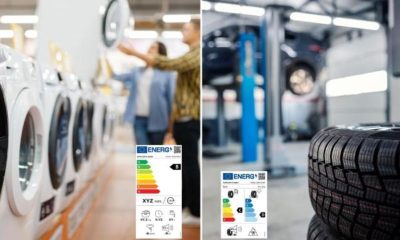
Commission simplifies and makes energy and tyre labelling rules more accessible to European consumers