Asylum policy
#Migration: Parliament introduces long-term approach towards migration


By Jane Booth
In the midst of the greatest refugee crisis since World War II, the Civil Liberties Committee has proposed a long-term approach on migration.
At a meeting Wednesday (16 March), MEP Roberta Metsola said that while there was no 'quick fix', any future plan needs to be all encompassing — short, medium and long term. This proposal had been met with wide support in the Civil Liberties Committee, as well as cross-partisan support.
Within the first line of the proposal is a call for solidarity amongst the member states. Metsola added that it is a great priority and needs to remain at the forefront when tackling issues relating to migration. MEP Kashetu Kyenge reiterated that point by saying that solidarity is absolutely paramount and member states need to share the responsibilities.
Over 3,000 people have drowned in the Mediterranean since the start of the refugee crisis, and 77 children have died this year alone. It is crucial for the EU to help prevent lose of life at sea, and the proposal calls for a permanent response of search and rescue teams. Metsola acknowledged FRONTEX’s part in saving lives, however feels that it needs to go farther.
“It is meant to ensure integrated border management, and at the external borders, it is a necessity to manage borders with a high level of internal security,” Metsola said.
The refugee crisis has also lead to an increase in illegal activity like human trafficking and smuggling of people. The proposal calls for an end to this.
The proposed approach will dictate a new message regarding relocation. Kyenge said that migrants can apply for asylum in a different member state than the country of which they arrived. The former idea out of the Dublin Convention has put too much pressure on countries such as Italy and Greece.
“The message is clear, we are a union of shared values, and we must now become a union of shared responsibility,” Metsola said.
Metsola and Kyenge both noted that not every refugee is eligible for protection, and they back the European Commission’s list of safe countries of origin. However, those that are eligible deserve to apply for asylum through humanitarian visas or humanitarian admission, and member states need to do what they can to help.
“Integration is a two-way process.” Metsola said. “Those offered protection must be given rights that they are entitled to. Yes, we must do more to keep families together, while at the same time it is also fair that we expect respect for the values upon which our union is built.”
Funding needs to be easier and more accessible to the persons working on the ground. Member states must put up the money to help build capacity in their country such as facilitating investment, education, strengthening and enforcing asylum systems, helping to secure and manage borders and reinforcing the judicial and legal system.
According to Kyenge, it is important for member states to look for gaps in their labour markets to fill with refugees. Amongst the refugees, there are many highly skilled workers to meet those demands.
The new proposal will be voted on at the April plenary sitting in Strasbourg.
“Immigration is a human issue. These are real people with real lives, and we must do better,” Metsola said. “Indifference is not an option, and it is time for action.”
Share this article:
EU Reporter publishes articles from a variety of outside sources which express a wide range of viewpoints. The positions taken in these articles are not necessarily those of EU Reporter. Please see EU Reporter’s full Terms and Conditions of publication for more information EU Reporter embraces artificial intelligence as a tool to enhance journalistic quality, efficiency, and accessibility, while maintaining strict human editorial oversight, ethical standards, and transparency in all AI-assisted content. Please see EU Reporter’s full A.I. Policy for more information.




EU foreign ministers to discuss options for restricting trade with Israeli communities in Judea and Samaria

European operation dismantles €10 million illicit cigarette network in Spain

Srebrenica's lesson is prevention. Why isn't the world applying It to Kashmir?

ALROSA Re-elects Supervisory Board with Minimal Changes

AIFC to host Astana Finance Days 2026 in September

Energy Union Task Force takes stock of oil and gas security of supply in the EU

Joint statement by High Representative/Vice-President Kallas and Commissioner Kos on the 31st anniversary of the Srebrenica genocide

EU launches a Team Gaza Initiative to support early recovery in Gaza with an initial amount of nearly €900 million

Britain’s leadership crisis is a symptom, not the disease

Chinese “leadership and coordination”

Shared commitment to advance EOSC through new EOSC Nodes and EOSC projects

Why young jobseekers struggle to find roles abroad that fit their expertise

Farmers, fair markets and consumers: new report highlights the role of EU competition rules in agriculture

EU and South Africa kick off intergovernmental dialogue on Clean Trade and Investment Partnership

Seveso - 50 years on: EU strengthens its commitment to industrial safety in a changing landscape of risk

Commission opens formal investigation into possible gun jumping in XXXLutz's acquisition of Porta

Kazakhstan reforms under scrutiny at Brussels Press Club round table

Japan should face up to history and contribute more to regional peace

Ambassador calls for 'speeding up' of co-operation between EU and Kazakhstan

Timur Turlov at Smart Moves Summit 2025: How chess can transform global education

Shevtsova’s case: Out-of-court sanctions dismantling trust in Ukrainian cause

The future of European transport

Trump Vs Trueman

US 'no longer' an 'unconditional ally' for Europe - MEP
-
 Israel3 days ago
EU foreign ministers to discuss options for restricting trade with Israeli communities in Judea and Samaria
-
 Cigarettes3 days ago
European operation dismantles €10 million illicit cigarette network in Spain
-
 Kashmir3 days ago
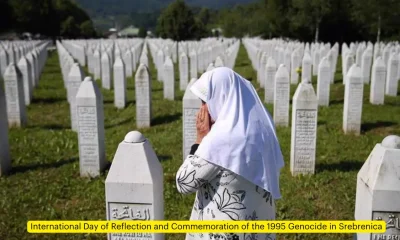
Srebrenica's lesson is prevention. Why isn't the world applying It to Kashmir?
-
 Economy2 days ago
ALROSA Re-elects Supervisory Board with Minimal Changes