Africa
#EUEmergencyTrustFundForAfrica - New assistance package to support vulnerable groups and address COVID-19 in North Africa


The European Commission has adopted, through the EU Emergency Trust Fund for Africa (EUTF), a new assistance package for North Africa to protect migrants, stabilise local communities and respond to COVID-19. This package includes €80 million in new funds in support to Libya and Tunisia, as well as €30m reallocated from non-contracted actions under the North of Africa window of the EUTF. In line with the Joint Communication on the global EU response to COVID-19, this new funding will strengthen the immediate response capacity and reinforce the health systems and services in the North African partner countries.
It will also mitigate the socio-economic impact of the crisis, as well as allow for the continuation of actions to protect refugees and migrants. Commissioner for Neighbourhood and Enlargement, Olivér Várhelyi, said: “With today's substantial and targeted assistance package we are responding to the urgent needs to fight the COVID-19 crisis and address the needs of some of the most vulnerable groups in North Africa, in particular refugees, migrants and displaced persons. In Libya, while the armed conflict continues, the EU Emergency Trust Fund for Africa has already supported over 200,000 beneficiaries with hygiene kits and medical assistance and over 1.7 million people now have better access to basic services in local communities, thanks to the renovation of health centres.”
With this adoption, the EUTF now funds 39 programmes in North Africa amounting to €888m. More information can be found in the press release and in the EU Emergency Trust Fund for Africa website.
Share this article:
EU Reporter publishes articles from a variety of outside sources which express a wide range of viewpoints. The positions taken in these articles are not necessarily those of EU Reporter. Please see EU Reporter’s full Terms and Conditions of publication for more information EU Reporter embraces artificial intelligence as a tool to enhance journalistic quality, efficiency, and accessibility, while maintaining strict human editorial oversight, ethical standards, and transparency in all AI-assisted content. Please see EU Reporter’s full A.I. Policy for more information.



Security realignment inevitable in Middle East after Netanyahu-Trump's war

Better enforcement of passenger rights: New EU agreement strengthens protection across all modes of transport

EU deploys emergency assistance to Venezuela following earthquakes

The Third International Maqom Art Forum and the New Uzbekistan

Shen Yun - The Abuses and Human Rights Violations

EU steps up support for Ukraine's defence, recovery and reconstruction at the Ukraine Recovery Conference 2026

Dismantling 'high walls' for a shared European-Asian future

Bangladeshis waking up to reality of Yunus government

Solana Company Partners with Kazakhstan on $6B Alatau Crypto Megacity

Astana's congress of world religions: A global platform for dialogue in an age of division

How Schuman lost Its way

Rating of American Express casino sites in the UK

PMI defends AI consultation tool as scrutiny grows over EU tobacco rules review

Civil society from across the EU gathers in Cork to reinforce Europe’s sustainability agenda

The Iran war changed Pakistan's strategic value, not its political trajectory

Democracy cannot be selective: Why Europe must apply the same standards abroad that it demands at home

Kazakhstan reforms under scrutiny at Brussels Press Club round table

Japan should face up to history and contribute more to regional peace

Ambassador calls for 'speeding up' of co-operation between EU and Kazakhstan

Timur Turlov at Smart Moves Summit 2025: How chess can transform global education

Shevtsova’s case: Out-of-court sanctions dismantling trust in Ukrainian cause

The future of European transport

Trump Vs Trueman

US 'no longer' an 'unconditional ally' for Europe - MEP
-
 Middle East4 days ago
Security realignment inevitable in Middle East after Netanyahu-Trump's war
-
 Transport4 days ago
Better enforcement of passenger rights: New EU agreement strengthens protection across all modes of transport
-
 Earthquake4 days ago
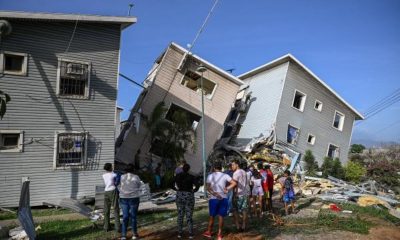
EU deploys emergency assistance to Venezuela following earthquakes
-
 Uzbekistan5 days ago
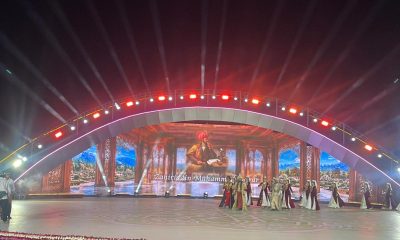
The Third International Maqom Art Forum and the New Uzbekistan