Kazakhstan
Astana's Congress of World Religions: A Global Platform for Dialogue in an Age of Division

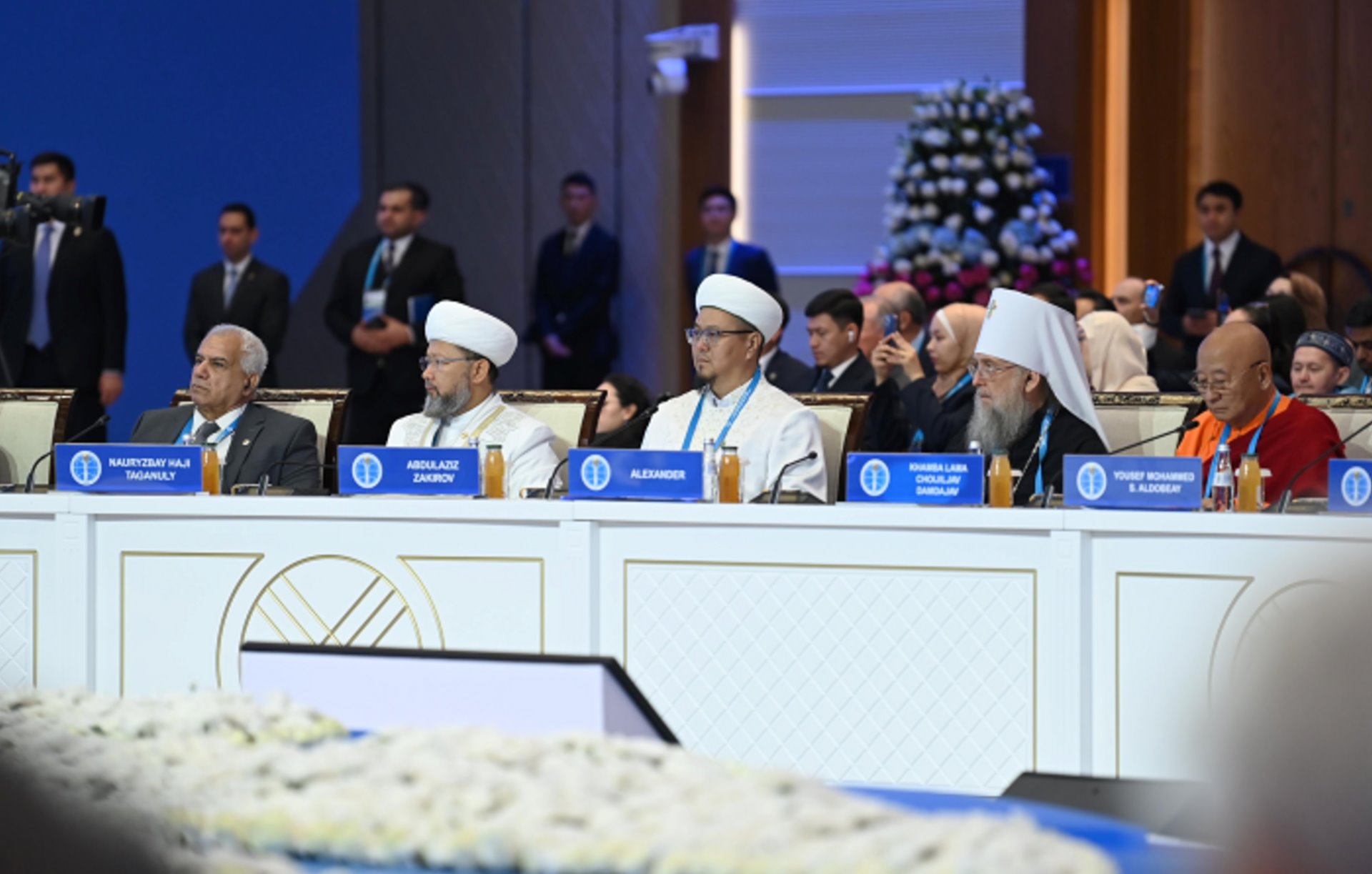
At a time when religious tensions, geopolitical conflicts and cultural misunderstandings continue to challenge international stability, Kazakhstan's Congress of Leaders of World and Traditional Religions has emerged as one of the world's most significant platforms for interfaith dialogue and global understanding.
Founded in 2003 at the initiative of Kazakhstan's First President, Nursultan Nazarbayev, the Congress was conceived in the aftermath of growing global concerns about extremism, religious intolerance and the perceived "clash of civilizations". More than two decades later, the initiative has evolved into a respected international institution bringing together religious leaders, politicians, academics and civil society representatives from across the world.
The idea was first proposed by President Nazarbayev during an international conference on peace and concord held in February 2003. Representatives of Christianity, Islam and Judaism gathered to discuss ways to strengthen cooperation among faiths and cultures. Support quickly followed from the Vatican and other major religious institutions, leading to the first Congress being convened in Astana on 23-24 September 2003.
Building Bridges Between Faiths
The Congress was established with a clear mission: to identify the common human values shared by the world's religions and to create a permanent international mechanism for dialogue among faith communities. Since its inception, it has promoted peace, tolerance, mutual respect and understanding among different religions, nations and ethnic groups.
The organisers have consistently emphasised that religion should serve as a force for reconciliation rather than division. The Congress seeks to prevent the misuse of religious beliefs to incite conflict and hostility, while encouraging cooperation among faith leaders in addressing global challenges.
Over the years, the forum has expanded beyond religious representatives to include scholars, youth organisations, media professionals and cultural figures. This broader participation reflects a recognition that dialogue among civilizations must involve all sectors of society if it is to have a lasting impact.
Kazakhstan's Unique Role
Kazakhstan occupies a distinctive position at the crossroads of Europe and Asia, with a long history of coexistence among different ethnic and religious communities. The country's leadership has frequently highlighted this multicultural heritage as the foundation for its efforts to promote international dialogue.
Today, the Congress is recognised as one of the leading interreligious forums in the world. According to Congress organisers, representatives from more than 50 countries and major world religions have participated in its activities, creating a rare platform where leaders of Christianity, Islam, Judaism, Buddhism, Hinduism and other faiths can engage directly with one another.
The Congress has also established a permanent institutional structure, enabling ongoing cooperation between sessions and helping to develop initiatives aimed at strengthening global interfaith understanding.
European Participation
European religious institutions have played an important role in the Congress from the beginning. The Holy See was among the earliest supporters of the initiative, and Vatican representatives have regularly participated in Congress meetings.
Belgium's involvement has largely come through religious and interfaith organisations rather than official governmental delegations. Among those associated with European interfaith initiatives is Chief Rabbi Albert Guigui of Brussels, a respected figure within Belgium's Jewish community and an active participant in dialogue among religions. While publicly available information does not definitively confirm his participation in plenary Congress sessions, his profile reflects the type of religious leadership that the forum seeks to engage.
Belgian Catholic representatives have likewise been involved through broader Vatican and European episcopal structures that have supported Kazakhstan's efforts to foster interreligious understanding.
Relevance in a Changing World
The significance of the Congress has arguably increased as international tensions have become more complex. From conflicts in the Middle East and Ukraine to rising concerns about extremism, social polarisation and religious intolerance, the need for dialogue across faiths and cultures remains pressing.
The Congress's central message—that peace, mutual respect and cooperation must prevail over division and confrontation—resonates far beyond religious communities. Its work reflects a broader diplomatic effort to encourage understanding among civilizations at a time when global challenges increasingly require collective solutions.
As the international community searches for ways to bridge growing divides, Astana's Congress of Leaders of World and Traditional Religions continues to demonstrate how dialogue can serve as a powerful instrument of peace, helping to build trust among peoples, cultures and nations.
For Europe and the wider international community, the Congress offers an important reminder that despite differences of belief and tradition, common human values remain a foundation upon which lasting cooperation can be built.
Share this article:
EU Reporter publishes articles from a variety of outside sources which express a wide range of viewpoints. The positions taken in these articles are not necessarily those of EU Reporter. Please see EU Reporter’s full Terms and Conditions of publication for more information EU Reporter embraces artificial intelligence as a tool to enhance journalistic quality, efficiency, and accessibility, while maintaining strict human editorial oversight, ethical standards, and transparency in all AI-assisted content. Please see EU Reporter’s full A.I. Policy for more information.



Security realignment inevitable in Middle East after Netanyahu-Trump's war

Better enforcement of passenger rights: New EU agreement strengthens protection across all modes of transport

EU deploys emergency assistance to Venezuela following earthquakes

The Third International Maqom Art Forum and the New Uzbekistan

Shen Yun - The Abuses and Human Rights Violations

EU steps up support for Ukraine's defence, recovery and reconstruction at the Ukraine Recovery Conference 2026

Bangladeshis waking up to reality of Yunus government

Dismantling 'high walls' for a shared European-Asian future

Astana's Congress of World Religions: A Global Platform for Dialogue in an Age of Division

How Schuman Lost Its Way

Rating of American Express Casino Sites in the UK

PMI Defends AI Consultation Tool as Scrutiny Grows Over EU Tobacco Rules Review

Civil society from across the EU gathers in Cork to reinforce Europe’s sustainability agenda

The Iran war changed Pakistan's strategic value, not its political trajectory

Democracy cannot be selective: Why Europe must apply the same standards abroad that it demands at home

EU policy toward Azerbaijan: Why Brussels must move beyond political dialogue

Kazakhstan reforms under scrutiny at Brussels Press Club round table

Japan should face up to history and contribute more to regional peace

Ambassador calls for 'speeding up' of co-operation between EU and Kazakhstan

Timur Turlov at Smart Moves Summit 2025: How chess can transform global education

Shevtsova’s case: Out-of-court sanctions dismantling trust in Ukrainian cause

The future of European transport

Trump Vs Trueman

US 'no longer' an 'unconditional ally' for Europe - MEP
-
 Middle East4 days ago
Security realignment inevitable in Middle East after Netanyahu-Trump's war
-
 Transport4 days ago
Better enforcement of passenger rights: New EU agreement strengthens protection across all modes of transport
-
 Earthquake4 days ago
EU deploys emergency assistance to Venezuela following earthquakes
-
 Uzbekistan5 days ago
The Third International Maqom Art Forum and the New Uzbekistan