Africa
EU provides humanitarian aid and experts to support the fight against mpox in Burundi and the Democratic Republic of Congo

In response to the transmission of mpox cases from the Democratic Republic of Congo (DRC) to neighbouring countries, the European Commission is providing additional humanitarian funding to help the Burundian Red Cross prepare for and respond to the mpox outbreak. The €200,000 funding will support disease surveillance and case detection, water and sanitation activities, and health and hygiene promotion at community level.
This support comes on top of the €1 million in humanitarian aid already announced this year by Commissioner for Crisis Management Janez Lenarčič to support smallpox prevention in refugee camps and among host populations around Goma.
The EU is already providing up to €100m in humanitarian aid in 2024 inside the DRC, covering multiple areas of assistance, such as food assistance and nutrition, shelter, protection, healthcare as well as measures to improve water, sanitation and hygiene conditions.
In addition, in cooperation with the European Centre for Disease Prevention and Control (ECDC), two Commission epidemiologists are deployed in the DRC, which is the epicentre of this outbreak with 92% of the total cases in the Africa region.
This support follows the Commission's agreement to purchase and donate 215,420 doses of MPOX vaccine to African countries, as an immediate response to the outbreak in Africa. The Commission's Health Emergency Preparedness and Response Authority (HERA) also announced a €3.5m grant to improve access to MPOX diagnostics and sequencing in the region.
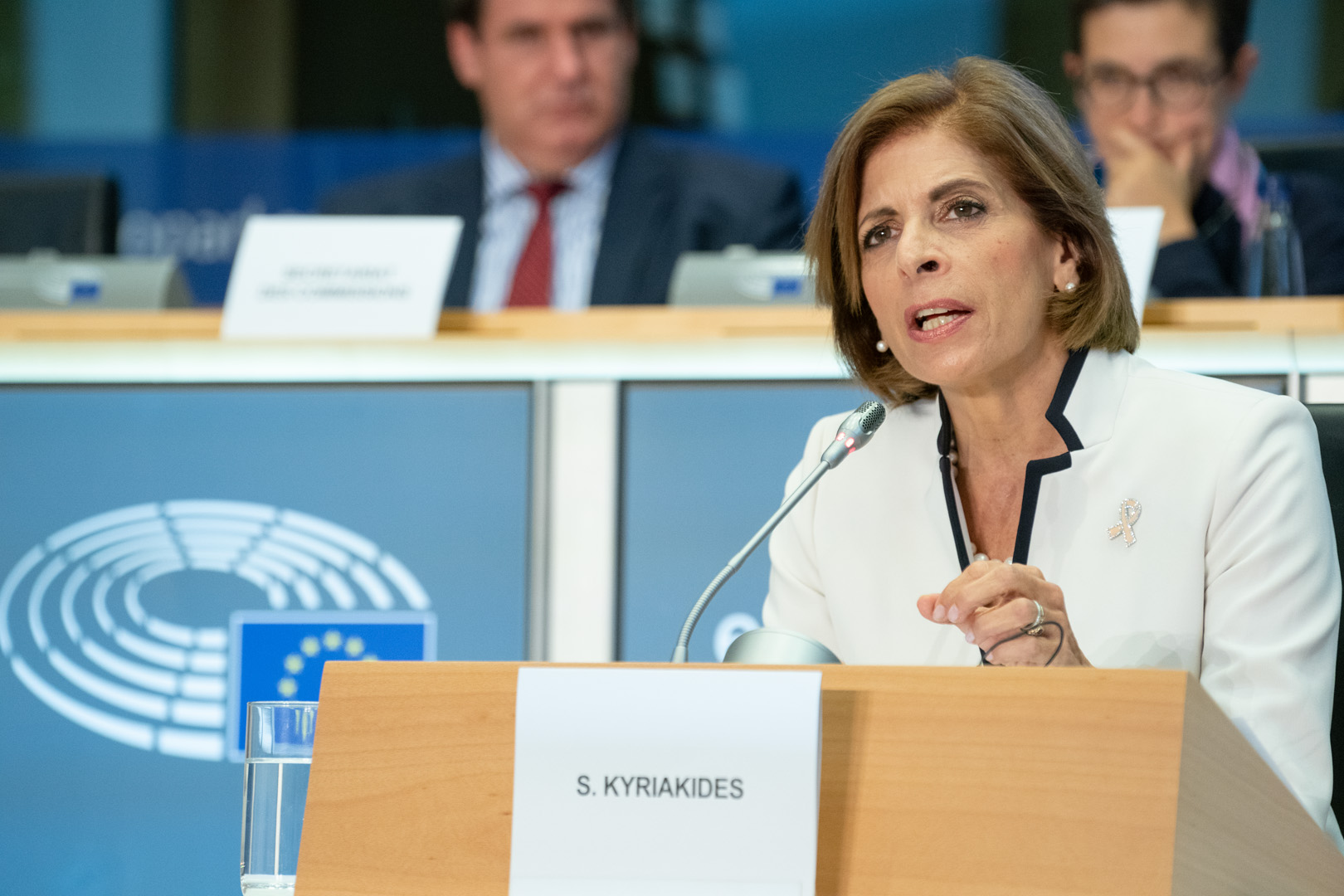
Health and Food Safety Commissioner Stella Kyriakides (pictured) also contacted EU health ministers on plans to donate vaccines and treatments. She stressed the need for coordination and underlined the importance of solidarity in tackling global health threats, as well as the Commission's willingness to coordinate bilateral donations.
Share this article:
EU Reporter publishes articles from a variety of outside sources which express a wide range of viewpoints. The positions taken in these articles are not necessarily those of EU Reporter. Please see EU Reporter’s full Terms and Conditions of publication for more information EU Reporter embraces artificial intelligence as a tool to enhance journalistic quality, efficiency, and accessibility, while maintaining strict human editorial oversight, ethical standards, and transparency in all AI-assisted content. Please see EU Reporter’s full A.I. Policy for more information.



Kashmir's 9,765 missing women and girls demand international attention

New EU strategy must help farmers move toward a more humane food system

EU foreign ministers to discuss options for restricting trade with Israeli communities in Judea and Samaria

Srebrenica's lesson is prevention. Why isn't the world applying It to Kashmir?

EU-Mexico: While others build walls, Europe builds bridges

Europe's Cloud moment: The DMA must now deliver

European operation dismantles €10 million illicit cigarette network in Spain

Survey of city economic experts: Cities are driving Draghi’s competitiveness agenda, but need EU recognition to scale action

EU weighs age-13 limit for 'social media plus'

ALROSA Re-elects Supervisory Board with Minimal Changes

Public consultation on Joint Undertakings, Art. 185 initiatives, and thematic priorities for European Partnerships under Horizon Europe 28-34

Poland sees new research and changes to policies on migrant integration

EU launches a Team Gaza Initiative to support early recovery in Gaza with an initial amount of nearly €900 million

NESBp: Strengthening maritime spatial planning across the North Sea and Baltic Sea

Energy Union Task Force takes stock of oil and gas security of supply in the EU

AIFC to host Astana Finance Days 2026 in September

Kazakhstan reforms under scrutiny at Brussels Press Club round table

Japan should face up to history and contribute more to regional peace

Ambassador calls for 'speeding up' of co-operation between EU and Kazakhstan

Timur Turlov at Smart Moves Summit 2025: How chess can transform global education

Shevtsova’s case: Out-of-court sanctions dismantling trust in Ukrainian cause

The future of European transport

Trump Vs Trueman

US 'no longer' an 'unconditional ally' for Europe - MEP
-
 Kashmir4 days ago
Kashmir's 9,765 missing women and girls demand international attention
-
 Animal welfare4 days ago
New EU strategy must help farmers move toward a more humane food system
-
 Israel2 days ago
EU foreign ministers to discuss options for restricting trade with Israeli communities in Judea and Samaria
-
 Kashmir1 day ago
Srebrenica's lesson is prevention. Why isn't the world applying It to Kashmir?