Azerbaijan
What makes the Zangezur Corridor essential for regional energy integration?

As the world grapples with energy security concerns and seeks to diversify supply routes, the Zangezur Corridor represents far more than a mere infrastructure project. It embodies the convergence of geopolitical ambitions, economic necessities, and strategic imperatives that define 21st-century energy diplomacy - writes Aytac Mahammadova, a researcher specializing in energy security and international relations
But what is its uniqueness in comparison with other energy routes? What new opportunities does this project open up for the countries of the region and Europe? The answers to these questions are essential for understanding the significance of the Zangezur Corridor in the context of energy security and for evaluating its contribution to diversifying routes and enhancing the resilience of both regional and European energy systems.
The uniqueness of the Zangezur Corridor compared to other energy routes lies in its strategic geopolitical position, multifaceted infrastructure design, and the new regional and European opportunities it unlocks. The Zangezur Corridor is uniquely positioned to become the shortest land transport corridor linking the Caspian region, Turkey, and Europe via Azerbaijan. Beyond its physical function, the corridor carries symbolic weight as a post-conflict initiative that can transform regional rivalries into avenues of cooperation, while simultaneously creating a new platform for integrating traditional hydrocarbons with emerging renewable energy projects.
From an energy perspective, this uniqueness translates into a role that goes well beyond transportation. The South Caucasus has long served as a crucial energy bridge between the resource-rich Caspian Basin and European markets hungry for diversified energy supplies. The existing Southern Gas Corridor, anchored by the Trans-Anatolian Pipeline (TANAP) and Trans-Adriatic Pipeline (TAP), has already demonstrated the region's potential as an energy transit hub. The Zangezur corridor could significantly enhance this role, providing additional redundancy and capacity for energy flows while reducing dependence on routes that traverse potentially unstable regions.
At the same time, it is important to emphasize that the Zangezur Corridor will not replace any of the existing pipelines such as the South Caucasus gas pipeline, but would complement it, strengthening and expanding the existing energy infrastructure of the region. The creation of an additional pipeline artery will turn the current vulnerable configuration into a stable two-route architecture.
Of cource, there are other energy transportation routes in Eurasia, but they can not completely replace the potential of the Zangezur Corridor. And there are two reasons for it. Firstly, alternative routes are often much longer, which increases transportation costs and delivery time. The creation of the Zangezur corridor will significantly reduce transportation costs, reduce delivery time, and reduce operational risks.
Secondly, the current complexicity of geopolitical situation and ongoing sanctions against Russia make traditional routes vulnerable and prone to disruption. In this context, the Zangezur Corridor offers a relatively more reliable, compact and politically acceptable option for energy supply diversification, creating an alternative route that can increase the sustainability of the entire European energy supply system. Thus, despite the existence of several routes, the Zangezur Corridor promises to become an efficient and strategically important addition to the region's energy infrastructure.
Moreover, the significance of the Zangezur Corridor goes far beyond the national interests of Azerbaijan. While Azerbaijan will undoubtedly benefit from strengthened status as a key energy supplier and major transit hub, with accompanying transit revenues and infrastructure development, the corridor's true significance lies in its capacity to benefit numerous countries throughout the region.
For Türkiye, the corridor represents a key component of its broader strategy to strengthen ties with Turkic nations and position itself as a crucial energy hub between East and West. According to Türkiye’s President Erdoğan, the corridor is both a geopolitical and geoeconomic breakthrough, forming a critical component of the Middle Corridor, a trade and transport route linking Europe and China through Türkiye, the South Caucasus, and Central Asia. Erdoğan stressed the importance of adapting to new realities in a rapidly changing world and suggested that the corridor could serve as a rare example of successful post-conflict reconstruction and cooperation, marking a significant step toward deeper regional connectivity and economic growth within the Turkic world and Eurasia at large.
For Europe, the Zangezur corridor represents another crucial step toward the critical goal of energy supply diversification. The European Union's strategy of reducing dependence on Russian energy supplies has intensified focus on alternative sources and routes. The corridor could enhance the capacity and reliability of the Southern Gas Corridor, potentially allowing for increased volumes of Caspian and Central Asian energy to reach European markets. The timing of the corridor's potential development coincides with Europe's urgent need to replace traditional energy supplies with more secure and diversified sources.
As for the Central Asian countries, such as Kazakhstan, Turkmenistan, and Uzbekistan, today they mainly export energy resources via routes through Russia, China, and Iran. These routes are often characterized by complex logistics, high transit costs, and political vulnerability, especially in the face of sanctions and geopolitical instability. In this context, the Zangezur Corridor may offer Central Asian countries an important additional energy transit corridor, allowing to increase the economic efficiency of exports and reduce energy transportation costs.
Even Armenia could theoretically benefit economically. If political agreements will be realized, Armenia’s active participation or even passive provision of transit would provide revenue from the use of infrastructure, stimulate cross-border trade and open-up new opportunities for regional economic integration.
In conclusion, answering the question «What Makes the Zangezur Corridor Essential for Regional Energy Integration?» we can underline that in an era of growing energy security challenges and geopolitical tensions, the Zangezur Corridor stands as an essential catalyst for regional energy integration, offering a unique combination of strategic positioning, infrastructure complementarity, and multi-national benefits. Its successful development promises to strengthen energy security for multiple partners, reduce regional isolation, and create new opportunities for cooperation and integration across Eurasia. When achieved, this corridor will not only revolutionize regional energy flows but also establish a new paradigm for post-conflict reconstruction and regional cooperation in the 21st century.
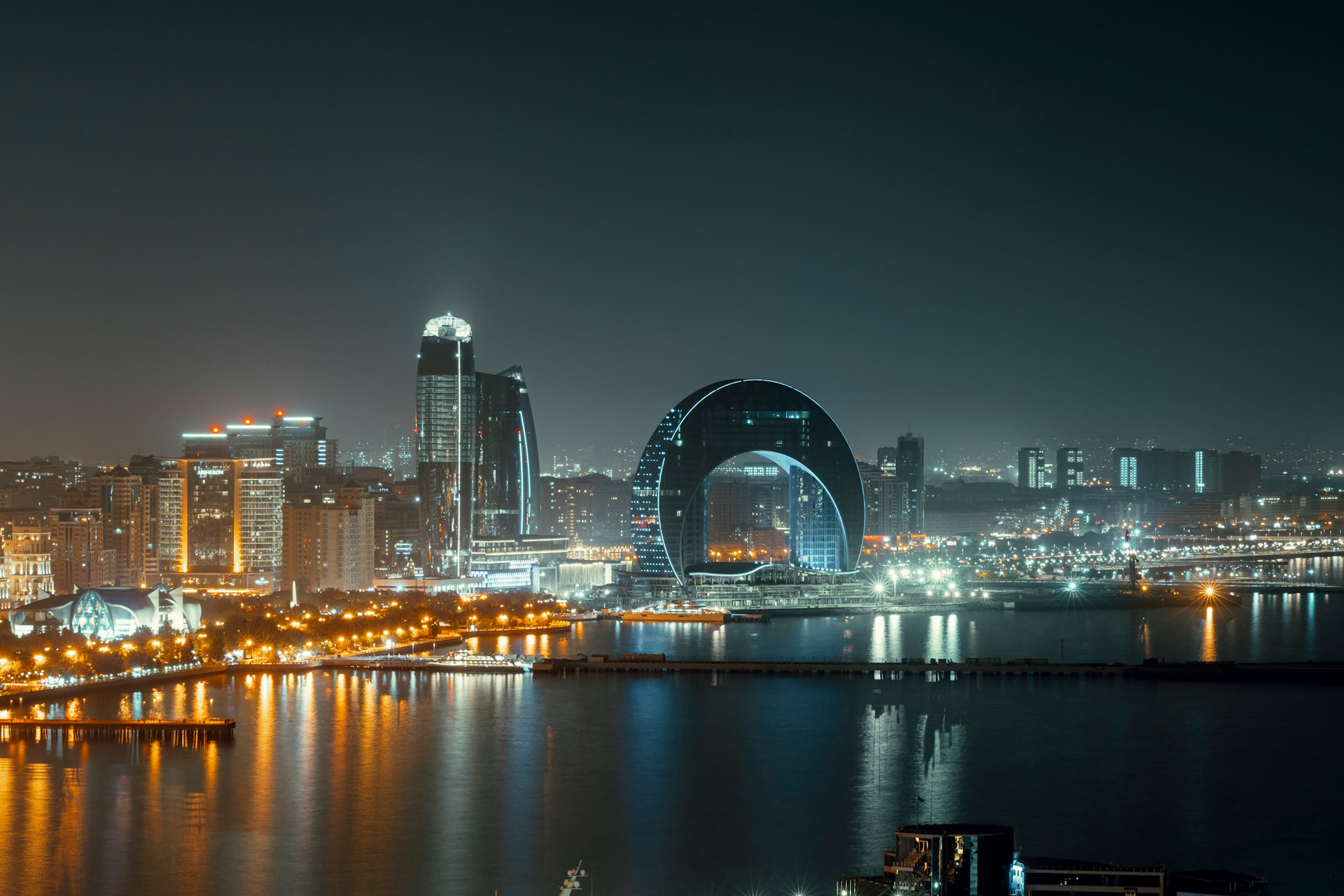
Photo by Farid Salimov on Unsplash
Share this article:

EU Reporter publishes articles from a variety of outside sources which express a wide range of viewpoints. The positions taken in these articles are not necessarily those of EU Reporter. Please see EU Reporter’s full Terms and Conditions of publication for more information EU Reporter embraces artificial intelligence as a tool to enhance journalistic quality, efficiency, and accessibility, while maintaining strict human editorial oversight, ethical standards, and transparency in all AI-assisted content. Please see EU Reporter’s full A.I. Policy for more information.



Astana's congress of world religions: A global platform for dialogue in an age of division

Protect children from online sexual abuse: Call for urgent negotiations and permanent solution

Solana company partners with Kazakhstan on $6B Alatau Crypto Megacity

Will the Gulf monarchies rise above internecine disputes in the interest of collective security?

Europe must double down on nuclear progress to achieve its long-term ambitions

International Plastic Bag Free Day – from single use to reuse

Study: Europe's defense runs on American servers

Commission proposes five joint defence projects to strengthen Europe's industrial capabilities

Safer cars, safer roads: New rules take effect

Survey of city economic experts: Cities are driving Draghi’s competitiveness agenda, but need EU recognition to scale action

Europe's Cloud moment: The DMA must now deliver

EU-Mexico: While others build walls, Europe builds bridges

New EU strategy must help farmers move toward a more humane food system

Kashmir's 9,765 missing women and girls demand international attention

Quarterly reports show a surge in solar energy and e-vehicles, with record highs in 2025

EU deploys wildfire support to face multiple fires across Portugal and France

Kazakhstan reforms under scrutiny at Brussels Press Club round table

Japan should face up to history and contribute more to regional peace

Ambassador calls for 'speeding up' of co-operation between EU and Kazakhstan

Timur Turlov at Smart Moves Summit 2025: How chess can transform global education

Shevtsova’s case: Out-of-court sanctions dismantling trust in Ukrainian cause

The future of European transport

Trump Vs Trueman

US 'no longer' an 'unconditional ally' for Europe - MEP
-
 Kazakhstan4 days ago
Astana's congress of world religions: A global platform for dialogue in an age of division
-
 Child sexual abuse4 days ago
Protect children from online sexual abuse: Call for urgent negotiations and permanent solution
-
 Kazakhstan4 days ago
Solana company partners with Kazakhstan on $6B Alatau Crypto Megacity
-
 Iran4 days ago
Will the Gulf monarchies rise above internecine disputes in the interest of collective security?