Georgia
Georgia demands re-elections

This is how the situation in the country looks a week after the stolen ‘elections’. There is no longer any doubt that they were stolen - the courts have begun to cancel the election results at individual polling stations in batches. The first reports of systemic fraud with the help of electronic ballot counting devices have already appeared. And if at first the opposition demanded a recount at certain polling stations, now the information about the scale of the abuse gives a clear signal: the election will have to be held again.
In fact, the attack on the elections in Georgia came from two directions. On the one hand, Russian forces conducted a months-long propaganda campaign to intimidate Georgian citizens. They were put in front of a false choice: “either you vote for Moscow's puppets, or there will be another war, bigger than the previous ones, like the one in Ukraine.” Of course, this affected the mood of many, but it did not break the Georgian people. People were ready to vote for the European path and freedom from the Russian regime, no matter what. But on the other hand, the pro-Moscow ruling party decided to play it safe and rigged the election.
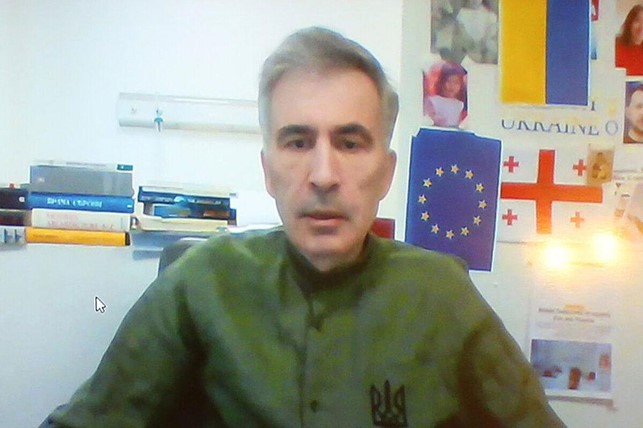
As Mikheil Saakashvili said on his Facebook page, the country is on the brink of destruction, so it's either/or: “We all have to realize that not only the elections were stolen in Georgia, but a dictatorship was established, which is now waiting for Georgians to enter the 'new reality' and then plans to finally end the remaining freedoms and carry out mass repressions. A major ethnic cleansing of Georgia is also being prepared.”
How they stole the votes
So, if the voting had been held without direct fraud, the results would have been close to the figures shown by exit polls, which indicate that the Georgian Dream would have received no more than 42% of the vote, and therefore the opposition would have been leading with a result of no worse than 56%. But the official, or falsified, results showed diametrically opposite figures: 53.9% for the pro-Moscow ruling party Georgian Dream, while a group of opposition parties received less than 40% of the vote. In particular, the Coalition of Changes gained only 11.04%, according to official, i.e. falsified, data, Unity - National Movement - 10.17%, Strong Georgia - 8.8%, and Gakharia for Georgia - 7.8%.
International observers issued harsh statements about violations, and they recorded such cynical actions as voter intimidation and the use of administrative resources. And the European Commission stated that the elections were held in violation of the secrecy of the vote and a number of procedures.
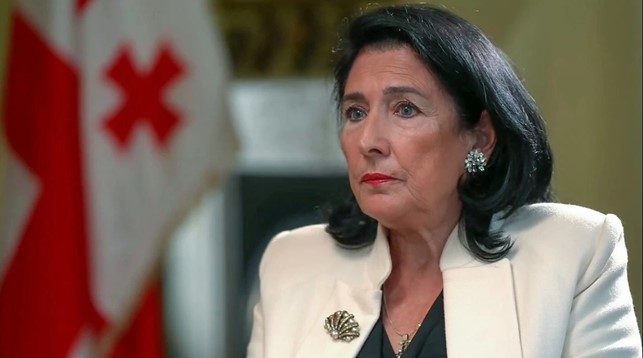
The opposition immediately reacted and began fighting to save the country's democracy. On the day after the vote, President Salome Zurabishvili called the events during the parliamentary elections a new form of hybrid warfare by the Russian Federation, which was tested on the Georgian people. Of course, she did not recognize the official results of the vote, calling them fraudulent. On October 28, large-scale protests took place in Tbilisi. Zurabishvili spoke at the main rally that day. It was then that the opposition first demanded that the elections be held again. The four opposition parties, which, despite the fraud, still overcame the five percent threshold, collectively did not recognize the legitimacy of the new parliament
Now - towards victory
The only peaceful way to turn the tide is through total re-elections under the close supervision of the international community to prevent Russia from influencing the will of the Georgian people.
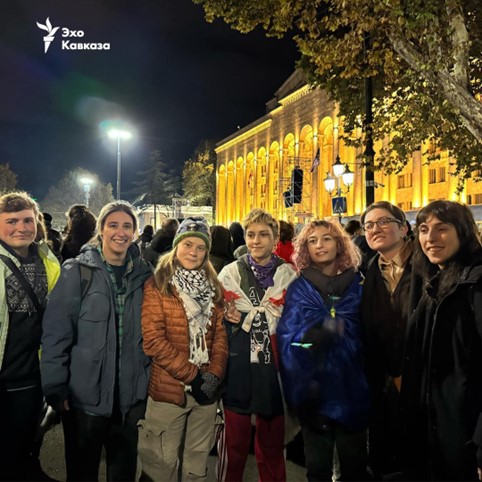
On November 4, demonstrations and rallies have already begun in Tbilisi. Protesters against election fraud marched through the city. The rally ended on Marjanishvili Square after participants, including Swedish activist Greta Thunberg, gathered near the House of Justice and marched about 5 kilometers through the streets of Tbilisi, waving Georgian flags and flags of the European Union and Ukraine.
“I am here to support the struggle for democracy and freedom of the Georgian people, who have stood up again and again against the repression they face from the state,” Greta Thunberg said. Her presence sent a loud signal not so much to the outside world. After all, the EU and other democratic countries clearly understand that the elections in Georgia were indeed stolen by Moscow as a result of powerful hybrid interference. Thunberg's presence also sent a clear message to the pro-Moscow ruling party that force should not be used against the opposition.
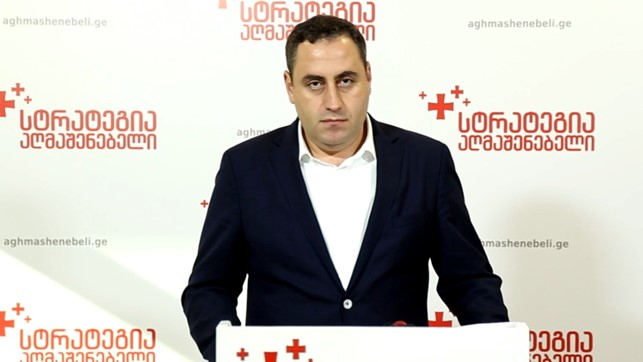
“This is the most important day. We demand new elections and we will not accept the stealing of elections by the Georgian Dream, which has already been confirmed,” Giorgi Vashadze, one of the leaders of the opposition Unity – National Movement, told reporters on the eve of the rally.
Where does this confidence come from? It is not just that there were a lot of reports from observers about blatant violations. In the week since the election, some of these violations have been addressed by the courts. In particular, the court of Tetritskaro (60 kilometers southwest of Tbilisi) invalidated the results at 30 polling stations in Tetritskaro and Tsalka, where voting was conducted with electronic vote counting.
The voting procedure there was organized in such a way that unauthorized persons could see which party a particular voter voted for. That is, it was not only about falsifying the count as such, but also about direct pressure on voters because secrecy of the vote was destroyed.
Of course, the Central Election Commission, which is controlled by the ruling party, will appeal these decisions, but the ice has broken - it is no longer possible to pretend that the voting violations were sporadic, that is, not systemic. On the contrary, it has already been established in court that the violations were massive and systemic.
There is also a very interesting figure: 3,111 polling stations worked in Georgia on election day, of which 2,263 were equipped with electronic voting systems. After court decisions to cancel the results at such polling stations, the opposition and local human rights organizations are now quite reasonably demanding that the results at 2263 of the 3111 polling stations be canceled. This actually means new elections.
The opposition is preparing for an active struggle, as evidenced by Mikheil Saakashvili's appeals, which he was able to post on Facebook: “We have little time. Of course, we need patience, but more than patience we need aggressive resistance against the de facto dictatorship. We need to fight as long as we can, and then as long as we need to!”
It is not for nothing that Ukrainian flags are present at the rallies in Georgia - they are well aware of the experience of Ukrainians who peacefully defended their choice in 2004 and pressured the authorities to hold repeat elections.
Tamaz Somkhishvili, a philanthropist and prominent member of the Georgian diaspora in the UK, believes that the Georgian people have the right to broad support from democratic countries in their opposition to Moscow's hybrid interference in Georgia's elections. With the clock ticking toward the restoration of the Russian empire, the free world must effectively resist revenge of authoritarianism.
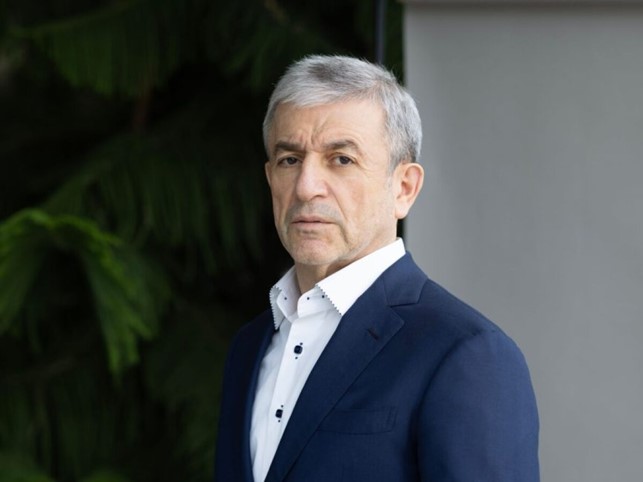
The West must support Georgia in its resistance to pro-Russian forces, not only in words but also by putting concrete pressure on the authorities, as it did during the Maidan in Ukraine in 2004. Back then, the Ukrainian people, with the support of the democratic world, were able to overthrow Russia's protege Yanukovych and finally embark on the path of democracy. Georgia also deserves this chance.
Share this article:
EU Reporter publishes articles from a variety of outside sources which express a wide range of viewpoints. The positions taken in these articles are not necessarily those of EU Reporter. Please see EU Reporter’s full Terms and Conditions of publication for more information EU Reporter embraces artificial intelligence as a tool to enhance journalistic quality, efficiency, and accessibility, while maintaining strict human editorial oversight, ethical standards, and transparency in all AI-assisted content. Please see EU Reporter’s full A.I. Policy for more information.



European operation dismantles €10 million illicit cigarette network in Spain

Energy Union Task Force takes stock of oil and gas security of supply in the EU

Srebrenica's lesson is prevention. Why isn't the world applying It to Kashmir?

AIFC to host Astana Finance Days 2026 in September

ALROSA Re-elects Supervisory Board with Minimal Changes

EU launches a Team Gaza Initiative to support early recovery in Gaza with an initial amount of nearly €900 million

EU clarifies rules to allow continued waste recovery shipments to Switzerland

Joint statement by High Representative/Vice-President Kallas and Commissioner Kos on the 31st anniversary of the Srebrenica genocide

Starmer’s problem? 'He is not a politician'

Why a Brussels–Nicosia–Eastern Mediterranean strategic affairs platform would benefit the European Union

Albania's Vlora airport standoff tests investor confidence as EU accession clock ticks

ECR MEPs question the European Commission on cardiovascular health and diet promoting the Mediterranean diet as an alternative to ultra-processed foods as key to tackling obesity

Kazakhstan's fixed capital investment tops 9.5 trillion tenge in H1 2026

Commission adopts simpler rules for EU agri-food promotion policy

Commission approves €659 million German state aid for four new semiconductor facilities

EU law on nitrates pollution remains effective, with scope for smarter implementation

Kazakhstan reforms under scrutiny at Brussels Press Club round table

Japan should face up to history and contribute more to regional peace

Ambassador calls for 'speeding up' of co-operation between EU and Kazakhstan

Timur Turlov at Smart Moves Summit 2025: How chess can transform global education

Shevtsova’s case: Out-of-court sanctions dismantling trust in Ukrainian cause

The future of European transport

Trump Vs Trueman

US 'no longer' an 'unconditional ally' for Europe - MEP
-
 Cigarettes5 days ago
European operation dismantles €10 million illicit cigarette network in Spain
-
 Energy market4 days ago
Energy Union Task Force takes stock of oil and gas security of supply in the EU
-
 Kashmir5 days ago
Srebrenica's lesson is prevention. Why isn't the world applying It to Kashmir?
-
 Kazakhstan4 days ago
AIFC to host Astana Finance Days 2026 in September