Disasters
Knee-deep in sewage: German rescuers race to avert health emergency in flood areas


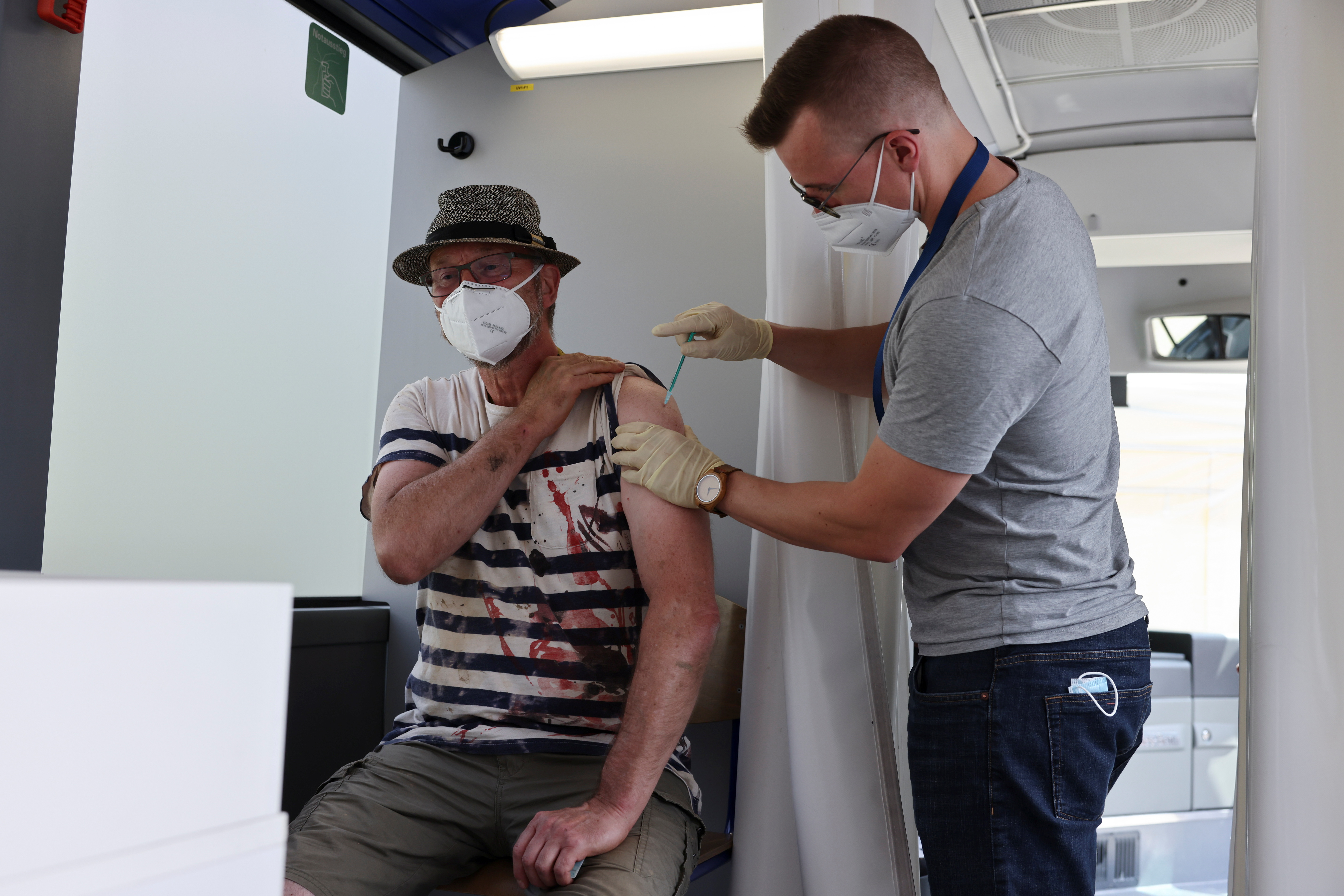
Red Cross volunteers and emergency services in Germany deployed emergency stand-pipes and mobile vaccination vans to flood-devastated regions on Tuesday, attempting to avert a public health emergency, write Reuters TV, Thomas Escritt, Ann-Kathrin Weis and Andi Kranz.
Last week's freak floods killed more than 160 people, and wrecked basic services in the hilly villages of the Ahrweiler district, leaving thousands of residents knee-deep in debris and without sewage or drinking water.
"We have no water, we have no electricity, we have no gas. The toilet can't be flushed," said Ursula Schuch. "Nothing is working. You can't shower...I am nearly 80 years old and I have never experienced anything like it."
Few have, in a prosperous corner of one of the world's richest countries, and that sense of disbelief was widely echoed among residents and aid workers coming to terms with the chaos caused by the floods.
If the clean-up operation does not move swiftly ahead, more disease will come in the floods' wake, just as many had come to believe the coronavirus pandemic was nearly beaten, with rats coming in to feast on the discarded contents of freezers.
Few recovery workers are able to take the kind of anti-infection precautions that are possible in more ordered circumstances, so mobile vaccination plans have come to the region.
"Everything has been destroyed by the water. But not the damn virus," said Olav Kullak, head of vaccine coordination in the region.
"And since the people now have to work side by side and have no chance of obeying any corona rules, we at least have to try to give them the best protection via vaccination."
Share this article:
EU Reporter publishes articles from a variety of outside sources which express a wide range of viewpoints. The positions taken in these articles are not necessarily those of EU Reporter. Please see EU Reporter’s full Terms and Conditions of publication for more information EU Reporter embraces artificial intelligence as a tool to enhance journalistic quality, efficiency, and accessibility, while maintaining strict human editorial oversight, ethical standards, and transparency in all AI-assisted content. Please see EU Reporter’s full A.I. Policy for more information.



EU delivers emergency aid and organises a humanitarian flight in response to earthquakes in Venezuela

European Inventor Award 2026 winners announced: Honouring the innovators shaping tomorrow

High Representative Kallas with Commissioners Kos and Brunner in Türkiye to advance bilateral cooperation

Commission approves new geographical indication from Slovakia

President von der Leyen travels to Azerbaijan and Armenia

Open letter to president of the European Commission on the Schengen Entry/Exit System (EES)

Region Trade Bank strengthens international governance as Iraq's banking sector deepens global engagement

EU policy toward Azerbaijan: Why Brussels must move beyond political dialogue

Kyrgyzstan launches Tamchy SFIT: A new international jurisdiction as a gateway to Eurasia

Kazakhstan’s dombyra: The two-stringed instrument that carries the soul of the steppe

How Schuman lost Its way

Rating of American Express casino sites in the UK

PMI defends AI consultation tool as scrutiny grows over EU tobacco rules review

Civil society from across the EU gathers in Cork to reinforce Europe’s sustainability agenda

The Iran war changed Pakistan's strategic value, not its political trajectory

Democracy cannot be selective: Why Europe must apply the same standards abroad that it demands at home

Kazakhstan reforms under scrutiny at Brussels Press Club round table

Japan should face up to history and contribute more to regional peace

Ambassador calls for 'speeding up' of co-operation between EU and Kazakhstan

Timur Turlov at Smart Moves Summit 2025: How chess can transform global education

Shevtsova’s case: Out-of-court sanctions dismantling trust in Ukrainian cause

The future of European transport

Trump Vs Trueman

US 'no longer' an 'unconditional ally' for Europe - MEP
-
 Venezuela4 days ago
EU delivers emergency aid and organises a humanitarian flight in response to earthquakes in Venezuela
-
 Science3 days ago
European Inventor Award 2026 winners announced: Honouring the innovators shaping tomorrow
-
 European Commission4 days ago
High Representative Kallas with Commissioners Kos and Brunner in Türkiye to advance bilateral cooperation
-
 Protected Geographical Indication (PGI)4 days ago
Commission approves new geographical indication from Slovakia