Humanitarian assistance
Reforming EU humanitarian aid to meet today’s global challenges

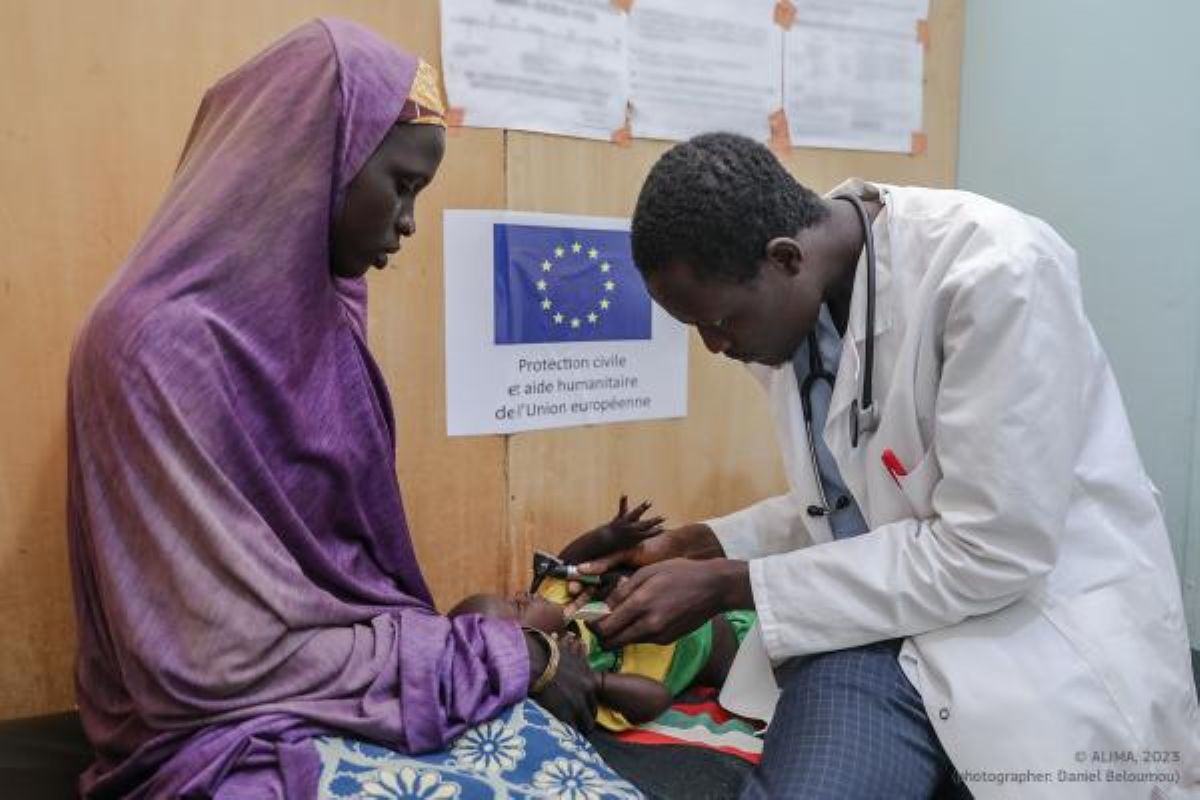
The international humanitarian system is under severe pressure, following the outbreak of conflicts in Gaza, Ukraine and Sudan. Humanitarian needs are at an all-time high in 2026 with 239 million people in need of assistance. Disastrous humanitarian situations coupled with severe funding cuts mean re-prioritising how aid is delivered. To answer the challenges ahead, the European Commission will adapt its way of working to maximise the effectiveness and impact of EU humanitarian aid around the world.
The European Union and EU countries currently provide the largest share of global humanitarian funding. The European Commission alone allocated almost €2 billion for humanitarian aid this year.
The new approach on humanitarian aid sets out concrete solutions to ensure humanitarian aid reaches people in need across the globe. The EU will:
Protect: work more closely with partners to deliver humanitarian help safely, protect aid workers, and ensure support reaches everyone, including through stronger local involvement
Perform: make humanitarian aid more efficient, so support is delivered where it is needed most and makes the best use of EU funds
Partner: team up with more organisations to help communities become more resilient, reduce long-term dependence on aid, and pool resources for greater impact
The EU will continue to provide needs-based, inclusive and non-discriminatory assistance to save lives and preserve human dignity.
For more information
Joint Communication on Humanitarian Aid
Share this article:
EU Reporter publishes articles from a variety of outside sources which express a wide range of viewpoints. The positions taken in these articles are not necessarily those of EU Reporter. Please see EU Reporter’s full Terms and Conditions of publication for more information EU Reporter embraces artificial intelligence as a tool to enhance journalistic quality, efficiency, and accessibility, while maintaining strict human editorial oversight, ethical standards, and transparency in all AI-assisted content. Please see EU Reporter’s full A.I. Policy for more information.



Astana's congress of world religions: A global platform for dialogue in an age of division

Protect children from online sexual abuse: Call for urgent negotiations and permanent solution

Solana company partners with Kazakhstan on $6B Alatau Crypto Megacity

Will the Gulf monarchies rise above internecine disputes in the interest of collective security?

Kazakhstan’s dombyra: The two-stringed instrument that carries the soul of the steppe

Kyrgyzstan launches Tamchy SFIT: A new international jurisdiction as a gateway to Eurasia

Europe must double down on nuclear progress to achieve its long-term ambitions

International Plastic Bag Free Day – from single use to reuse

Friedman Institute and Trends Group at the Italian parliament: Countering the Muslim brotherhood

How hair extensions can transform your look naturally

Deposits to Swiss banks from Bangladeshi nationals nearly tops all time peak

EU agricultural markets remain robust despite uncertainties and rising input costs

Commission report highlights achievements of EU rules on animal health

EU deploys wildfire support to face multiple fires across Portugal and France

Europe’s job market is shifting, and EURES is ready to lead the way into 2030

From a remote island to shelves around the world: The story of Azorean canned fish

Kazakhstan reforms under scrutiny at Brussels Press Club round table

Japan should face up to history and contribute more to regional peace

Ambassador calls for 'speeding up' of co-operation between EU and Kazakhstan

Timur Turlov at Smart Moves Summit 2025: How chess can transform global education

Shevtsova’s case: Out-of-court sanctions dismantling trust in Ukrainian cause

The future of European transport

Trump Vs Trueman

US 'no longer' an 'unconditional ally' for Europe - MEP
-
 Kazakhstan3 days ago
Astana's congress of world religions: A global platform for dialogue in an age of division
-
 Child sexual abuse3 days ago
Protect children from online sexual abuse: Call for urgent negotiations and permanent solution
-
 Kazakhstan3 days ago
Solana company partners with Kazakhstan on $6B Alatau Crypto Megacity
-
 Iran3 days ago
Will the Gulf monarchies rise above internecine disputes in the interest of collective security?