Africa
Rapprochement between Israel and Arab countries set to drive economic growth in MENA

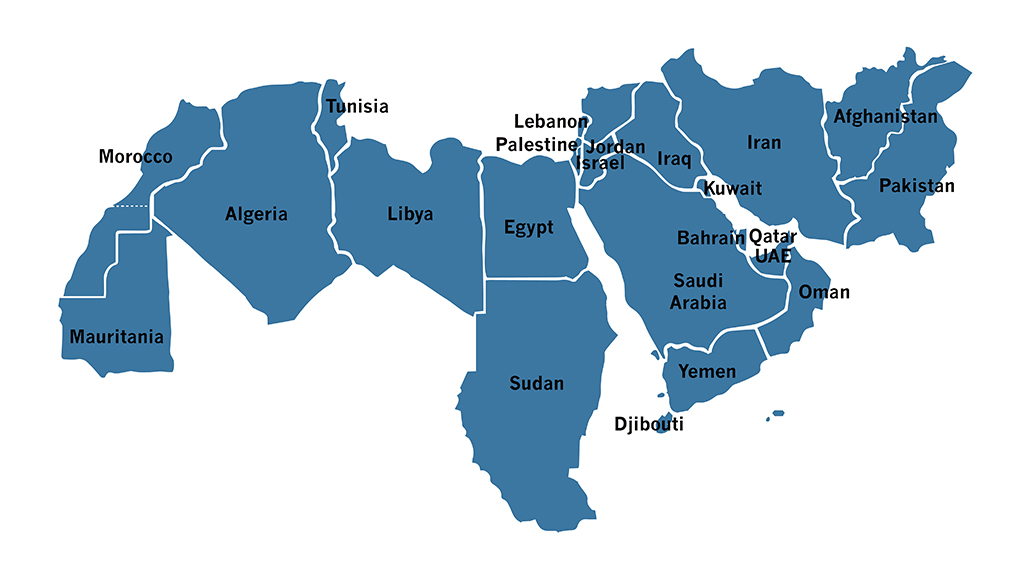
Over the past year, several Arab countries have normalized relations with Israel, marking a significant geopolitical shift in the Middle East and North Africa (MENA) region. While the details of each normalization deal vary, some of them include trade and tax treaties and cooperation in key sectors such as health and energy. Normalization efforts are set to bring countless benefits to the MENA region, boosting economic growth, writes Anna Schneider.
In August 2020, the United Arab Emirates (UAE) became the first Gulf Arab nation to normalize relations with Israel, establishing formal diplomatic, commercial, and security ties with the Jewish state. Shortly after, the Kingdom of Bahrain, Sudan, and Morocco followed suit. Some experts have suggested that other Arab nations, such as Saudi Arabia, may also consider fostering relations with Israel. The string of normalization efforts is historic, as hitherto, only Egypt and Jordan had established official ties with Israel. The agreements are also a major diplomatic win for the United States, which played a critical role in fostering the deals.
Historically, Arab nations and Israel have maintained distant relations, as many were staunch supporters of the Palestinian movement. Now, however, with the growing threat of Iran, some GCC nations and other Arab countries are beginning to lean towards Israel. Iran is investing significant resources in expanding its geopolitical presence by way of its proxies, Hezbollah, Hamas, the Houthis, and others. Indeed, several GCC countries recognize the danger Iran poses to the region’s national security, critical infrastructure, and stability, leading them to side with Israel in an effort to counterbalance Iranian aggression. By normalizing relations with Israel, the GCC can pool resources and coordinate militarily.
Furthermore, the trade agreements featured in the normalization deals allow Arab nations to purchase advanced US military equipment, such as the famed F-16 and F-35 fighter jets. Thus far, Morocco has purchased 25 F-16 fighter jets from the U.S. The U.S. has also agreed to sell 50 F-35 jets to the UAE. Although there are some concerns that this influx of weaponry into the already-unstable MENA region could ignite current conflicts. Some experts believe such advanced military technology could also augment efforts to combat Iran's presence.
Mohammad Fawaz, director of Gulf Policy Research Group, states that “advanced military technology is essential in obstructing Iranian aggression. In today’s military arena, aerial superiority is perhaps the most critical advantage an army can possess. With Iran’s military equipment and weaponry heavily dampened by decades-long sanctions, a formidable airforce will only work to further deter the Iranian regime from escalating provocations.”
The normalization agreements could also enhance cooperation in the health and energy sectors. For example, during the early stages of the COVID-19 pandemic, the UAE and Israel developed technology to monitor and combat the coronavirus. The two nations are also exploring collaboration opportunities in the area of pharmaceuticals and medical research. In June, the UAE and Israel also signed a double taxation treaty, citizens to generate income in both nations without paying double tax. Additionally, Bahrain, the UAE, Israel, and the US have agreed to cooperate on energy issues. In particular, the quartet aims to pursue advancements in petrol, natural gas, electricity, energy efficiency, renewable energies, and R&D.
These noteworthy agreements could help boost economic growth and social benefits in the region. Indeed, MENA nations are currently battling with a new outbreak of COVID-19, thanks to the Delta variant, which is severely impacting economies and health industries. In order to improve the region’s critical institutions, such normalization deals are sure to improve the region’s reliance on oil. In fact, the UAE has been working on reducing its own dependence on oil, diversifying its economy to include renewable energy and high tech, such progress is sure to spill over to others in the region.
The normalization of relations between a handful of Arab nations and Israel will have major benefits on the geopolitical and economic structure of the Middle East and North Africa region. Facilitating cooperation across the Middle East will not only boost economic growth, but it will also foster regional stability.
Share this article:

EU Reporter publishes articles from a variety of outside sources which express a wide range of viewpoints. The positions taken in these articles are not necessarily those of EU Reporter. Please see EU Reporter’s full Terms and Conditions of publication for more information EU Reporter embraces artificial intelligence as a tool to enhance journalistic quality, efficiency, and accessibility, while maintaining strict human editorial oversight, ethical standards, and transparency in all AI-assisted content. Please see EU Reporter’s full A.I. Policy for more information.




Astana's congress of world religions: A global platform for dialogue in an age of division

Protect children from online sexual abuse: Call for urgent negotiations and permanent solution

Solana company partners with Kazakhstan on $6B Alatau Crypto Megacity

Will the Gulf monarchies rise above internecine disputes in the interest of collective security?

Europe must double down on nuclear progress to achieve its long-term ambitions

International Plastic Bag Free Day – from single use to reuse

Study: Europe's defense runs on American servers

Commission proposes five joint defence projects to strengthen Europe's industrial capabilities

Safer cars, safer roads: New rules take effect

Survey of city economic experts: Cities are driving Draghi’s competitiveness agenda, but need EU recognition to scale action

Europe's Cloud moment: The DMA must now deliver

EU-Mexico: While others build walls, Europe builds bridges

New EU strategy must help farmers move toward a more humane food system

Kashmir's 9,765 missing women and girls demand international attention

Quarterly reports show a surge in solar energy and e-vehicles, with record highs in 2025

EU deploys wildfire support to face multiple fires across Portugal and France

Kazakhstan reforms under scrutiny at Brussels Press Club round table

Japan should face up to history and contribute more to regional peace

Ambassador calls for 'speeding up' of co-operation between EU and Kazakhstan

Timur Turlov at Smart Moves Summit 2025: How chess can transform global education

Shevtsova’s case: Out-of-court sanctions dismantling trust in Ukrainian cause

The future of European transport

Trump Vs Trueman

US 'no longer' an 'unconditional ally' for Europe - MEP
-
 Kazakhstan5 days ago
Astana's congress of world religions: A global platform for dialogue in an age of division
-
 Child sexual abuse5 days ago
Protect children from online sexual abuse: Call for urgent negotiations and permanent solution
-
 Kazakhstan5 days ago
Solana company partners with Kazakhstan on $6B Alatau Crypto Megacity
-
 Iran5 days ago
Will the Gulf monarchies rise above internecine disputes in the interest of collective security?