Russia
Russia responsible for Litvinenko killing, European rights court rules


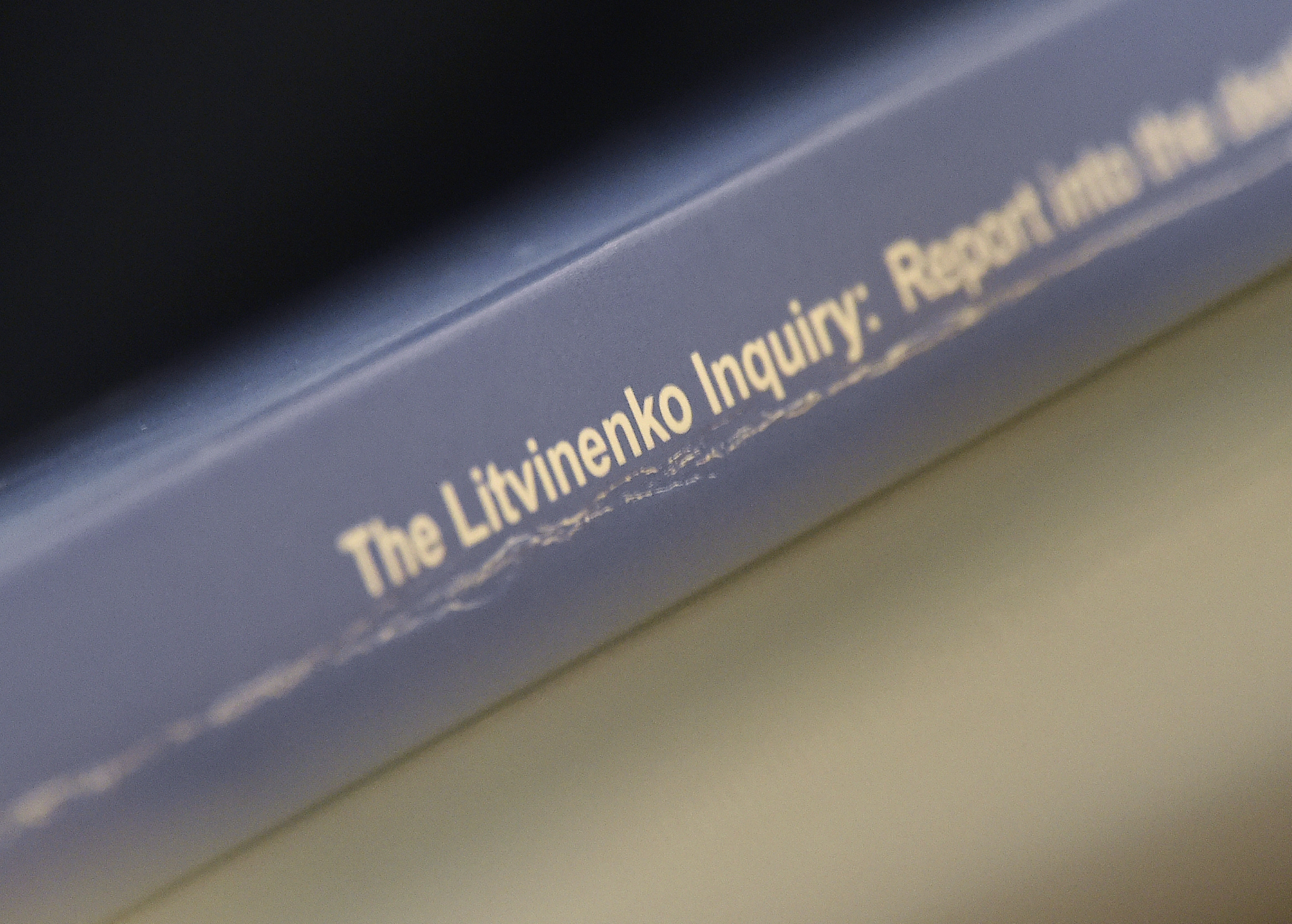
The European Court of Human Rights ruled on Tuesday (21 September) that Russia was responsible for the 2006 killing of ex-KGB officer Alexander Litvinenko who died an agonizing death after he was poisoned in London with Polonium 210, a rare radioactive isotope, write Guy Faulconbridge and Michael Holden.
Kremlin critic Litvinenko, 43, died weeks after drinking green tea laced with polonium-210 at London’s plush Millennium hotel in an attack Britain has long blamed on Moscow.
In its ruling, the European Court of Human Rights (ECHR) concluded Russia was responsible for the killing.
"It found that Mr Litvinenko’s assassination was imputable to Russia," its statement said.
Russia has always denied any involvement in Litvinenko's death which plunged Anglo-Russian relations to a post-Cold War low.
A lengthy British inquiry concluded in 2016 that Russian President Vladimir Putin probably approved a Russian intelligence operation to murder Litvinenko.
It also found that former KGB bodyguard Andrei Lugovoy and another Russian, Dmitry Kovtun, carried out the killing as part of an operation probably directed by Russia’s Federal Security Service (FSB), the main successor to the Soviet-era KGB.
The ECHR agreed. Both men have always denied involvement.
"The court found it established, beyond reasonable doubt, that the assassination had been carried out by Mr Lugovoy and Mr Kovtun," the ruling said.
"The planned and complex operation involving the procurement of a rare deadly poison, the travel arrangements for the pair, and repeated and sustained attempts to administer the poison indicated that Mr Litvinenko had been the target of the operation."
It too concluded that the Russian state was to blame and that had the men been carrying out a "rogue operation", Moscow would have the information to prove that theory.
"However, the government had made no serious attempt to provide such information or to counter the findings of the UK authorities," the ruling said.
Share this article:
EU Reporter publishes articles from a variety of outside sources which express a wide range of viewpoints. The positions taken in these articles are not necessarily those of EU Reporter. Please see EU Reporter’s full Terms and Conditions of publication for more information EU Reporter embraces artificial intelligence as a tool to enhance journalistic quality, efficiency, and accessibility, while maintaining strict human editorial oversight, ethical standards, and transparency in all AI-assisted content. Please see EU Reporter’s full A.I. Policy for more information.






Astana's congress of world religions: A global platform for dialogue in an age of division

Protect children from online sexual abuse: Call for urgent negotiations and permanent solution

Solana company partners with Kazakhstan on $6B Alatau Crypto Megacity

Will the Gulf monarchies rise above internecine disputes in the interest of collective security?

Kazakhstan’s dombyra: The two-stringed instrument that carries the soul of the steppe

Kyrgyzstan launches Tamchy SFIT: A new international jurisdiction as a gateway to Eurasia

Europe must double down on nuclear progress to achieve its long-term ambitions

International Plastic Bag Free Day – from single use to reuse

Friedman Institute and Trends Group at the Italian parliament: Countering the Muslim brotherhood

How hair extensions can transform your look naturally

Deposits to Swiss banks from Bangladeshi nationals nearly tops all time peak

EU agricultural markets remain robust despite uncertainties and rising input costs

Commission report highlights achievements of EU rules on animal health

EU deploys wildfire support to face multiple fires across Portugal and France

Europe’s job market is shifting, and EURES is ready to lead the way into 2030

From a remote island to shelves around the world: The story of Azorean canned fish

Kazakhstan reforms under scrutiny at Brussels Press Club round table

Japan should face up to history and contribute more to regional peace

Ambassador calls for 'speeding up' of co-operation between EU and Kazakhstan

Timur Turlov at Smart Moves Summit 2025: How chess can transform global education

Shevtsova’s case: Out-of-court sanctions dismantling trust in Ukrainian cause

The future of European transport

Trump Vs Trueman

US 'no longer' an 'unconditional ally' for Europe - MEP
-
 Kazakhstan3 days ago
Astana's congress of world religions: A global platform for dialogue in an age of division
-
 Child sexual abuse3 days ago
Protect children from online sexual abuse: Call for urgent negotiations and permanent solution
-
 Kazakhstan3 days ago
Solana company partners with Kazakhstan on $6B Alatau Crypto Megacity
-
 Iran3 days ago
Will the Gulf monarchies rise above internecine disputes in the interest of collective security?