Ukraine
Deadlock over as EU finally seals €90 billion loan for Ukraine

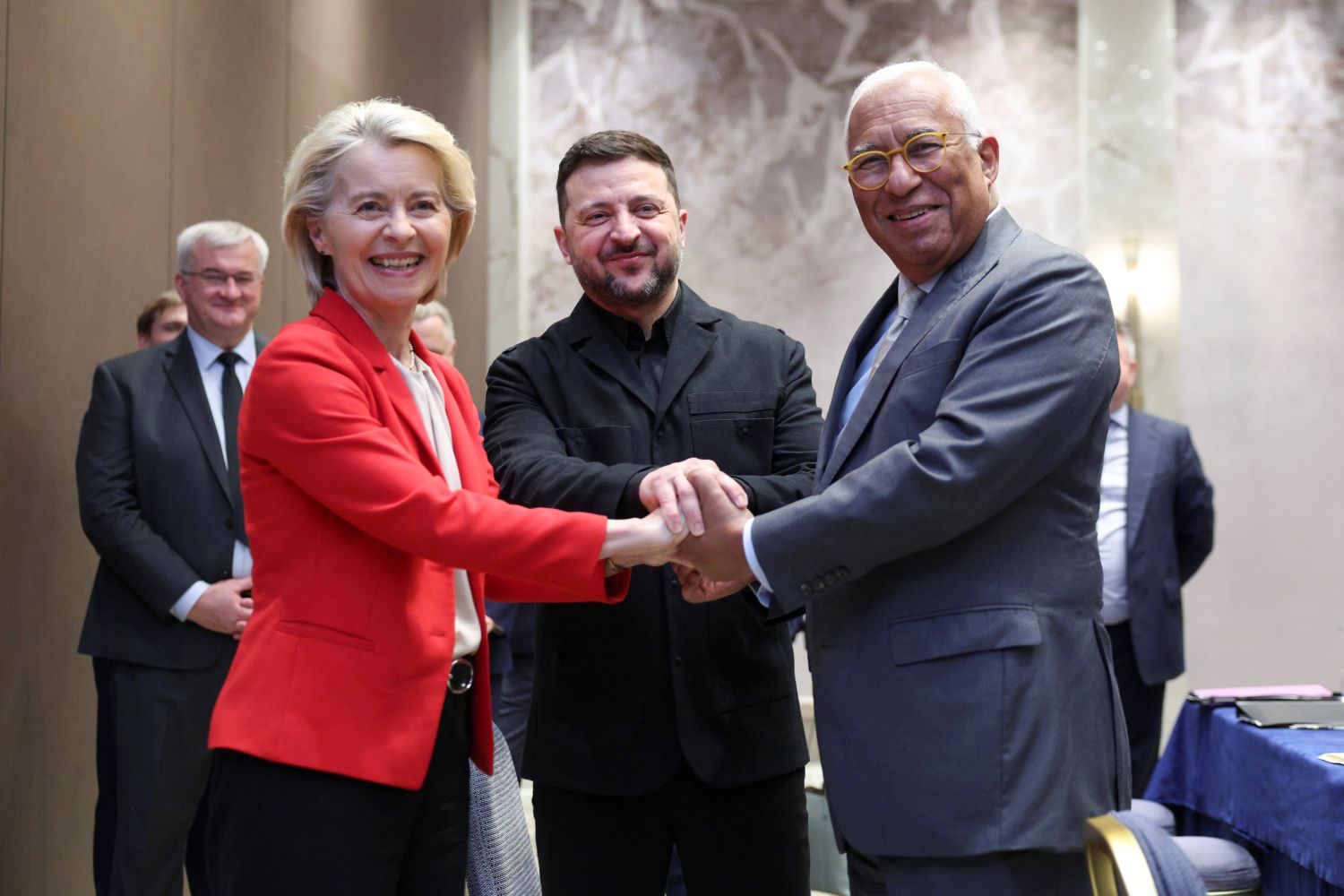
The EU confirmed its long-term commitment to Ukraine by finalizing a landmark €90 billion support loan. The loan was meant to become operational at the start of April, but had been blocked by Hungary over its disput with Ukrain over the Druzhba pipeline, which delivers Russian oil to landlocked Hungary and Slovakia, writes Catherine Feore.
EU High Representative Kaja Kallas posted on X: “Deadlock over. The EU just cleared the way for the € 90-billion loan for Ukraine and the 20th sanctions package. Russia’s war economy is under growing strain, while Ukraine is getting a major boost. We will provide Ukraine what it needs to hold its ground, until Putin understands his war leads nowhere.”
As stated in the official announcement, the package “will help cover the country’s most urgent budgetary and defence industrial capacity needs in 2026 and 2027, within a robust and conditional framework”.
The funding is tied to governance standards, with “strict conditions on Ukraine’s side such as adherence to the rule of law, including the fight against corruption”. This underscores the EU’s broader vision of aligning financial assistance with institutional reform, ensuring that support translates into sustainable progress.
“The EU remains steadfast in its support for Ukraine’s sovereignty and territorial integrity,” said Minister of Finance of the Republic of Cyprus, Makis Keravnos.
President Zelenskyy thanked the EU: “Today is an important day for our defence and for our relations with the European Union. The European support loan for Ukraine has been unblocked €90 billion over two years. This package will strengthen our army, make Ukraine more resilient, and enable us to fulfill our social obligations to Ukrainians.”
The financing structure itself is notable. The loan will be financed through EU borrowing on the capital markets and will be backed by the EU budget headroom. It is to be repaid by Russia in the form of future reparations.
In practical terms, the €90bn package is divided into two major components. Around €30 billion in macroeconomic support will help Ukraine address immediate fiscal pressures. The remaining €60bn is earmarked for defence industrial capacity, enabling investments in production and procurement. This funding opens access to defence products not only from Ukraine and EU member states but also from partner countries.
The package received unanimous support from the 24 participating member states, Hungary, Slovakia, and the Czechia opting out. Beyond the immediate financial impact, the initiative represents a broader commitment: to anchor Ukraine’s stability, reinforce its defence capabilities, and integrate its future more closely with European structures.
20th Sanction Package
The EU was also able to agree on its 20th package of sanctions on Russia, which had also been blocked by Hungary. The package targets energy, finance, military, and trade sectors. It restricts oil revenues via maritime bans, sanctions vessels and ports, and limits LNG services.
Tighter financial measures include bans on Russian banks, crypto platforms, and third-country facilitators have received particular attention, since they have been used to circumvent existing sanctions. There are also stronger measures against foreign suppliers of dual-use goods.
European Council President António Costa said that “now it’s time to look forward” and formally open the first clusters of negotiations to prepare for Ukraine’s accession to the European Union.
Share this article:

EU Reporter publishes articles from a variety of outside sources which express a wide range of viewpoints. The positions taken in these articles are not necessarily those of EU Reporter. Please see EU Reporter’s full Terms and Conditions of publication for more information EU Reporter embraces artificial intelligence as a tool to enhance journalistic quality, efficiency, and accessibility, while maintaining strict human editorial oversight, ethical standards, and transparency in all AI-assisted content. Please see EU Reporter’s full A.I. Policy for more information.





Kashmir's 9,765 missing women and girls demand international attention

EU foreign ministers to discuss options for restricting trade with Israeli communities in Judea and Samaria

New EU strategy must help farmers move toward a more humane food system

EU-Mexico: While others build walls, Europe builds bridges

Europe's Cloud moment: The DMA must now deliver

Srebrenica's lesson is prevention. Why isn't the world applying It to Kashmir?

European operation dismantles €10 million illicit cigarette network in Spain

Survey of city economic experts: Cities are driving Draghi’s competitiveness agenda, but need EU recognition to scale action

EU weighs age-13 limit for 'social media plus'

ALROSA Re-elects Supervisory Board with Minimal Changes

Public consultation on Joint Undertakings, Art. 185 initiatives, and thematic priorities for European Partnerships under Horizon Europe 28-34

Poland sees new research and changes to policies on migrant integration

EU launches a Team Gaza Initiative to support early recovery in Gaza with an initial amount of nearly €900 million

NESBp: Strengthening maritime spatial planning across the North Sea and Baltic Sea

Energy Union Task Force takes stock of oil and gas security of supply in the EU

AIFC to host Astana Finance Days 2026 in September

Kazakhstan reforms under scrutiny at Brussels Press Club round table

Japan should face up to history and contribute more to regional peace

Ambassador calls for 'speeding up' of co-operation between EU and Kazakhstan

Timur Turlov at Smart Moves Summit 2025: How chess can transform global education

Shevtsova’s case: Out-of-court sanctions dismantling trust in Ukrainian cause

The future of European transport

Trump Vs Trueman

US 'no longer' an 'unconditional ally' for Europe - MEP
-
 Kashmir4 days ago
Kashmir's 9,765 missing women and girls demand international attention
-
 Israel2 days ago
EU foreign ministers to discuss options for restricting trade with Israeli communities in Judea and Samaria
-
 Animal welfare4 days ago
New EU strategy must help farmers move toward a more humane food system
-
 Mexico4 days ago
EU-Mexico: While others build walls, Europe builds bridges