Western Balkans
Strengthening CBRN investigation, prosecution and adjudication capabilities in the Western Balkans

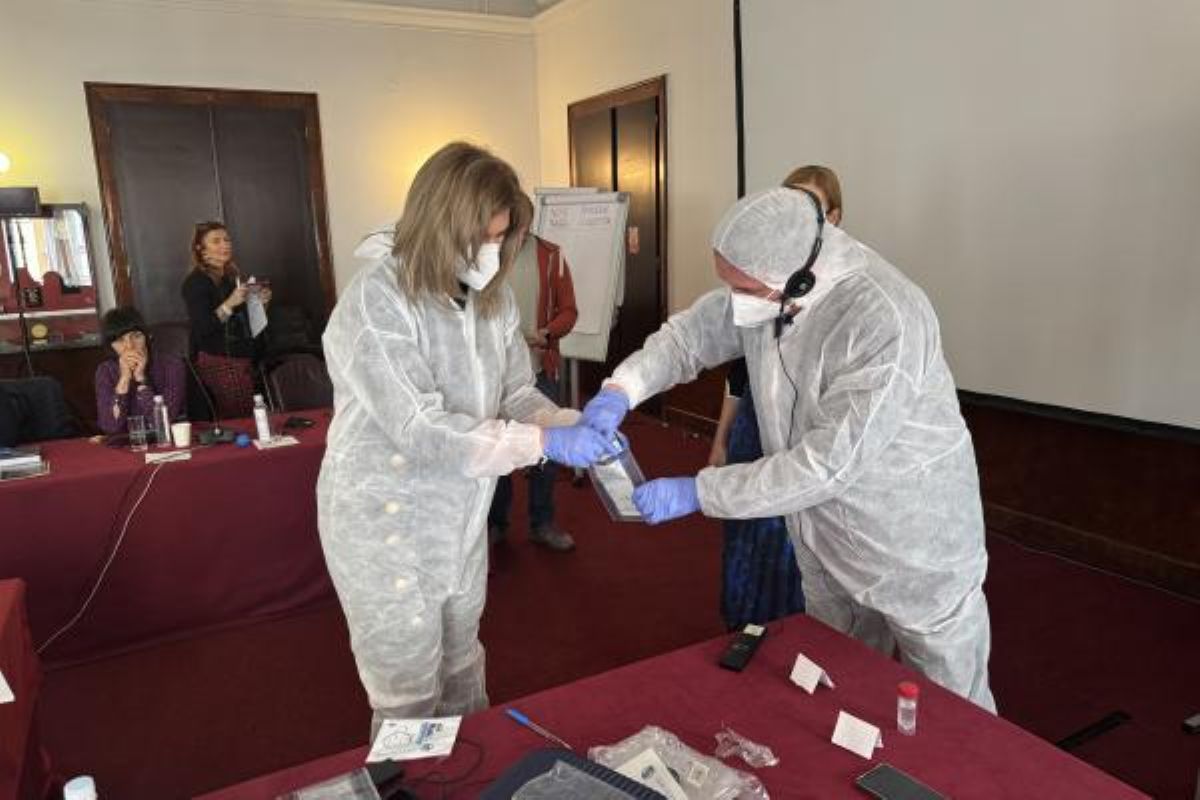
The Western Balkans countries strengthened their capacity to address CBRN-related crime through a comprehensive training programme, enhancing investigation, prosecution and adjudication capabilities under the EU CBRN Centres of Excellence Initiative.
The risks posed by CBRN incidents require strong coordination between law enforcement, judicial authorities and technical experts, particularly in a context of evolving security challenges.
To address these risks, a comprehensive CBRN Investigation, Prosecution and Adjudication (IPA) capacity-building programme was implemented across the Western Balkans, focusing on strengthening legal, investigative and judicial responses. The programme was funded by the European Union and organized within the framework of the European Union CBRN Centres of Excellence Initiative, with the support of United Nations Interregional Crime and Justice Research Institute UNICRI.
The programme unfolded through a structured series of activities:
- Table Top Exercise (4–5 November 2025, Sarajevo)
- CBRN Criminalisation Workshop (6–7 November 2025, Sarajevo)
- Building a Case for Prosecution Training (1–5 December 2025, Skopje)
- Mock Trial (3–6 February 2026, Podgorica)
- Train-the-Trainer Programme (17–19 March 2026, Sarajevo)
National ownership and international co-operation
The initiative was launched following a request by Bosnia and Herzegovina, through its High Judicial and Prosecutorial Council, to the European Commission’s Foreign Policy Instruments Service, demonstrating strong national ownership.
The programme engaged Bosnia and Herzegovina, Montenegro and North Macedonia, bringing together investigators, prosecutors, judges, forensic experts and laboratories in a coordinated, multi-agency approach.
Contributions from international partners - including the European Union (EU), the International Atomic Energy Agency (IAEA), the Organisation for the Prohibition of Chemical Weapons (OPCW), the United Nations Interregional Crime and Justice Research Institute (UNICRI), the United Nations Office for Disarmament Affairs (UNODA), the United Nations Office on Drugs and Crime (UNODC), and the United Nations Office of Counter-Terrorism (UNOCT) - ensured a comprehensive and globally aligned framework, reinforcing cooperation across national and international levels.
Results and impact
The programme strengthened inter-agency cooperation and enhanced the ability of national authorities to investigate, prosecute and adjudicate CBRN-related crimes. It improved coordination across the justice and security chain and supported alignment with European Union standards.
A key outcome was the preparation of 17 national trainers — comprising prosecutors, judges and law enforcement officials — designated to deliver follow-up training. The Train-the-Trainer component equipped participants with practical skills in instructional methodologies, course design and delivery, enabling the integration of training into national curricula.
The initiative also promoted gender balance and fostered a unified regional approach, reinforcing preparedness and institutional capacity to respond to complex CBRN threats.
Strengthening capacity for the future: A regional impact
Building on this programme, participating countries are integrating the training into national systems, ensuring long-term sustainability and continued capacity development.
The approach also demonstrates strong potential for replication in other regions. Recent developments, including similar training integration in Ukraine, highlight the growing momentum of international cooperation in strengthening CBRN preparedness.
Through their continued commitment, the countries of the Western Balkans demonstrate the importance of sustained cooperation in preventing and responding to complex chemical, biological, radiological and nuclear-related threats.
Background
This action was funded by the European Union through the EU CBRN Centres of Excellence (CoE) Initiative.
This activity contributes to ongoing efforts under the EU CBRN CoE Initiative to strengthen partner countries’ capacities in investigating, prosecuting and adjudicating CBRN crimes. It supports the development of sustainable national training systems, enhances inter-agency cooperation and promotes alignment with international standards.
To know more: EU Global Threats Programme – EU CBRN Centres of Excellence Initiative
Share this article:
EU Reporter publishes articles from a variety of outside sources which express a wide range of viewpoints. The positions taken in these articles are not necessarily those of EU Reporter. Please see EU Reporter’s full Terms and Conditions of publication for more information EU Reporter embraces artificial intelligence as a tool to enhance journalistic quality, efficiency, and accessibility, while maintaining strict human editorial oversight, ethical standards, and transparency in all AI-assisted content. Please see EU Reporter’s full A.I. Policy for more information.



Astana's congress of world religions: A global platform for dialogue in an age of division

Solana company partners with Kazakhstan on $6B Alatau Crypto Megacity

Protect children from online sexual abuse: Call for urgent negotiations and permanent solution

Will the Gulf monarchies rise above internecine disputes in the interest of collective security?

Kyrgyzstan launches Tamchy SFIT: A new international jurisdiction as a gateway to Eurasia

Kazakhstan’s dombyra: The two-stringed instrument that carries the soul of the steppe

International Plastic Bag Free Day – from single use to reuse

Europe must double down on nuclear progress to achieve its long-term ambitions

Setting sustainable livestock farming on a strong footing

Competition policy: Enforce without fear

Friedman Institute and Trends Group at the Italian parliament: Countering the Muslim brotherhood

How hair extensions can transform your look naturally

Deposits to Swiss banks from Bangladeshi nationals nearly tops all time peak

EU agricultural markets remain robust despite uncertainties and rising input costs

Commission report highlights achievements of EU rules on animal health

EU deploys wildfire support to face multiple fires across Portugal and France

Kazakhstan reforms under scrutiny at Brussels Press Club round table

Japan should face up to history and contribute more to regional peace

Ambassador calls for 'speeding up' of co-operation between EU and Kazakhstan

Timur Turlov at Smart Moves Summit 2025: How chess can transform global education

Shevtsova’s case: Out-of-court sanctions dismantling trust in Ukrainian cause

The future of European transport

Trump Vs Trueman

US 'no longer' an 'unconditional ally' for Europe - MEP
-
 Kazakhstan3 days ago
Astana's congress of world religions: A global platform for dialogue in an age of division
-
 Kazakhstan3 days ago
Solana company partners with Kazakhstan on $6B Alatau Crypto Megacity
-
 Child sexual abuse3 days ago
Protect children from online sexual abuse: Call for urgent negotiations and permanent solution
-
 Iran3 days ago
Will the Gulf monarchies rise above internecine disputes in the interest of collective security?