Eurobarometer
EU citizens trust traditional media most, new Eurobarometer survey finds

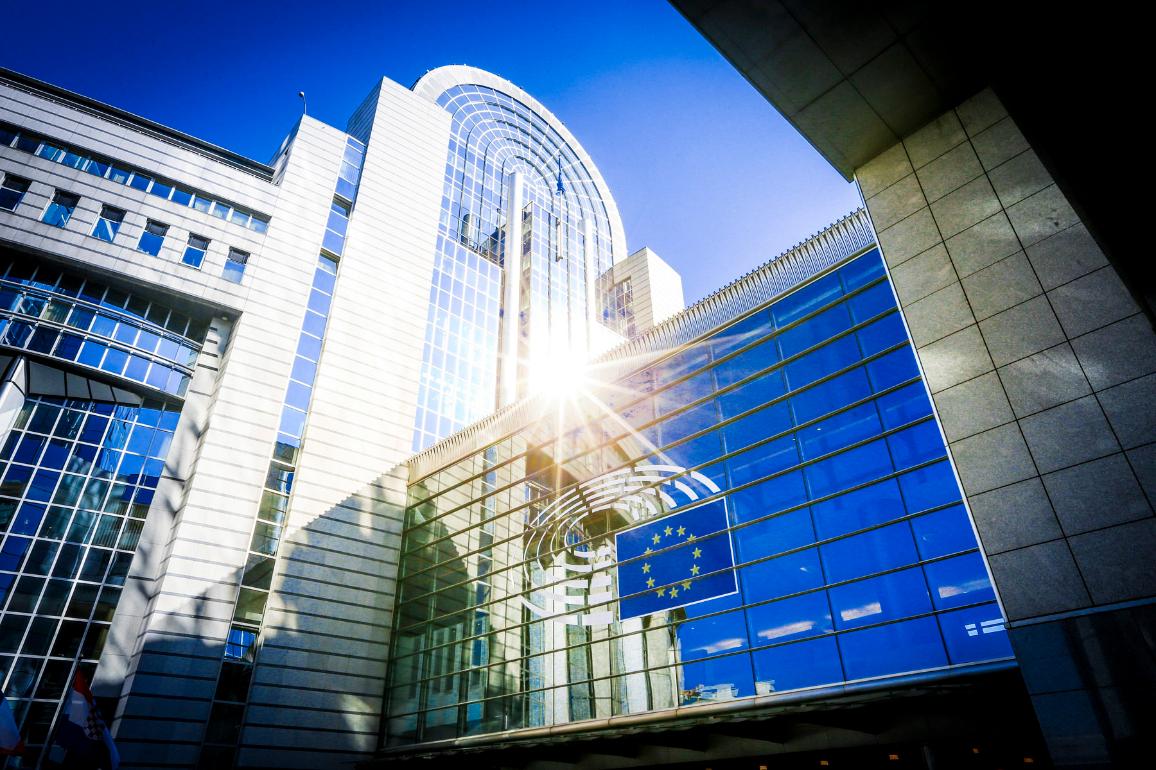
The most recent Eurobarometer survey focuses on media attitudes, media trust and media habits.
Media recall
National political topics are most important to citizens (selected by half of respondents), but European and international affairs (46%) is close behind, on par with local news (47%).
72% of respondents said they recall reading, seeing, or hearing about the European Union in the media, including on television, radio, and the Internet. 57% of respondents have read, seen or heard about the European Parliament in recent times.
Recall on EU news varies between 57% and 90% in France, while news on the EP recall varies from 39% to 85% in Malta.
Media habits
Television is the main news source for people over 55, with 75%. Online news platforms (43%) and radio (39%), as well as social media platforms, blogs and Twitter (26%), are next. With one in five respondents (21%), citing magazines and newspapers as their primary news source, the written press is fifth. However, younger respondents are more likely to use blogs and social media platforms to access news (46 percent of respondents aged 15-24 vs. 15% for 55+).
Traditional news sources, especially television, are still important. However, 88% of respondents access at least some news online using their smartphone, computer, or laptop. 43% of respondents access the news source's website (e.g. 43% of respondents use the website of the news source (e.g., newspaper) to access online news. 31% also read posts or articles that appear on their social media networks. Young people are more likely to access news via their social networks than older respondents (43 percent of those aged 15-24 vs 24% of those 55+).
Online news content can still be paid for, but this is a rare exception. 70% of people who access online news would prefer to use free content or online news services.
Most trusted media source
Citizens are more likely to trust traditional media such as print media and their online presence than social media platforms and online news channels. 49% expect their radio and public television stations to provide them with truthful information, followed by the written media, which is selected by 39%. 27% cite private radio and TV stations as trusted media sources. Poland is the only country in which radio and private television stations are trusted as a news source. Respondents in Hungary cite "friends, groups, and people who are on social media" as the most trusted news source, a radical departure from traditional news sources.
When respondents were asked to tell what made them most likely to read a news article online, trust was also emphasized. 54% of respondents are motivated by the title's relevance to their interests. 37% however, say they trust the news source posting the article.
Exposure to disinformation and fake news
28 percent of respondents believe they were exposed to fake news and disinformation in the last seven days. This is more than a quarter. Overall, respondents from Bulgaria are most likely to respond that they were often exposed to disinformation or fake news within the last seven days. 55% of those surveyed said they were exposed'very frequently' or ’often', while the Netherlands is the least likely (3%'very commonly' and 9% the 'often’ responses).
The majority of respondents felt confident that they could recognize disinformation and fake information. 12% felt'very confident', 52% felt'somewhat confident'. As we get older, our confidence in recognizing fake news from real news increases.
Background
What citizens see, hear, and read in different media influences their perceptions of the European Union or the European Parliament. The Flash Eurobarometer provides a detailed look at citizens' media usage and media habits. It includes traditional and online media. Ipsos European Public Affairs interviewed an average of 15-year-old EU citizens in each of the 27 EU Member States. Between 26 April 2022 and 11 May 2022 53 347 interviews were conducted via computer-assisted internet interviewing (CAWI), using Ipsos' online panels and their network of partners.
The EU results are weighted based on the country's population.
Here you can find data and the complete report.
Share this article:
EU Reporter publishes articles from a variety of outside sources which express a wide range of viewpoints. The positions taken in these articles are not necessarily those of EU Reporter. Please see EU Reporter’s full Terms and Conditions of publication for more information EU Reporter embraces artificial intelligence as a tool to enhance journalistic quality, efficiency, and accessibility, while maintaining strict human editorial oversight, ethical standards, and transparency in all AI-assisted content. Please see EU Reporter’s full A.I. Policy for more information.



Kazakhstan cuts water use by 874 mln m³ through new technologies

Record breaking Belgian sailors making more waves

Serbia’s business environment is driving its integration into the EU

New EU rules on pay transparency explained

Europe's peripheral and maritime regions 'combine many territorial assets', meeting told

Message to Kemi Badenoch: 'Make a splash by thinking out-of-the-box on UK-Europe relationship'

Commission endorses Lithuania’s €884 million Social Climate Plan to support vulnerable households and micro-enterprises in the clean transition

Give your career a real take off

The Factual and Legal Basis of the One-China Principle is Unquestionable and Indisputable

Tanzania remains a strategic lynchpin for the West

Ministry of Justice directs British 'Ghost Tube Station' entrepreneur to exception in Statute of Limitations on £109 million lawsuit

What 'house edge' means in Blackjack and why it varies between games

EU advances zero-emission truck corridors and autonomous vehicle testbeds

Plea for calm in Belfast amid violent disorder

Chinese and European Youth Invited to Showcase Creativity in International Cartoon and Short Video Contest

Commission updates EU Air Safety List: Air Express Algeria added, air carriers from Kyrgyzstan removed

Kazakhstan reforms under scrutiny at Brussels Press Club round table

Japan should face up to history and contribute more to regional peace

Ambassador calls for 'speeding up' of co-operation between EU and Kazakhstan

Timur Turlov at Smart Moves Summit 2025: How chess can transform global education

Shevtsova’s case: Out-of-court sanctions dismantling trust in Ukrainian cause

The future of European transport

Trump Vs Trueman

US 'no longer' an 'unconditional ally' for Europe - MEP
-
 Kazakhstan4 days ago
Kazakhstan cuts water use by 874 mln m³ through new technologies
-
 Belgium4 days ago
Record breaking Belgian sailors making more waves
-
 General3 days ago
Serbia’s business environment is driving its integration into the EU
-
 Gender equality4 days ago
New EU rules on pay transparency explained