Russia
Ruminating on rebellion, Putin says the state must be strong

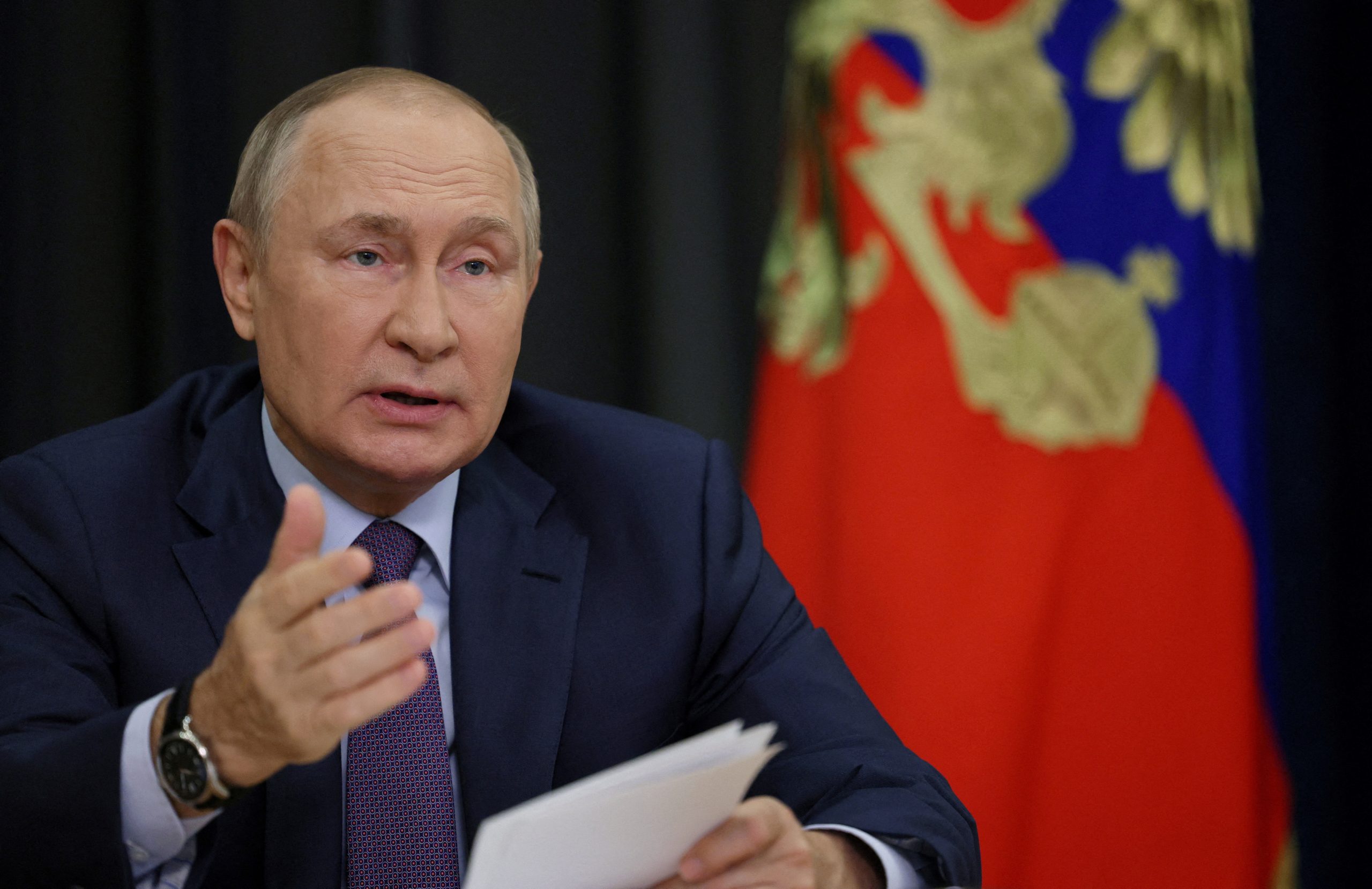
On Wednesday (5 October), President Vladimir Putin questioned a Russian teacher about the 18th century rebellion that shook Empress Catherine The Great's Russia. He offered his view on the history lesson: the state must remain strong.
Putin, Russia's supreme leader since 1999, is now facing the greatest challenge to his rule. His forces are losing ground in their seven month war in Ukraine, while Russia faces the West in the most perilous standoff since 1962's Cuban Missile Crisis.
Putin began unexpectedly grilling one of his teachers about the 1773-1775 Pugachev Rebellion in a long, televised videoconference.
"What was this Pugachev Rebellion?" It happened. What's your opinion?" Putin asked the teacher, who was in shock. He gave many reasons for Catherine's most serious domestic problem over her 34-year reign.
Putin joked that the teacher's response was similar to that of a diplomat of the Russian foreign ministry. He then asked for clarification about the causes and consequences of the rebellion led Cossack Yemelyan Pugchev, who claimed to be Tsar Peter III.
Putin stated that Pugachev, who was buoyed by dynastic intrigues at court, started a major insurgency 1773, before Catherine's forces defeated him more than a year later.
Putin stated that it was an indication of weakness in central authority.
While Putin has tried repeatedly to strengthen Russia's state following the 1990s chaos, critics like Alexei Navalny, a jailed opposition leader, say that Putin has created a weak system of personal rule that is dependent on sycophancy.
He has repeatedly warned against US attempts at revolutionizing the former Soviet Union.
Pugachev was executed on the Red Square in Moscow in January 1775. The revolt did have a lasting impact on Catherine. It was used as the backdrop for Alexander Pushkin's historical novel, The Captain's Daughter.
Share this article:
EU Reporter publishes articles from a variety of outside sources which express a wide range of viewpoints. The positions taken in these articles are not necessarily those of EU Reporter. Please see EU Reporter’s full Terms and Conditions of publication for more information EU Reporter embraces artificial intelligence as a tool to enhance journalistic quality, efficiency, and accessibility, while maintaining strict human editorial oversight, ethical standards, and transparency in all AI-assisted content. Please see EU Reporter’s full A.I. Policy for more information.







Stepping out...to get the UK back in European Union

Improving energy efficiency of buildings to reduce bills and save energy

Energy use in the industry sector continues to decline

DG Translation in a city near you: June events

The role of quality assurance in advancing inclusive upper secondary VET in Slovenia

Europe must not turn its back on rural women’s empowerment

Commission accelerates transition away from animal testing in chemical safety assessments

Counterfeit cigarettes drive illicit tobacco trade to highest level in a decade, new study claims

Inconvenient questions about Andorra and San Marino that Brussels should be asking

How digital wallets are changing the way Welsh consumers pay for online services

Impasse in European Union Tobacco Tax Reform: The Swedish veto

EU Cybersecurity Act could expose member states to costly investment treaty claims, legal opinion warns

Várhelyi says unilateral measures by the US against the EU ‘would not be justified’

Libya’s fuel crisis offers lessons for energy security on both sides of the Mediterranean

490+ experts call for €10 billion ring-fenced health allocation in EU budget

ENVI opinion signals early resistance to Biotech Act SPC extension

Kazakhstan reforms under scrutiny at Brussels Press Club round table

Japan should face up to history and contribute more to regional peace

Ambassador calls for 'speeding up' of co-operation between EU and Kazakhstan

Timur Turlov at Smart Moves Summit 2025: How chess can transform global education

Shevtsova’s case: Out-of-court sanctions dismantling trust in Ukrainian cause

The future of European transport

Trump Vs Trueman