EU
Opinion: Education and collaboration means better treatment for patients

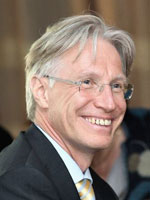
By Professor Ulrich Jäger (pictured), European Hematology Association (EHA) former president and European Affairs Committee chairman
In the changing world of health care in Europe, including exciting new developments in personalised medicine (PM), at least two key elements are under-emphasized – the education of health care professionals and their interaction with the industries producing innovative treatments and medicines.
The true potential of all of this fantastic new science, built around genetic profiling and individual DNA, will never be fully realised unless the front-line clinicians have the knowledge and understanding to exploit it and the innovators have the feedback required.
There is an urgent need for an improvement in relationships between all key stakeholders in order to develop trust and new partnerships. This should have the goal of giving clinicians better tools to treat and inform their patients and allow health care professionals (HCPs) a better understanding of their patients’ needs.
The modern patient wants to be informed in a transparent, non-patronizing and clear way about his or her options and this lets him or her properly into the decision-making process with regard to treatment options, taking into account lifestyle and other factors.
There is also a need for HCPs to respond better to industry by giving feedback on how well or otherwise a treatment or medicine acts in real situations. Furthermore, small, medium and large companies busy creating the latest medicines and technologies need to collaborate with HCPs, in an independent and transparent way that also establishes cross-stakeholder trust. The European Alliance for Personalised Medicine (EAPM) is already working along these lines with organisations such as EHA, EAU and others.
On top of this, it is vital that there is much more cross-disciplinary dialogue and collaboration so that, for example, radiologists, urologists and clinicians can understand one another and devise a holistic response to any given treatment. This will result in a better understanding of each other’s discipline and allow more effective, modern-day synergies to be developed.
EAPM, which brings together a broad range of stakeholders including patients, clinicians, researchers, industry, academics and policymakers, strongly believes that the necessary two-way collaborations should take place in an arena based on solid ethical principles as well as those of respect, mutual trust and goodwill.
An environment such as this can only help to improve patient outcomes through better development of treatments and more-targeted, effective drugs. Such improvement is vital for an aging population of 500 million citizens across the EU’s 28 Member States. Not only because it is incumbent upon all parties to keep the population as healthy as possible, enjoying equal access to the best treatment available, but also because a healthy Europe means a wealthy Europe.
The issue of education of HCPs is a major one. It is clear that a great degree of upskilling is already required and, to keep pace with the science, this must be ongoing. Stakeholders need to find a way to achieve this together – with agreed standards across the board so that no patient is denied a suitable, virtually tailor-made treatment due to a lack of knowledge or understanding on behalf of the HCP treating and diagnosing him or her.
EAPM believes that, given the advances in personalised medicine in recent years there is now a need to reform how health care is delivered to the technology-aware patient. A key partner in tackling this is the health care community and one way to achieve the goal is through increased EU-wide investment in the education and training of health care professionals. In the case of PM the health care professionals are all directly related to the integration of 'omics' technologies and range from GPs to bioscientists and biostatisticians.
Health is clearly all about patients and potential patients – 500 million across the EU as already noted. Each health care system within the 28-country bloc features the coming together of one set of citizens in need of diagnosis and/or treatment and another set entrusted to deliver it. This trust is based on a blend of technical competence and service orientation, steered by ethical commitment and social accountability, which forms the essence of reliable and professional health care. Developing such a blend requires lengthy education and a substantial investment by policymakers and society. Yet, the context, content and conditions in which we need to educate health professionals are rapidly changing.
This modern-day shift has already been noted by the European Commission whose agenda includes a Joint Action on Health Workforce and Planning. This Joint Action not only addresses the future capacity of the health workforce but also aims to modernise its skills and competences. There is certainly a need to develop shared and/or overlapping guidelines for this exciting new era of health care in order to make the most of the recent explosion in technology. This will inevitably necessitate the creation of a platform designed to verify, assess and access information relating to new treatments and technology.
EAPM has gone further, by calling for action at EU level, saying: “By 2020, the EU should support the development of a Europe-wide education and training of health care professionals’ curriculum for the personalised medicine era, by committing to this in 2015. The EU should subsequently facilitate the development of an Education and Training Strategy for HCP in Personalised Medicine.”
The Alliance is working hard to promote dialogues, encourage the required platform and, as stated, is calling for swift EU action. These are topics that will certainly be discussed at its annual conference on 9-10 September at the Solvay Library in Brussels’ Park Leopold, close to the European Parliament. This will bring together all stakeholders, including new MEPs, and is timed to precede the appointment of the incoming European Commission.
With the help of the European Union, and with greater collaboration between all stakeholders, we can work towards building a healthier – and thus wealthier - EU for ourselves, our children and for generations to come.
Share this article:
EU Reporter publishes articles from a variety of outside sources which express a wide range of viewpoints. The positions taken in these articles are not necessarily those of EU Reporter. Please see EU Reporter’s full Terms and Conditions of publication for more information EU Reporter embraces artificial intelligence as a tool to enhance journalistic quality, efficiency, and accessibility, while maintaining strict human editorial oversight, ethical standards, and transparency in all AI-assisted content. Please see EU Reporter’s full A.I. Policy for more information.



Who will win the 2026 World Cup? Data points to Spain

Chinese and European Youth Invited to Showcase Creativity in International Cartoon and Short Video Contest

European Union and Australia successfully conclude Horizon Europe negotiations

Commission updates EU Air Safety List: Air Express Algeria added, air carriers from Kyrgyzstan removed

EU advances zero-emission truck corridors and autonomous vehicle testbeds

Plea for calm in Belfast amid violent disorder

Belgium Military Wives Choir: A 'lifeline' for women

President approves Digital Qazaqstan national strategy

Are you prepared for the safety risks of the modern workplace?

EU Coordinators discuss the strengthened European Child Guarantee and support for vulnerable young people

European Sustainable Energy Week 2026: That’s a wrap

New migration and asylum rules enter into application: What is changing?

Commission proposes €540 million in financial relief and other supports for farmers facing fertiliser crisis

EU and Republic of Korea bolster strategic partnership with new areas of cooperation

EU finance ministers back EIB Group strategy for a stronger, more secure Europe in a more stable world

The Earth is accumulating heat at an accelerating rate: Global warming reached 1.37°C in 2025

Kazakhstan reforms under scrutiny at Brussels Press Club round table

Japan should face up to history and contribute more to regional peace

Ambassador calls for 'speeding up' of co-operation between EU and Kazakhstan

Timur Turlov at Smart Moves Summit 2025: How chess can transform global education

Shevtsova’s case: Out-of-court sanctions dismantling trust in Ukrainian cause

The future of European transport

Trump Vs Trueman

US 'no longer' an 'unconditional ally' for Europe - MEP
-
 Sport4 days ago
Who will win the 2026 World Cup? Data points to Spain
-
 China-EU5 days ago
Chinese and European Youth Invited to Showcase Creativity in International Cartoon and Short Video Contest
-
 Australia5 days ago
European Union and Australia successfully conclude Horizon Europe negotiations
-
 Aviation Strategy for Europe5 days ago
Commission updates EU Air Safety List: Air Express Algeria added, air carriers from Kyrgyzstan removed