Ebola
West Africa’s Ebola outbreak 'a global security issue' says Parliament


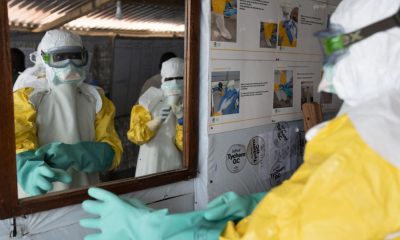
The Ebola virus outbreak in West Africa has been underrated by the international community and now constitutes a challenge to global security, say MEPs in a Resolution voted on Thursday (18 September). As the affected countries face socio-economic collapse, the deployment of military assets under the UN flag should be considered and access to existing treatments speeded up, they add.
Countries on the verge of economic collapseMEPs underline that the affected countries already suffer shortages of food and clean water, and face economic collapse due to the disruption of trade, cancellation of commercial flights and loss of harvests caused by the pandemic. Social unrest, people fleeing affected areas, and chaos is only spreading the virus further. Moreover, the outbreak has revealed the serious inadequacy of these countries’ health systems, which urgently need support, they add.
Co-ordinate plans, co-ordinate flightsThe European Commission is asked to assess the needs and draw up country-specific plans in order to determine and coordinate demand for and deployment of health personnel, mobile laboratories, equipment, protective clothing and treatment centres. EU Member states should coordinate flights and establish dedicated air bridges, and the African Union should be encouraged to consider a holistic action plan as the crisis becomes more complex and political, says the text.
Medical research and access to treatments
Clinical trials of existing candidate treatments against the Ebola virus should be advanced, MEPs say. However, they call for a clear distinction to be drawn between treatment and vaccination tests – clinical trials of the latter should respect the relevant WHO rules in force.
Background
Since the Ebola outbreak was officially declared on 22 March 2014 in Guinea, it has spread to four other countries (Liberia, Nigeria, Sierra Leone and Senegal), infecting almost 4,000 people and causing more than 2,000 deaths. According to the World Health Organization, the number of patients could grow to over 20,000 over the next three months.
Share this article:
EU Reporter publishes articles from a variety of outside sources which express a wide range of viewpoints. The positions taken in these articles are not necessarily those of EU Reporter. Please see EU Reporter’s full Terms and Conditions of publication for more information EU Reporter embraces artificial intelligence as a tool to enhance journalistic quality, efficiency, and accessibility, while maintaining strict human editorial oversight, ethical standards, and transparency in all AI-assisted content. Please see EU Reporter’s full A.I. Policy for more information.





Stepping out...to get the UK back in European Union

Europe must not turn its back on rural women’s empowerment

Commission accelerates transition away from animal testing in chemical safety assessments

Counterfeit cigarettes drive illicit tobacco trade to highest level in a decade, new study claims

High-speed drama shatters Monaco’s tranquil façade

Republic of Moldova joins European Patent Organization as 40th member state

Commission proposes new authorization for mobile satellite services for EU's resilience and competitiveness

Defending values, driving reform, delivering impact: New measures to strengthen EU humanitarian action

Inconvenient questions about Andorra and San Marino that Brussels should be asking

How digital wallets are changing the way Welsh consumers pay for online services

Impasse in European Union Tobacco Tax Reform: The Swedish veto

EU Cybersecurity Act could expose member states to costly investment treaty claims, legal opinion warns

Várhelyi says unilateral measures by the US against the EU ‘would not be justified’

Libya’s fuel crisis offers lessons for energy security on both sides of the Mediterranean

490+ experts call for €10 billion ring-fenced health allocation in EU budget

ENVI opinion signals early resistance to Biotech Act SPC extension

Kazakhstan reforms under scrutiny at Brussels Press Club round table

Japan should face up to history and contribute more to regional peace

Ambassador calls for 'speeding up' of co-operation between EU and Kazakhstan

Timur Turlov at Smart Moves Summit 2025: How chess can transform global education

Shevtsova’s case: Out-of-court sanctions dismantling trust in Ukrainian cause

The future of European transport

Trump Vs Trueman

US 'no longer' an 'unconditional ally' for Europe - MEP
-
 Brexit4 days ago
Stepping out...to get the UK back in European Union
-
 Gender equality4 days ago
Europe must not turn its back on rural women’s empowerment
-
 Animal welfare4 days ago
Commission accelerates transition away from animal testing in chemical safety assessments
-
 Health2 days ago
Counterfeit cigarettes drive illicit tobacco trade to highest level in a decade, new study claims