Iran
Will the Gulf monarchies rise above internecine disputes in the interest of collective security?


The US-Israel and Iran War is straining already uneasy alliances in the Middle East. No matter what is the outcome of negotiations between the US and Iran over the next six weeks, this war is already resulting in the formation of new alliances, fissuring of old alliances or their reinvigoration by inducting new members, writes Vidya S. Sharma, Ph. D.
To understand what the future may bring to us, we need to know how we reached this point so that we can postulate what may be the most likely shape of the new Middle East security architecture considering internecine disputes that plague the Gulf Cooperation Council or the GCC members (i.e., Saudi Arabia, Oman, the United Arab Emirates or the UAE, Qatar, Bahrain and Kuwait).
SEEDS OF THIS WAR WERE SOWN 2003
This war did not come out of the blue. Its seeds were sown with the removal of Saddam Hussein and how the Iraq War Mark II (March 2003 - December 2011), launched by the George W Bush Administration in search of non-existent Weapons of Mass Destruction, destabilised Iraq.
Throughout 2003 Amin Tarzi, Ali Ansari and many other think tank analysts, and U.S. intelligence agencies warned the George W Bush Administration that attacking Iraq would most likely spark violent sectarian divides, provide al-Qaeda with new opportunities in Iraq and Afghanistan, and offer an unprecedented opportunity to Iran to assert its regional influence and "probably would result in a surge of political Islam and increased funding for terrorist groups" in the Muslim world. On August 15, 2002, the late Lt. Gen. (Rtd.) Brent Scowcroft, National Security Advisor to Presidents Gerald Ford and George H.W. Bush, published an op-ed in The Wall Street Journal entitled "Don't Attack Saddam" making the same arguments.
Amin Tarzi, frequently addressed the question of "the Gulf balance after Saddam" during his many interviews. He argued that the removal of the secular Baʿath Party regime and consequent destabilisation of Iraq would erase the dual containment, i.e., Iraq and Iran nullifying each other.
The vacuum created by the removal of Saddam allowed Iran from being a contained or suffocated power to a regional power expanding its influence from the Gulf to the Levant, accompanied by a virulent revolutionary rhetoric against the US and Israel.
Two other developments have nourished the seed sown in 2003. These are (a) the Abraham Accords: An initiative of the Trump I Administration designed to bypass the core issue of Palestinian statehood and persuade the countries in the Middle East and Muslim-majority countries elsewhere to recognise Israel; and (b) Hamas, knowing that the real aim of the Abraham Accords was to marginalise Palestinians forever and their wish to have their own country thrown in the dustbin of history, perpetrated the brutal and gruesome act of killing 1195 party goers and taking about 250 hostages on October 7, 2023. The Netanyahu Government used this event as an excuse to carry out ethnic cleansing in the Gaza Strip.
Many Jewish scholars of the Holocaust have accused the Israeli Defence Forces (IDF) of perpetrating genocide in the Gaza Strip. The Netanyahu Government also weaponised food (both its distribution and delivery) and medical supplies. An analysis of satellite images carried out by the United Nations shows that 80% to 92% of housing units and civilian structures across the Gaza Strip have been demolished to render the place inhabitable. From the public statements of various ministers in the Netanyahu Government it is obvious that the Israeli Government intends to permanently occupy and declare it as Israeli territory. Around 73,000 Palestinians have been killed by the IDF and the count is still mounting. Another UN report found that many thousands have been killed at very short range (including thousands of children and women).
The Netanyahu Government and media outlets sympathetic to the Israeli Government narrative dismiss any such criticism by widely respected Jewish holocaust scholars, various Western Governments, international organisations such as the UN, Amnesty International, Red Cross/Red Crescent, Médecins Sans Frontières, and numerous other charity organisations as rooted in antisemitism and calumniate them as Hamas’s propagandists (= spin doctors).
ABRAHAM ACCORDS — US POLICY RENDERED IRRELEVANT
This was a signature transactional policy of the Trump I Administration. The logic behind the Abraham Accords was that Muslim-majority countries, especially those that were poor or undeveloped would be asked to recognise Israel in return they would be promised economic aid, debt relief or access to international financial institutions, etc. or other non-economic incentives where they were vulnerable. President Biden also tried to follow this policy with little success. Amongst the wealthy Muslim nations to recognise Israel under this framework were the UAE and Bahrain. The last two pursued the Accords for high-tech trade and advanced weapons, and poorer nations treated the recognition of Israel as a transactional economic lifeline.
Five countries agreed to normalise diplomatic relations with Israel under the Abraham Accords framework. Almost all of these countries had maintained for a long time low-level, clandestine, or formal non-diplomatic contacts with Israel, including the UAE. These were:
- The United Arab Emirates (UAE) was enticed into recognising Israel by providing access to advanced U.S. military hardware, including F-35 fighter jets. There were two other motives for the UAE: it follows a foreign policy that will bring it more opportunities to diversify economically. Second, the UAE is as hostile to Iran’s Revolutionary Government as Israel is. Another reason, the UAE gave, in support of its decision, was that Israel had agreed to "suspend" the formal, de jure annexation of the West Bank. The UAE already hosted Israel’s trade office.
- Bahrain a vassal state of Saudi Arabia, already had been maintaining covert or unofficial business and intelligence ties (buying Israeli apps to surveil its people) with Israel for a long time. Its Sunni Monarchy is unpopular with its mainly Shia population.
- Morocco In exchange for normalizing relations with Israel, the U.S. officially recognized Morocco's sovereignty over Western Sahara where a rebel group, the Polisario Front is fighting the Royal Moroccan Army for to create an independent Western Sahara.
- Sudan Here the money spoke. Sudan’s Transitional Sovereignty Council has inherited a bankrupt economy. In exchange for recognition of Israel, it was offered emergency economic relief, debt relief, and an access to funds from the IMF. But Sudan never received debt relief or emergency aid because the country was engulfed in the civil war soon afterwards.
- Kosovo The U.S. negotiated/brokered an "economic normalization" for Kosovo with Serbia. Kosovo was also promised energy loans and some other infrastructure development assistance. The promised major U.S. financial investments yielded minimal results. Kosovo became a casualty of broader European geopolitical tensions.
Not many of the financial promises made were kept. Last year, Kazakhstan became the sixth one but it had established full diplomatic relations with Israel in early 1990s.
The continued perpetration of genocide by the Israeli Defence Forces in the Gaza Strip and the West Bank and Israel’s policy to continue building illegal Jewish settlements in Palestine has made this policy is so unpopular now that even an autocrat indifferent to public opinion would not be willing to participate in it. It was an exercise in coalition building by offering economic incentives, and not peace building: the initiative’s major thrust was to marginalise the Palestinian people's struggle for homeland or statehood forever, throw them into the dustbin of history as collateral casualty of buying respectability to Israel. The latter is widely perceived, to use President Biden’s phrase as a "rogue country or actor".
The Abraham Accords have been another casualty of the Israel-US and Iran War.
GULF MONARCHIES: INTERNECINE DISPUTES
As I mentioned in my first article, Gulf Cooperation Council States are not good neighbours to each other. Broadly speaking, their relationships suffer from three kinds of disputes: (a) disputes rooted in the history of Islam; (b) unresolved territorial and maritime boundary demarcation disputes; and (c) more recently to these two layers of disputes has been added another stratum: disputes arising due to increasing economic competition and different foreign policy postures (their different world-views).
We need to know a little about these disputes, if in the aftermath of the Israel-US and Iran War, we need to figure out to what extent various Gulf States are likely to cooperate to craft a common collective security response. In other words, be a force in shaping the destiny of their region.
DISPUTES ROOTED IN THE HISTORY OF ISLAM
What we know today as Saudi Arabia did not exist as one country (like Egypt and Syria) during the Ottoman Sultanate. The latter was a casualty of World War I. Today’s Saudi Arabia is the result of a number of strategic tribal alliances and a series of wars led by Abdulaziz bin Abdul Rahman Al Saud over a period of 30 years by. Saudi Arabia, as a nation, came into existence in September, 1932.
King Abdulaziz was the paternal grandfather of the current Saudi Crown Prince, Mohammed bin Salman (MBS).
In addition to being the biggest country in the region geographically, Saudi Arabia is also the birthplace of the Prophet Mohammed. Further, Islam’s two holiest sites, Mecca and Medina, are in Saudi Arabia. Oil has made it a very wealthy nation. For all these reasons, Saudi Arabia thinks it should be accepted as the undisputed leaders not only of the Gulf Cooperation Council or GCC members, but of the entire Muslim world (Ummat al-Islām).
DISPUTES BETWEEN SAUDI ARABIA AND THE UAE
The disputes among the Gulf Cooperation Council or GCC members are really between Saudi Arabia and Abu Dhabi. The UAE and the Saudis recognised each other when they signed the 1974 Treaty of Jeddah. However, the UAE (in reality, Abu Dhabi) claims the final text of the treaty does not correspond with the oral agreements reached between them, and the treaty was signed under duress.
The treaty grants a vast tract of land to Saudi Arabia, including the super giant Shaybah oilfield (the UAE claims it was promised joint ownership). The treaty also granted Saudi Arabia a 25-kilometre land corridor to the Persian Gulf east of Qatar. This prevented the UAE from having a direct land route to Qatar. The UAE also argues that ceding the land corridor to Saudi Arabia should not affect its original maritime economic zones.
In 2005, the UAE wanted to build a bridge between the two countries (UAE-Qatar Causeway), but Saudi Arabia objected to it. However, following the 2021 Al-Ula reconciliation agreement between QATAR and the GCC, the project was officially given go ahead.
Mohammed bin Zayed al-Nahyan (MBZ) doubles as the Emir of Abu Dhabi and President of the UAE. He is the most secular of all Gulf leaders in the sense he is against Islamist groups (eg, Al Qaeda, the Islamic State (ISIS), Muslim Brotherhood, Hamas, Hezbollah, etc.). He thinks they all want to establish a caliphate with the Quran in place of a constitution. However, it does not mean he is a liberal or secular politician as we understand the terms in the West.
His foreign policy is dictated by his desire to make the UAE a global investment hub. The UAE prioritises its economic strategic interests and anti-Islamism goals over countering Iran. The UAE was the first GCC member to establish full diplomatic ties with Israel. The UAE sees Israel as a source of premium defence technologies and in return the UAE offers financial services to Israeli companies.
Saudi Arabia considers Iran as a chief national security threat and wants to contain it by diplomatic means. In Saudis’ view, Israel is a destabilising force in the region.
To neutralise Saudi Arabia’s influence, the UAE responded by deepening its strategic ties with Israel and India.
The two countries (the UAE and Saudi Arabia) also support opposing factions in Yemen and Sudan. More than half of Sudan’s total exports are destined to the UAE. The latter is interested developing port along the Sudanese coastline on the Red Sea, as part of its "chain port" strategy. In the post-fossil fuel world, the UAE envisages itself as a global logistical and maritime superpower. Recently, Israel recognised Somaliland. Saudi Arabia suspects the UAE (which manages all Somaliland ports) encouraged Israel to do so.
The intense economic competition between Saudi Arabia and the UAE is also a source of tension between them, eg, taking advantage of its large population and geographical size, Saudi Arabia is forcing foreign companies interested doing business with the Gulf countries to set up their regional headquarters in Saudi Arabia.
Saudi Arabia needs political stability in the region and higher oil prices to successfully diversify its economy. As a back up to the US security guarantee, it has signed a NATO-style mutual defence pact with Pakistan. This has also exacerbated the relations with the UAE as the later sees Pakistan as an unstable country and a sanctuary and training place for Islamists.
The latest act to strain the relations between these two countries was the UAE’s decision to pull out of OPEC. This move will allow the UAE as much oil as it can, especially to India.
TERRITORIAL DISPUTES ACROSS THE GULF
There are three islands in the Persian Gulf that are claimed by the UAE but Iran controls them. Similarly, Saudi Arabia and Kuwait jointly claim ownership of an offshore natural gas field, the Al-Durra/Arash gas field. Iran also claims part of this gas field.
DISPUTES DUE DIVERGENT FOREIGN POLICIES
Qatar pursues a policy of engaging with diverse regional State and non-State players (eg, Hamas, Muslim Brotherhood, etc.). In the wake of the Arab Spring (beginning in late 2010 and early 2011) that brought the Muslim Brotherhood to power in Egypt in 2012, such a policy became a matter of great concern to all five remaining GCC monarchs who feared for their own survival. Consequently, all five GCC members collectively imposed a total diplomatic and economic blockade of Qatar. It lasted for three and half years (from 2017 to 2021) until it was resolved with the signing of the AlUla reconciliation agreement.
Further, other member states of the GCC monarchies view Qatar Government-owned Al Jazeera as an aggressive political instrument of Qatari foreign policy. Al Jazeera covers news worldwide without any editorial interference by its owner, but at home in Qatar, by law, it is not allowed to criticise Qatari Government or the royal family.
Finally, Oman has isolated itself from the rest of GCC by pursuing a Switzerland-style neutral foreign policy.
GULF STATES: HOW LIBERAL
In my preceding article (published here on June 29, 2026), I mentioned the Gulf states offered a politically stable investment environment with reasonably liberal social attitudes. This is particularly true of Abu Dhabi and Dubai, two of the seven emirates that comprise the UAE.
However, it would be a mistake to equate the social freedom offered in the UAE or in any other Gulf country to that available in Western liberal democracies or even in India where democracy is being gradually squeezed out of social life.
While all six GCC members offer a varying degree of domestic tolerance, they are classified as "Not Free" or “highly restrictive” by organisations like Freedom House and Amnesty International.
All GCC members systematically restrict political opposition, heavily criminalise free speech that may be vaguely political in nature, and enforce strict limits on civil liberties. This includes digital media: the GCC members arrested 1000 persons during the recent US-Iran war for posting comments that conflicted with the State narrative. There is very intrusive digital surveillance or digital tracking, including door-to-door phone inspections. The Kafala (sponsorship) system leaves millions of migrant workers vulnerable to wage theft, confiscation of documents, sexual slavery, repressive working conditions, etc. with no recourse to justice except in most extreme circumstances.
Mass trials and arbitrary detention of human rights defenders is common in all six Gulf States. The criticism of the royal family is a criminal offence in all Gulf States. For posting online content that "violates social values or principles" or "slanders others" (read investigative journalism) can result in 3-5 years in jail.
MOST LIKELY SECURITY MODEL
What is the most likely security architecture to emerge as a result of this war? Two things are clear.
First, from the above discussion we know, like the weathered spalling plaster on a wall, the GCC’s unity is fractured in many places.
In such adverse circumstances one would have expected the GCC members will put their differences aside, come together, pool their resources to craft a collective security architecture that will look credible, deter their enemies, will reduce their dependence — at least to some extent — on the US or any other subcontractor, and will allow them to shape the future of the region so that it reflects their collective world-view.
Nevertheless, the split seems to be deepening between the two most important members of the GCC: Saudi Arabia and the UAE. On April 28, soon after the ceasefire came into force, the UAE announced it was pulling out of OPEC effective May 1, 2026.
Second, as the war dragged on without President Trump achieving any of his aims, the US became increasingly hostage to domestic politics and the international economic fallout. President Trump also realised that he could not bear the cost of opening the Strait of Hormuz by force. Such an action could have resulted in the sinking of one or more US Navy destroyers and the loss of lives of hundreds of its men in uniform.
Consequently the Memorandum of Understanding (MOU) signed is an agreement that their respective circumstances or limitations have imposed on the US and Iran.
Both Saudi Arabia and the UAE publicly welcomed it, yet they find the MOU a disappointing and one-sided document. It is silent about Iran’s ballistic missiles and advanced drones programmes. The MOU’s paragraph 5 states that Iran has only agreed to free passage through the Strait of Hormuz for sixty days. They also do not like the prospect that they might have to contribute to Iran’s US$300 billion reconstruction fund.
In short, it has increased their sense of apprehension towards the US.
ARMED FORCES TO PROTECT MONARCHS AND NOT EXTERNAL ENEMIES
Saudi Arabia considers that it is its birthright to lead the Arabs (or is trying to reclaim that historical status after the dissolution of the Ottoman Empire). Consequently, (a) it is willing to tolerate — for strategic reasons — some of these Islamist groups and their activities; (b) use diplomacy to reduce tension (bi/multi-lateral de-escalation); (c) put premium on regional stability; and (d) it wants the UAE to accept its leadership of the region because of (a) above.
In my earlier article published here on June 29, 2026, I mentioned that of the six GCC members, it is only the UAE’s defence forces that have, only recently, been structured along the lines of a spartan model, i.e., to fight an external aggressor.
The GCC monarchs fear their own relatives will plot to dethrone them or their own subjects may rise against them. To avoid such an outcome they keep their military institutions fragmented.
This is why all Gulf monarchies have draconian laws against freedom of speech, online posting of messages that may be faintly critical of the ruling elite, and have intrusive surveillance laws.
It is worthwhile to recall here how Mohammed bin Salman (MBS) became Crown Prince and de facto ruler from being a gatekeeper/private secretary to his father (the present King Salman). He organised a number of palace coups to reach where he is today.
When MBS’s father, King Salman, ascended the throne, he appointed his youngest half-brother, Prince Muqrin bin Abdulaziz as Crown Prince and Prince Mohammed bin Nayef (MBN), his older brother Nayef’s son, as Deputy Crown Prince. Then, in a sudden palace power shift, Crown Prince was relieved of his duties after 3 months. MBN, the deputy Crown Prince, was named Crown Prince. King Salman named his son, MBS, as Deputy Crown Prince.
Then in June 2017, MBS personally telephoned MBN to come to the Al Safa Palace (in Mecca) because the King wanted to see him immediately regarding some issues. When MBN came to the Al Safa, he was taken prisoner by security personnel loyal to MBS, and MBN’s bodyguards were disarmed and deprived of all means of communication. During the night, MBN was put under tremendous psychological pressure and was forced to relinquish his position in favour of MBS. In the morning, MBN was presented to King Salman who then formally relieved him of his title and duties. MBN was subsequently placed under house arrest.
Soon after becoming Crown Prince, MBS, under an "anti-corruption drive" rounded all of his potential challengers (over 200 persons). Those arrested included the kingdom's wealthiest individuals, senior princes, and cabinet ministers. They were kept prisoners in the Ritz-Carlton Hotel in Riyadh. Before they were released they were stripped of most of their assets and had to sign a pledge of loyalty to MBS.
One will come across variations of this story in the life of all Gulf monarchs. Even MBZ and his five full brothers, all six collectively called “Bani Fatima” after the name of their mother, outmanoeuvred their older half-brothers who had precedence in succession by taking control over the UAE's security, intelligence, and financial institutions. They thus effectively locked their half-brothers out of the line of succession.
ONE REGION, TWO DIFFERENT VISIONS
The two most important Gulf State leaders, MBS of Saudi Arabia and MBZ of the UAE, are pursuing very divergent strategies. They have already invested considerably to realise their respective visions. Therefore, most likely scenario is that we will witness four strands: (a) Oman continuing with its Switzerland style neutral policy in the full knowledge that if Oman is attacked, both the Saudis and the UAE will come to its rescue; (b) the UAE going solo; (c) Saudi Arabia, along with Bahrain and Kuwait, pursuing a security architecture that will allows Saudi Arabia to concentrate on its Vision 2030; and (d) Qatar boosting its defence expenditure but keeping its options open, i.e., it may join hands either with the Saudis or the UAE depending on the circumstances.
Let me now discuss what the security architectures crafted by the UAE and Saudi Arabia may look like.
UAE’S SECURITY ARCHITECTURE
It has sloughed off the old strategy of finding a balance between Washington’s and Tehran’s demands. Its new policy (UAE Vision 2030) is to build a maritime commercial empire and a zone of influence, i.e., becoming a small regional superpower.
To achieve its aim, the UAE is pursuing an aggressive strategy where it is not afraid of seeking the help of State or non-State actors even if it means playing a destabilising role in some African countries and causing some discomfort to Saudi Arabia, its main economic competitor.
To achieve its economic goals and develop a level of defence autonomy or self-reliance, it is pursuing what is termed I2U2 (or Israel, India, the UAE and the US) strategy. In other words, it is further deepening its ties Israel and India.
Realising that in the event of a war with Iran, the Persian Gulf route of exporting its goods can be throttled by Iran, it is building a multi-fuel pipeline to its Fujairah port to insulate itself economically from any such disruption. Further, it is taking part in the construction of a “land bridge” stretching from India, across the Arabian Peninsula, and via Israel's Port of Haifa to Europe. The term “Land bridge” is a misnomer. It refers to a multimodal transit network of maritime shipping lanes and high-speed rail lines to connect India's western ports directly to Europe via the Arabian Peninsula and Israel's Port of Haifa. This project was conceived during the Biden Presidency to counter China’s Bricks and Road Initiative. It is estimated that using this route from India to Europe will reduce overall transit times by 40% and transport costs by 30%. It will provide recurring revenue to ports controlled or owned by the UAE en route to Europe.
In exchange for gaining a friend in Arab world, Israel offers the UAE its leading edge defence technology including Israel's Iron Dome batteries to intercept missiles (also used by India), its AI-based advanced reconnaissance software and hardware. Deploying these top-line defence soft- and hardware in the UAE, Israel can battle-test their effectiveness.
India will play an important role in the UAE’s economic development and help it become much more self-reliant in defence.
The UAE is going for high-tech solutions to develop a level of defence autonomy in the event of an attack because it is scantily populated. Only 11-12% of all residents in the UAE are native Emiratis. The UAE’s relationship with India is symbiotic in two ways: (a) India provides the unskilled, semi-slkilled and skilled manpower necessary for its economic activities; and (b) India provides access to its defence technology know-how, eg, the UAE is exploring the possibility of buying India’s BrahMos supersonic cruise missiles and Akashteer air defence command-and-control system, a fully automated, indigenous Indian network designed to detect and track fast-moving aerial threats.
As part of trilateral cooperation, the UAE, Israel and India plan to band together to manufacture AI-powered modern semiconductors for aerospace sectors. In such ventures, the UAE will provide capital, Israeli cutting edge technical know-how and India will use its diversified manufacturing base to build these items for all three countries.
Furthermore, the UAE is going to increase its oil storage facilities so that India is not caught off-guard in case of an emergency.
The UAE is also buying a controlling interest in small niche firms active in the defence segment, eg, Estonia’s Milrem Robotics, and Poland’s Flaris. The latter manufactures high-performance, carbon-fibre very light jets (VLJs). The UAE’s Edge has converted Flaris’ battle-tested technology to manufacture military unmanned aerial vehicles (drones) which it now exports.
SAUDI SECURITY ARCHITECTURE
Saudi Arabia’s foreign and defence policies are guided by its desire to implement its Vision 2030. MBS believes that geopolitical peace is necessary to realise Saudi Vision 2030.
MBS is also vying for influence in the same region which the UAE is seeking dominance.
From his misadventure in Yemen’s civil war, MBS has learnt that it is a costly exercise, especially for a cash-strapped economy like Saudi Arabia. Such a policy can also attract drone and missile attacks on Saudi Arabia’s oil production facilities. So MBS is now pursuing a policy of de-escalatory diplomacy and mediation in Yemen (halting southern fragmentation and negotiating with the Houthis), Sudan (pursuing active mediation between the two warring parties), and Libya (not backing favourite ideological factions any more and adopting a pragmatic approach to contain the influence of the UAE).
In each of these theatres the UAE is playing or has played a spoiler’s role.
To meet any external threats, Saudi Arabia is further deepening its long standing ties with Pakistan. Because of Saudi Arabia’s reluctance to organise its military on a spartan model, just before the Israel-US and Iran War began, it requested the posting of around 10,000 additional Pakistani troops on Saudi soil. In other words, Pakistan supplies mercenary troops to Saudi Arabia.
But Pakistan is deeply embedded in Sudi Arabia’s security architecture. Pakistan cooperates extensively to help Saudi Arabia locally produce armoured vehicles and land systems, ammunition and heavy ordnance, drones, missile systems and the necessary missile guidance electronics systems, etc. It also supplies components for tanks, armoured personnel carriers, fighter planes, etc.
India and Pakistan may not be friends, but Saudi Arabia also has strong economic ties with India. It has invested heavily in India’s petrochemical sector. Recently, it signed a defence ammunition export contract worth US$225 million.
A few months ago, Saudi Arabia and Pakistan signed a NATO-style defence pact. There is some talk that Turkey may also join this pact. Turkey may be sympathetic to Saudi Arabia, but given the parlous state of its economy, it would be extremely reluctant to jeopardise its ties with the UAE.
While the UAE is deepening its ties with Israel, the Saudis consider Israel as a cause of instability in the region. This is primarily because of Israel’s policy to using its defence forces first to solve a problem and Israel’s desire to be the unquestioned regional superpower. Saudi Arabia thinks Israel’s oversized military responses to any developments that threaten Israel’s security frighten away potential investors.
In conclusion, I must say that the two largest countries in the region, the UAE and Saudi Arabia, because of their different world-views and economic imperatives, will continue to see their defence and security needs differently. The Gulf monarchies might cooperate with each other on an ad hoc basis, if one of them is attacked, but the divisions are so deep and diverse, it is difficult to see them having common or unified defence posture. But it does not mean there will be nil cooperation. For instance, the stalled railway project that is supposed to connect all six GCC members may be given priority now. Similarly, they may also deepen their intelligence cooperation.
Vidya S. Sharma advises clients on country risks and technology-based joint ventures. He has contributed numerous articles for such prestigious newspapers as: The Canberra Times, The Sydney Morning Herald, The Age (Melbourne), The Australian Financial Review, The Economic Times (India), The Business Standard (India), EU Reporter (Brussels), East Asia Forum (Canberra), The Business Line (Chennai, India), The Hindustan Times (India), The Financial Express (India), The Daily Caller (US). He can be contacted at: [email protected].
Share this article:

EU Reporter publishes articles from a variety of outside sources which express a wide range of viewpoints. The positions taken in these articles are not necessarily those of EU Reporter. Please see EU Reporter’s full Terms and Conditions of publication for more information EU Reporter embraces artificial intelligence as a tool to enhance journalistic quality, efficiency, and accessibility, while maintaining strict human editorial oversight, ethical standards, and transparency in all AI-assisted content. Please see EU Reporter’s full A.I. Policy for more information.





European Inventor Award 2026 winners announced: Honouring the innovators shaping tomorrow

Region Trade Bank strengthens international governance as Iraq's banking sector deepens global engagement

High Representative Kallas with Commissioners Kos and Brunner in Türkiye to advance bilateral cooperation

Open letter to president of the European Commission on the Schengen Entry/Exit System (EES)

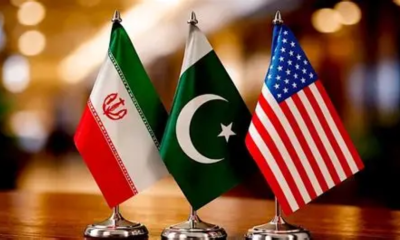
The Iran war changed Pakistan's strategic value, not its political trajectory

EU policy toward Azerbaijan: Why Brussels must move beyond political dialogue

PMI defends AI consultation tool as scrutiny grows over EU tobacco rules review

New rules to protect EU steel industry from damaging impacts of global overcapacity enter into application

International Plastic Bag Free Day – from single use to reuse

Protect children from online sexual abuse: Call for urgent negotiations and permanent solution

Will the Gulf monarchies rise above internecine disputes in the interest of collective security?

MEPs supportive of draft Biotech report, but divisions over incentives remain

'Now is really the time!' for women's health, says Cooke

Macron and WHO chief back stronger safeguards for children online

Kyrgyzstan launches Tamchy SFIT: A new international jurisdiction as a gateway to Eurasia

Kazakhstan’s dombyra: The two-stringed instrument that carries the soul of the steppe

Kazakhstan reforms under scrutiny at Brussels Press Club round table

Japan should face up to history and contribute more to regional peace

Ambassador calls for 'speeding up' of co-operation between EU and Kazakhstan

Timur Turlov at Smart Moves Summit 2025: How chess can transform global education

Shevtsova’s case: Out-of-court sanctions dismantling trust in Ukrainian cause

The future of European transport

Trump Vs Trueman

US 'no longer' an 'unconditional ally' for Europe - MEP
-
 Science4 days ago
European Inventor Award 2026 winners announced: Honouring the innovators shaping tomorrow
-
 Iraq5 days ago
Region Trade Bank strengthens international governance as Iraq's banking sector deepens global engagement
-
 European Commission5 days ago
High Representative Kallas with Commissioners Kos and Brunner in Türkiye to advance bilateral cooperation
-
 Schengen3 days ago
Open letter to president of the European Commission on the Schengen Entry/Exit System (EES)