Business
EU agrees on safer, cleaner lorries – but by 2022

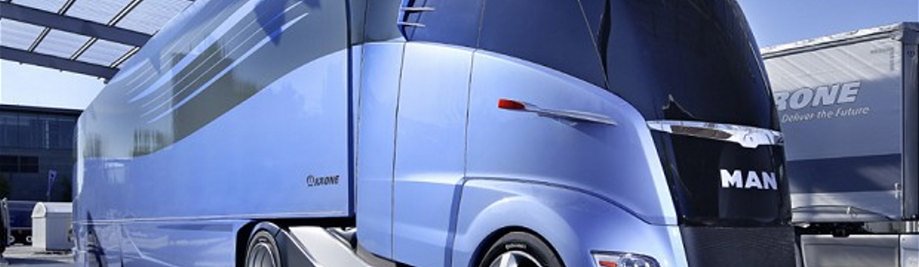
The 28 EU governments and the European Parliament last night (10 December) reached a deal to end brick-shaped lorries, which are inefficient and very dangerous for cyclists and pedestrians. The agreed law gives manufacturers the ability to produce more streamlined, safer and fuel-efficient lorries but, amid heavy lobbying by industry, sets a delay until 2022 [1] before redesigned lorry cabs are allowed on Europe’s roads. Member state representatives still need to formally approve the deal this Friday (12 December) in COREPER.
Current rules on weights and dimensions of lorries restrict cab length to 2.35m, which explains why European lorries have such box-shaped cabins. The agreed design changes would allow lorry makers to create a slightly longer and more streamlined nose, which would improve pedestrian protection, crash performance and could increase the driver’s field of view by 50%.
William Todts of Transport & Environment (T&E) said: “This deal signals the end of dangerous and inefficient brick-shaped trucks. This is good news for hauliers and truck drivers and, above all, for pedestrians and cyclists who’ll be much safer. But the absurd and unprecedented decision to impose a ban on new lorry designs until 2022 casts a dark shadow over the agreement.”
Under the original Commission proposal, new designs would have been allowed by around 2017. The European Parliament supported this. Lorry makers lobbied to only allow new designs much later fearing a quick allowance would disrupt the “competitive balance” between them. They convinced member states to impose a ban until 2025. At the negotiating table, the Parliament limited the damage and negotiated this down to 2022, although the exact timing remains uncertain.
Todts continued: “Few other industries would do what the lorry industry has done here: lobby hard to keep a ban on a better product for as long as possible. This is the same industry the Commission recently started investigating for price fixing. Clearly the Commission needs to do much more to inject real competition in this sector. Setting ambitious fuel efficiency standards for trucks like the US has done would be a good start.”
Every year 15% of all fatal collisions in Europe – around 4,200 deaths – involve lorries, according to the European Transport Safety Council. That makes lorries twice as deadly as cars. According to a new European Commission study, life-saving design changes to lorry cabs can save up to 900 lives every year [2]. In a separate declaration the Commission has said it will propose amendments to its vehicle safety regulations in 2016 to develop new safety requirements for trucks.
While lorries make up only 3% of vehicles, they account for 25% of road transport CO2 emissions in Europe. Their fuel efficiency has stagnated for the past 20 years and, contrary to cars or vans, the EU has not set fuel economy standards for trucks. T&E estimates that a more streamlined cab along with rear flaps could also improve fuel efficiency by up to 7-10%, saving hauliers around €3,000 per vehicle per year.
Earlier this year, a coalition of 130 mayors, trade unions, cyclists’ organisations, hauliers’ associations, fleets, green and safety campaigners asked MEPs to seize this once-in-a-generation chance to enforce life- and fuel-saving lorry designs as soon as possible.
The agreement also needs to be ratified by the plenary of the European Parliament.
Share this article:
EU Reporter publishes articles from a variety of outside sources which express a wide range of viewpoints. The positions taken in these articles are not necessarily those of EU Reporter. Please see EU Reporter’s full Terms and Conditions of publication for more information EU Reporter embraces artificial intelligence as a tool to enhance journalistic quality, efficiency, and accessibility, while maintaining strict human editorial oversight, ethical standards, and transparency in all AI-assisted content. Please see EU Reporter’s full A.I. Policy for more information.



Stepping out...to get the UK back in European Union

Improving energy efficiency of buildings to reduce bills and save energy

Energy use in the industry sector continues to decline

DG Translation in a city near you: June events

The role of quality assurance in advancing inclusive upper secondary VET in Slovenia

Europe must not turn its back on rural women’s empowerment

Commission accelerates transition away from animal testing in chemical safety assessments

Counterfeit cigarettes drive illicit tobacco trade to highest level in a decade, new study claims

Inconvenient questions about Andorra and San Marino that Brussels should be asking

How digital wallets are changing the way Welsh consumers pay for online services

Impasse in European Union Tobacco Tax Reform: The Swedish veto

EU Cybersecurity Act could expose member states to costly investment treaty claims, legal opinion warns

Várhelyi says unilateral measures by the US against the EU ‘would not be justified’

Libya’s fuel crisis offers lessons for energy security on both sides of the Mediterranean

490+ experts call for €10 billion ring-fenced health allocation in EU budget

ENVI opinion signals early resistance to Biotech Act SPC extension

Kazakhstan reforms under scrutiny at Brussels Press Club round table

Japan should face up to history and contribute more to regional peace

Ambassador calls for 'speeding up' of co-operation between EU and Kazakhstan

Timur Turlov at Smart Moves Summit 2025: How chess can transform global education

Shevtsova’s case: Out-of-court sanctions dismantling trust in Ukrainian cause

The future of European transport

Trump Vs Trueman