EU
#EAPM: Political sickness should not hamper population’s health

 With the UK heading out of the EU and the ‘Leave’ campaign’s main protagonist, Boris Johnson, having been savaged and shown up for the moral lightweight that he so clearly is (as he withdraws from the battlefield of the Tory leadership election), Britain looks to be on the floor for the time being, writes European Alliance for Personalised Medicine (EAPM) Executive Director Denis Horgan.
And with political in-fighting in both the Conservative and Labour camps, and with the Liberal Democrats still in tatters after a disastrous coalition, one could be forgiven for thinking that the UK is actually in its worse state for decades. On the ropes and reeling. Yet Britain, like everywhere else in Europe, has an ageing population, with a good percentage of its 65 million citizens set to be ill some time soon. Politics aside, what now for them and personalised medicine?
Well, on the downside, one has to view an eventual UK withdrawal from the European Union as a serious blow to collaboration, data-sharing and more. This helps absolutely nobody. On the upside, science and knowledge never disappears into a black hole. It is difficult for things to be un-learned. You can’t un-invent the nuclear bomb and you also cannot un-invent genetic technology that has put personalised medicine at the forefront of health care, despite cross-border difficulties, occasional silo mentalities and, crucially, a need to up-skill healthcare professionals (HCPs).
With Britain just a few short years away from quitting Europe in a legal and practical sense there are still current and future patients to think about. And their needs must still be met. Training for their doctors and nurses is vital. That’s why the Brussels-based EAPM, hosting its first Summer School for HCPs next week in Cascais, Portugal, cannot have come at a better time.
In collaboration with other medical societies under the leadership of the past president of the European Hematology Association, Christine Chomienne, EAPM is running a Summer School for young healthcare professionals called TEACH' which stands for Training and Education for Advanced Clinicians and HCPs. The goal is to bring young HCPs up-to-date with developments in this exciting field and help them to give the right treatment for the right patient at the right time.
Aimed at young healthcare professionals aged 28-40, TEACH will cover topics such as monoclonal antibodies, inhibitory drugs and putting the patient at the centre of his or her own care - all within the context of personalised medicine.
Recognizing that the patient at the centre of personalised medicine, the summer school will focus on training in “how to communicate to patients about personalised medicine” and, even more specifically, on “how the treatment they will receive is meant to work”, “how was the target of this treatment discovered in research and confirmed in the patient’s own samples?” and “what side effects or type of response may be expected considering other diseases/aspects of the patient?”.
The training will consist of plenary sessions followed by time spent in small groups focussing on how to communicate in respect of several defined topics over the course of four days. Tutors (the faculty) have been chosen from medical academic, clinical and research specialties, patient organisations and communication specialists.
The gathering will be held from 3-7 July, and, over the course of the school, the faculty of experts will oversee plenaries, group discussions and interactive role play sessions involving the HCPs on the course.
Share this article:

EU Reporter publishes articles from a variety of outside sources which express a wide range of viewpoints. The positions taken in these articles are not necessarily those of EU Reporter. Please see EU Reporter’s full Terms and Conditions of publication for more information EU Reporter embraces artificial intelligence as a tool to enhance journalistic quality, efficiency, and accessibility, while maintaining strict human editorial oversight, ethical standards, and transparency in all AI-assisted content. Please see EU Reporter’s full A.I. Policy for more information.




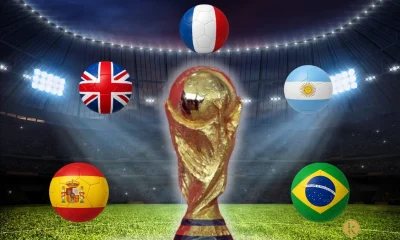
Who will win the 2026 World Cup? Data points to Spain

Western investors eye Russian assets again as sanctions discounts persist

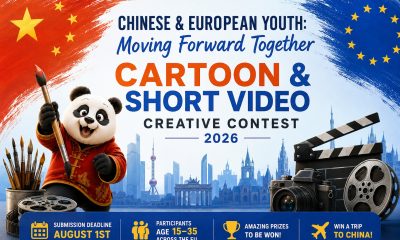
Chinese and European Youth Invited to Showcase Creativity in International Cartoon and Short Video Contest

'I don’t think Jews have a place neither in France nor in Belgium’, says Israeli deputy foreign minister

Shaping Europe’s startup future: Commissioner Zaharieva meets young innovators in Sofia

OceanEye initiative places EU at the forefront of ocean observation

European Union and Australia successfully conclude Horizon Europe negotiations

Commission updates EU Air Safety List: Air Express Algeria added, air carriers from Kyrgyzstan removed

European Sustainable Energy Week 2026: That’s a wrap

New migration and asylum rules enter into application: What is changing?

Commission proposes €540 million in financial relief and other supports for farmers facing fertiliser crisis

EU and Republic of Korea bolster strategic partnership with new areas of cooperation

EU finance ministers back EIB Group strategy for a stronger, more secure Europe in a more stable world

The Earth is accumulating heat at an accelerating rate: Global warming reached 1.37°C in 2025

Shoot the messenger: How Europe learned to silence its own warnings

When Brussels messes up: The people always pay

Kazakhstan reforms under scrutiny at Brussels Press Club round table

Japan should face up to history and contribute more to regional peace

Ambassador calls for 'speeding up' of co-operation between EU and Kazakhstan

Timur Turlov at Smart Moves Summit 2025: How chess can transform global education

Shevtsova’s case: Out-of-court sanctions dismantling trust in Ukrainian cause

The future of European transport

Trump Vs Trueman

US 'no longer' an 'unconditional ally' for Europe - MEP
-
 Sport3 days ago
Who will win the 2026 World Cup? Data points to Spain
-
 Russia5 days ago
Western investors eye Russian assets again as sanctions discounts persist
-
 China-EU4 days ago
Chinese and European Youth Invited to Showcase Creativity in International Cartoon and Short Video Contest
-
 Israel4 days ago
'I don’t think Jews have a place neither in France nor in Belgium’, says Israeli deputy foreign minister