EU
Civil liberties MEPs back #VisaWaivers for #Kosovo and #Georgia


Plans to grant citizens of Kosovo and Georgia the right to travel to the Schengen area without a visa were backed by Civil Liberties Committee MEPs on Monday (5 September).
The Committee approved the visa waiver for Kosovo by 25 votes to 24 with 2 abstentions, and that for Georgia by 44 votes to five.
Kosovo
Following the abolition of visas for the citizens of Former Yugoslav Republic of Macedonia, Montenegro and Serbia in 2009 and for Albania and Bosnia and Herzegovina in 2010, Kosovo was left isolated as the only Balkan country whose citizens still needed a visa to travel to the EU. It started the visa liberalization process in 2012, four years after all the other countries in its neighbourhood.
One of the 95 criteria the country should fulfil before obtaining the visa waiver is to ratify the border agreement with Montenegro, still pending.
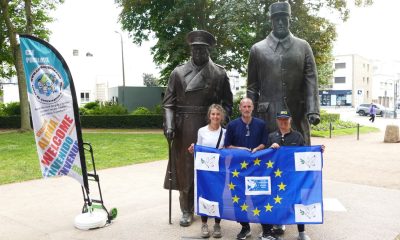
Parliament's rapporteur for the proposal, Tanja Fajon (S&D, SI), (pictured) believes that lifting the visa requirements will send a powerful signal to Kosovars, so that the country does not lose its EU accession hopes and aspirations and thus pursues its stability and democratic reform efforts.
Regarding the non-recognition issue (five EU countries do not recognize Kosovo), the draft legislation states that the abolition of visas does not affect the individual positions of the EU member states on Kosovo’s status.
Georgia
The EU-Georgia visa liberalization dialogue started in 2012 and by the end of 2015, the EU Commission had concluded that the country had fulfilled all the benchmarks. Mariya Gabriel (EPP, BG), Parliament's rapporteur for the proposal, believes that the visa waiver is an important instrument for stepping up economic and cultural relations and intensifying political dialogue, including on human rights and fundamental freedoms.
More efforts are necessary, however, in areas such as freedom of the media, independence of the judiciary, the fairness of elections and increased participation of women and national minority representatives, says Gabriel.
Next steps
The Committee approved the opening of negotiations with the Council on the Georgia proposal (with 44 votes in favour, 5 against and 1 abstention), with a view to reaching an agreement at the first reading, as well as the composition of the negotiating team. On Kosovo, MEPs rejected starting talks with the Council, with 24 votes to 25.
Once Parliament as a whole and Council endorse the legislative changes, Kosovars and Georgians will be able to enter the EU visa-free for 90 days in any 180-day period, provided they hold a biometric passport.
The visa waivers apply to the Schengen area, which includes all EU member states except Ireland and the United Kingdom, plus Iceland, Liechtenstein, Norway and Switzerland.The draft legislative proposals update the 2001 visa Regulation, transferring Kosovo and Georgia from the list on non-EU countries whose nationals need a visa to travel to the Schengen area (the “negative list”) to the list of countries whose nationals are exempt of this requirement (the “positive list”).
More information
Share this article:
EU Reporter publishes articles from a variety of outside sources which express a wide range of viewpoints. The positions taken in these articles are not necessarily those of EU Reporter. Please see EU Reporter’s full Terms and Conditions of publication for more information EU Reporter embraces artificial intelligence as a tool to enhance journalistic quality, efficiency, and accessibility, while maintaining strict human editorial oversight, ethical standards, and transparency in all AI-assisted content. Please see EU Reporter’s full A.I. Policy for more information.



Stepping out...to get the UK back in European Union

Improving energy efficiency of buildings to reduce bills and save energy

Energy use in the industry sector continues to decline

DG Translation in a city near you: June events

Europe must not turn its back on rural women’s empowerment

The role of quality assurance in advancing inclusive upper secondary VET in Slovenia

Commission accelerates transition away from animal testing in chemical safety assessments

Counterfeit cigarettes drive illicit tobacco trade to highest level in a decade, new study claims

Inconvenient questions about Andorra and San Marino that Brussels should be asking

How digital wallets are changing the way Welsh consumers pay for online services

Impasse in European Union Tobacco Tax Reform: The Swedish veto

EU Cybersecurity Act could expose member states to costly investment treaty claims, legal opinion warns

Várhelyi says unilateral measures by the US against the EU ‘would not be justified’

Libya’s fuel crisis offers lessons for energy security on both sides of the Mediterranean

490+ experts call for €10 billion ring-fenced health allocation in EU budget

ENVI opinion signals early resistance to Biotech Act SPC extension

Kazakhstan reforms under scrutiny at Brussels Press Club round table

Japan should face up to history and contribute more to regional peace

Ambassador calls for 'speeding up' of co-operation between EU and Kazakhstan

Timur Turlov at Smart Moves Summit 2025: How chess can transform global education

Shevtsova’s case: Out-of-court sanctions dismantling trust in Ukrainian cause

The future of European transport

Trump Vs Trueman