Brexit
The UK’s post-#Brexit growing pains

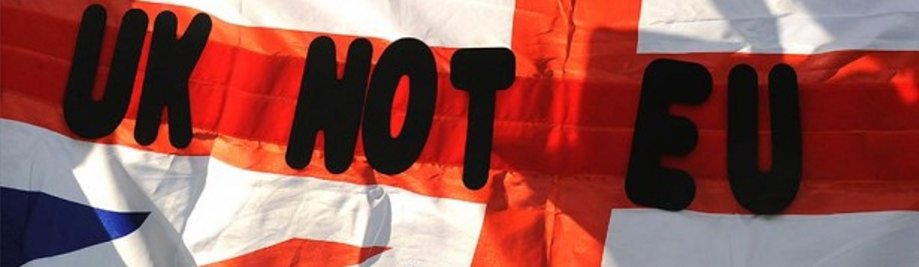
With Brexit looming ever closer, where will Britain end up? Even after UK premier Theresa May's speech this week laying out her vision of a “hard Brexit” without going into specifics, that’s a question few dare hazard an answer. But if Article 50 negotiations are to be a success, dodging a clear answer cannot be an option anymore, writes Martin Banks.
Stoking the embers, UK Foreign Minister Boris Johnson has this week warned French President Francois Hollande against trying to “administer punishment beatings” to any country that tries to leave the EU, while UKIP leader Paul Nuttall’s message to the EU’s Brexit negotiators is: “Now is not the time for empty threats.”
The Leave camp can’t be accused of being short on triumphalism and rhetoric. But are May, Johnson and Nuttall et al deluding themselves into thinking that the UK can “go it alone”?
Their case certainly seemed to be bolstered recently with reports by Change Britain that 400,000 jobs could be created (not lost) if the UK withdraws from the EU’s Customs Union and concludes trade agreements with those countries that have expressed an interest in doing so already.
Donald Trump, ahead of his inauguration as U.S president on Friday, has described Brexit “a great thing”, promising to draw up a trade deal with the UK “quickly”.
A US Senate Finance Committee member even chirped that negotiating an FTA with London would be “even easier” than negotiating a broad agreement with EU member states. Upgrading their bilateral trade relationship makes sense for both countries: the U.S. is the UK’s biggest trade partner, receiving a bit over $56 billion in goods every year. Secondly, US direct investment stock in the UK was estimated at a whopping $588bn in 2014, while London’s stake in Washington was a cool $449bn. With the Transatlantic Trade and Investment Partnership (TTIP) with the EU all but dead, negotiating such a deal would be a major coup for London.
There’s just one snag - as one Brussels based diplomat pointed out: “We have been told not to take everything Mr Trump says literally.” The real estate mogul ran a divisive campaign with frequent flip-flops on key policy issues, making his promises paper-thin.
But it’s not just the US that has been actively courting post-Brexit Britain. The Saudis have also been quick to endorse the Brits’ decision to leave the EU, pledging a speedy free trade agreement with the Gulf Cooperation Council (GCC) of which Saudi Arabia is a leading member.
The Saudis are particularly keen to diversify their economy, offering the Brits another apparent opportunity for a bilateral trade deal. Ties between the two countries have been growing every single year, boosted by strong defense and commercial ties. Saudi is a high growth country that is actively moving away from its reliance on oil receipts and is embarking on significant public works projects, and is planning to spend some £440 billion in the coming years.
Hundreds of British companies are operating in Saudi Arabia and are well positioned to benefit from this spending bonanza, especially if a FTA were signed between the two countries.
But before either negotiation can be started, many obstacles remain. London simply can’t start talking free trade with other partners without first disentangling itself from the EU. Under current rules, the UK has no individual trade tariffs, quotas or schedules with third countries – instead, it relies on European rules.
And there’s little hope that Article 50 negotiations will proceed nicely.
In a speech to the European Parliament in Strasbourg on Wednesday, Joseph Muscat, the Prime Minister of Malta, holder of the EU presidency, bluntly told the Brits that a post-Brexit deal will have to be “less desirable” than EU membership.
The fate of the many French and Poles living in Britain is still uncertain, as is Britain’s access to the single market and “passporting” rights for City of London firms. French Finance Minister Michel Sapin has also warned that outside the legal requirements of the EU, the City cannot keep its lucrative $120 trillion volume business trading and clearing euros.
The UK is legally bound to negotiate its withdrawal under Article 50 of the EU Treaty and this will not be invoked until the end of March. Once invoked, Article 50 talks are not supposed to last longer than two years but former UK Europe Minister Denis MacShane argues that at the EU’s normal pace of negotiation expecting a conclusion within two years could be hopelessly optimistic.
Now it is over to the Supreme Court in the UK. Next Tuesday (24 January), in a landmark ruling, judges are expected to say that May must get the consent of MPs and peers before she starts the Brexit ball rolling. She and others might be projecting Brexit as a “great opportunity” but it still very much remains unclear to what extent her predictions will come true.
Share this article:
EU Reporter publishes articles from a variety of outside sources which express a wide range of viewpoints. The positions taken in these articles are not necessarily those of EU Reporter. Please see EU Reporter’s full Terms and Conditions of publication for more information EU Reporter embraces artificial intelligence as a tool to enhance journalistic quality, efficiency, and accessibility, while maintaining strict human editorial oversight, ethical standards, and transparency in all AI-assisted content. Please see EU Reporter’s full A.I. Policy for more information.



Stepping out...to get the UK back in European Union

Why right-wing populism remains popular 10 years post-Brexit

Europe's broken promise, 300 million times over

Improving energy efficiency of buildings to reduce bills and save energy

Energy use in the industry sector continues to decline

DG Translation in a city near you: June events

The role of quality assurance in advancing inclusive upper secondary VET in Slovenia

Europe must not turn its back on rural women’s empowerment

EU Cybersecurity Act could expose member states to costly investment treaty claims, legal opinion warns

Várhelyi says unilateral measures by the US against the EU ‘would not be justified’

Libya’s fuel crisis offers lessons for energy security on both sides of the Mediterranean

490+ experts call for €10 billion ring-fenced health allocation in EU budget

ENVI opinion signals early resistance to Biotech Act SPC extension

Health sector hails EU vote on workforce crisis as ‘major step forward’

ECDC chief warns MEPs more health threats require more resources

Outrage of Iranian exiles and opposition of MEPs to inviting Reza Pahlavi to the European Parliament

Kazakhstan reforms under scrutiny at Brussels Press Club round table

Japan should face up to history and contribute more to regional peace

Ambassador calls for 'speeding up' of co-operation between EU and Kazakhstan

Timur Turlov at Smart Moves Summit 2025: How chess can transform global education

Shevtsova’s case: Out-of-court sanctions dismantling trust in Ukrainian cause

The future of European transport

Trump Vs Trueman

US 'no longer' an 'unconditional ally' for Europe - MEP
-
 Brexit3 days ago
Stepping out...to get the UK back in European Union
-
 Brexit5 days ago
Why right-wing populism remains popular 10 years post-Brexit
-
 Animal welfare5 days ago
Europe's broken promise, 300 million times over
-
 Energy4 days ago
Improving energy efficiency of buildings to reduce bills and save energy