Economy
Zero tolerance for counterfeiting the euro: Commission proposal clears final hurdle


The EU's finance ministers have today (6 May) backed measures that will reinforce the protection of the euro and other currencies through criminal law measures (IP/13/88). New measures will include tougher sanctions for criminals and improved tools for cross-border investigation. The directive was backed by the European Parliament on 16 April 2014 (MEMO/14/303) and is expected to enter into force in June 2014.
Johannes Hahn, commissioner responsible for justice during Vice President Viviane Reding's electoral leave said: "These new measures will help protect one of our most valuable assets: the euro. Citizens and businesses must be able to trust that the money they have in their pockets is authentic. And criminals seeking to undermine the strength of the euro must be duly punished. Today's endorsement marks a strong resolve to protect our currency for honest businesses and citizens and sends a stark warning to criminals."
Taxation, Customs, Statistics, Audit and Anti-Fraud Commissioner Algirdas Šemeta said:"These new rules against euro-counterfeiting will boost confidence in our common currency, and help to protect honest businesses and citizens from ending up with fake money in their pockets. While the final text has less bite than the Commission would have liked, it is nonetheless an important advance on where we stand today. The euro is better protected against criminals, thanks to this new law adopted today."
Since the euro was introduced in 2002, counterfeiting is estimated to have cost the EU at least €500 million. Recent figures published by the European Commission show that a total of 175,900 fake euro coins were withdrawn from circulation last year. According to the latest figures from the European Central Bank, 353,000 counterfeit euro banknotes were withdrawn in the second half of 2013.
The measures proposed by the Commission will bring about the following changes:
- The directive will set the lower limit for maximum penalties in member states: maximum sanctions must be at least eight years for production and at least five years for distribution of fake notes and coins.
- It will also ensure investigative tools for organised crime or serious cases provided for in national law can be used in cases of counterfeiting, thus improving the quality of cross-border investigation in this field.
- Analysing seized forgeries will be possible earlier during judicial proceedings, which will improve detection of counterfeit euros and prevent their circulation.
Following the political agreement with the Council in the trilogue meeting (MEMO 14/123), the vote in the European on 16 April supporting the directive (MEMO/14/303) and todays' backing by the Council, the directive is due to be signed by the President of the European Parliament and the President of the Council on 15 May 2014. After publication of the directive in the Official Journal, which is expected in June 2014, member states will have two years to transpose the new rules into national law.
More information
Frequently Asked Questions: MEMO/14/334
Homepage of Commissioner Algirdas Šemeta
Homepage of Commissioner Johannes Hahn who has taken interim responsibility for the justice portfolio until 26 May 2014
Share this article:
EU Reporter publishes articles from a variety of outside sources which express a wide range of viewpoints. The positions taken in these articles are not necessarily those of EU Reporter. Please see EU Reporter’s full Terms and Conditions of publication for more information EU Reporter embraces artificial intelligence as a tool to enhance journalistic quality, efficiency, and accessibility, while maintaining strict human editorial oversight, ethical standards, and transparency in all AI-assisted content. Please see EU Reporter’s full A.I. Policy for more information.





EU and South Africa kick off intergovernmental dialogue on Clean Trade and Investment Partnership

Seveso - 50 years on: EU strengthens its commitment to industrial safety in a changing landscape of risk

Why young jobseekers struggle to find roles abroad that fit their expertise

Commission opens formal investigation into possible gun jumping in XXXLutz's acquisition of Porta

Shared commitment to advance EOSC through new EOSC Nodes and EOSC projects

Farmers, fair markets and consumers: new report highlights the role of EU competition rules in agriculture

Falling in love with the Maldives

ECR MEPs question the European Commission on cardiovascular health and diet promoting the Mediterranean diet as an alternative to ultra-processed foods as key to tackling obesity

STATEMENT by the Ministry of Foreign Affairs of the Republic of Kazakhstan

Kazakhstan seeks regional AI leadership as economic partnership with China enters new phase

Starmer’s problem? 'He is not a politician'

Why a Brussels–Nicosia–Eastern Mediterranean strategic affairs platform would benefit the European Union

Albania's Vlora airport standoff tests investor confidence as EU accession clock ticks
ECR MEPs question the European Commission on cardiovascular health and diet promoting the Mediterranean diet as an alternative to ultra-processed foods as key to tackling obesity

Kazakhstan's fixed capital investment tops 9.5 trillion tenge in H1 2026

Commission adopts simpler rules for EU agri-food promotion policy

Kazakhstan reforms under scrutiny at Brussels Press Club round table

Japan should face up to history and contribute more to regional peace

Ambassador calls for 'speeding up' of co-operation between EU and Kazakhstan

Timur Turlov at Smart Moves Summit 2025: How chess can transform global education

Shevtsova’s case: Out-of-court sanctions dismantling trust in Ukrainian cause

The future of European transport

Trump Vs Trueman

US 'no longer' an 'unconditional ally' for Europe - MEP
-
 South Africa5 days ago
EU and South Africa kick off intergovernmental dialogue on Clean Trade and Investment Partnership
-
 Disasters5 days ago
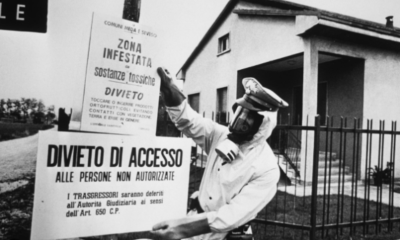
Seveso - 50 years on: EU strengthens its commitment to industrial safety in a changing landscape of risk
-
 Employment5 days ago
Why young jobseekers struggle to find roles abroad that fit their expertise
-
 European Commission5 days ago
Commission opens formal investigation into possible gun jumping in XXXLutz's acquisition of Porta