Business
Investment Plan for Europe: Slovakia to contribute €400 million

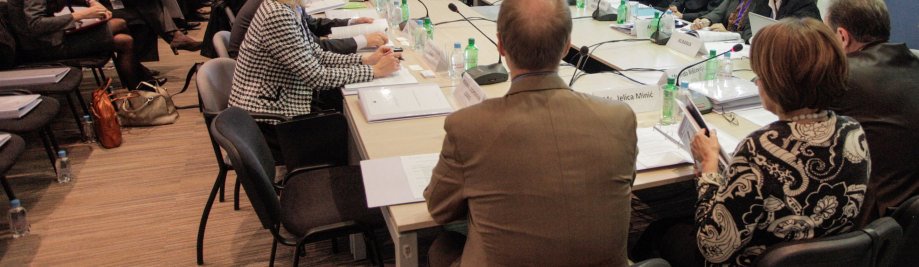
Today (15 June) Slovakia announced that it will contribute €400 million to projects benefiting from finance by the European Fund for Strategic Investments (EFSI), at the heart of the €315 billion Investment Plan for Europe. Slovakia is the seventh country to contribute to the Plan, even before the EFSI becomes operational, after Germany, Spain, France, Italy, Luxembourg and Poland. The contribution will come via Slovenský Investičný Holding and Slovenská Záručná a Rozvojová Banka, Slovakia's National Promotional Banks. Commission Vice President Jyrki Katainen, responsible for jobs, growth, investment and competitiveness, was in Bratislava as part of the Investment Plan roadshow and received the news in person from Deputy Prime Minister and Finance Minister Peter Kazimir.
Vice President Katainen said: "I am very glad to be here in Bratislava for the announcement that Slovakia will contribute to the Investment Plan. Two weeks ago we reached the political agreement on the EFSI Regulation, with Finance Ministers expected to formally approve it this Friday, and the European Parliament will take its final vote next week. Less than seven months after the Investment Plan got underway I now look forward to seeing the concrete results in the coming weeks – as I know our European citizens do as well."
Vice President Maroš Šefčovič, responsible for Energy Union, said: "I welcome the decision of the Slovak Government to announce the contribution to the Investment Plan for Europe at the level of projects. Slovakia has the stable environment to invest: the Investment Plan brings great opportunities to businesses and public-private partnerships, notably in the fields of energy efficiency and infrastructure, be it energy, transport or digital."
Background
On 28 May, just four and a half months after the Commission adopted the legislative proposal on 13 January, EU legislators reached a political agreement on the Regulation for European Fund for Strategic Investments (EFSI). Member States unanimously endorsed it on 10 March and the European Parliament voted in committee on 20 April. Finance Ministers are now expected to approve the Regulation at the ECOFIN Council on 19 June, and the European Parliament plenary vote on the Regulation is now expected to take place on 24 June, allowing the EFSI to be operational by September as planned.
In line with the European Council conclusions of December 2014, which invited the European Investment Bank (EIB) Group to "start activities by using its own funds as of January 2015", the EIB has already announced several projects to be pre-financed in the context of the Investment Plan for Europe, in which it is the Commission's strategic partner.
National Promotional Banks have a crucial role to play in getting Europe investing again. They have the expertise to carry out the Investment Plan, and they often ensure the most efficient use of public resources. Slovakia is now the seventh country to announce a contribution through its National Promotional Bank: Germany announced in February that it would contribute €8bn to the Investment Plan through KfW. Also in February, Spain announced a €1.5bn contribution through Instituto de Crédito Oficial (ICO). In March, France announced a €8bn pledge through Caisse des Dépôts (CDC) and Bpifrance (BPI) and Italy announced it will contribute €8bn via Cassa Depositi e Prestiti (CDP). In April Luxembourg announced that it will contribute €80m via Société Nationale de Crédit et d’Investissement (SNCI), and Poland announced that it will contribute €8bn via Bank Gospodarstwa Krajowego (BGK).
The economic crisis brought about a sharp reduction of investment across Europe. That is why collective and co-ordinated efforts at European level are needed to reverse this downward trend and put Europe on the path of economic recovery. Adequate levels of resources are available and need to be mobilized across the EU in support of investment. There is no single, simple answer, no growth button that can be pushed, and no one-size-fits-all solution. The Commission is setting out an approach based on three pillars: structural reforms to put Europe on a new growth path; fiscal responsibility to restore the soundness of public finances and cement financial stability; and investment to kick-start growth and sustain it over time. The Investment Plan for Europe is at the heart of this strategy.
More information
Share this article:
EU Reporter publishes articles from a variety of outside sources which express a wide range of viewpoints. The positions taken in these articles are not necessarily those of EU Reporter. Please see EU Reporter’s full Terms and Conditions of publication for more information EU Reporter embraces artificial intelligence as a tool to enhance journalistic quality, efficiency, and accessibility, while maintaining strict human editorial oversight, ethical standards, and transparency in all AI-assisted content. Please see EU Reporter’s full A.I. Policy for more information.



The South Caucasus at a historic turning point: Between lasting peace and renewed confrontation
The security environment of the South Caucasus amid changing geopolitical realities

Commission registers two European Citizens' Initiatives on education and housing

Commission sends Statements of Objections to several companies and trade associations in suspected construction chemicals cartel

Kazakhstan and Belgium: Building a Partnership for the Future

Commission endorses Latvia’s €617 million Social Climate Plan to support vulnerable households and transport users in the clean transition

Why the US is losing its legitimacy as a global superpower and the trust of the comity of nations

Commission outlines measures to strengthen Europe's banking sector and support growth

JoinCare explores scientific exchange during visit to Japan’s National Institute of Infectious Diseases

New episode – DGT podcast: Languages and Technology

Become a European Commission trainee – applications are now open

Commission outlines measures to strengthen Europe's banking sector and support growth

British political shifts and the future of UK-China ties
The South Caucasus at a historic turning point: Between lasting peace and renewed confrontation

As Ireland chairs the EU Presidency, what impact has over fifty years of EU membership had on Ireland

The Digital Markets Act Is Hurting Europeans. It’s Time to Put Progress, Free Markets, and Competition First

Kazakhstan reforms under scrutiny at Brussels Press Club round table

Japan should face up to history and contribute more to regional peace

Ambassador calls for 'speeding up' of co-operation between EU and Kazakhstan

Timur Turlov at Smart Moves Summit 2025: How chess can transform global education

Shevtsova’s case: Out-of-court sanctions dismantling trust in Ukrainian cause

The future of European transport

Trump Vs Trueman

US 'no longer' an 'unconditional ally' for Europe - MEP
-
 South Caucasus1 day ago
The South Caucasus at a historic turning point: Between lasting peace and renewed confrontation
-
South Caucasus2 days ago
The security environment of the South Caucasus amid changing geopolitical realities
-
 European Citizens' Initiative4 days ago
Commission registers two European Citizens' Initiatives on education and housing
-
 European Commission2 days ago
Commission sends Statements of Objections to several companies and trade associations in suspected construction chemicals cartel