Employment
Commission announces measures to better protect migrant workers and fight illegal employment

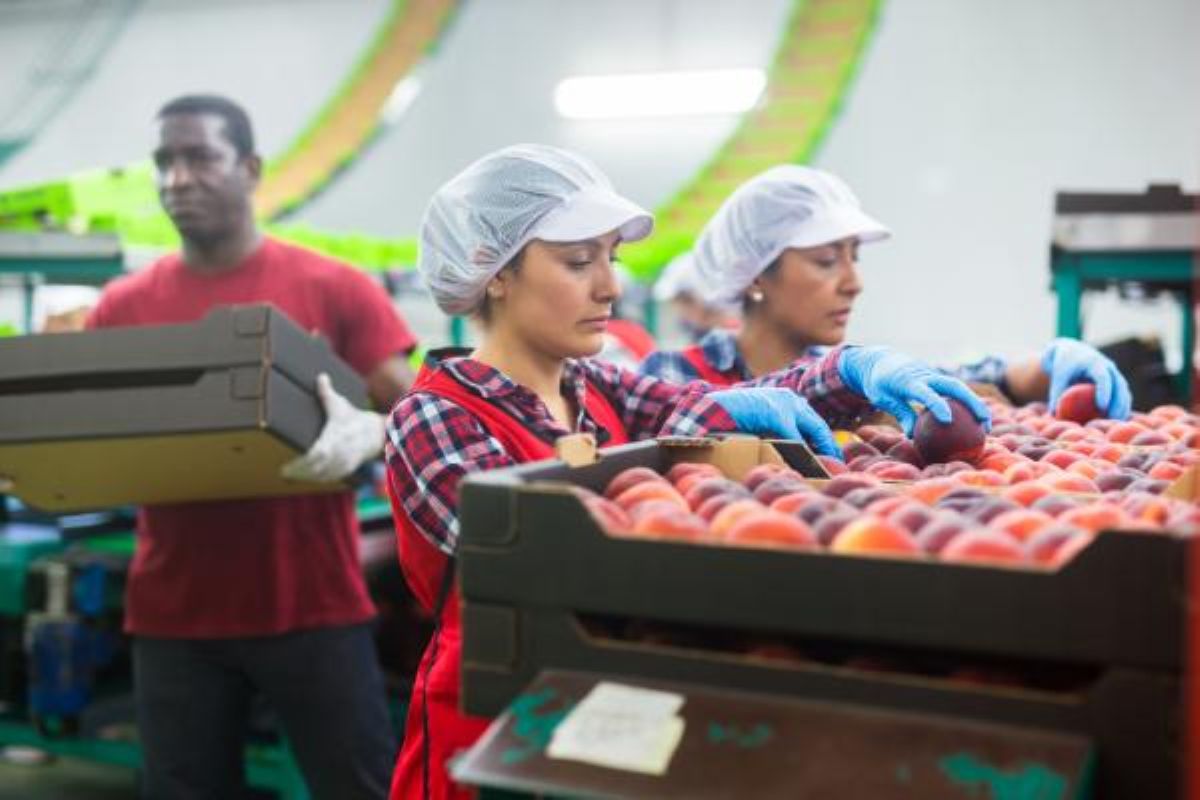
The Commission has adopted two new reports on the Employers Sanctions Directive and the Seasonal Workers Directive, assessing efforts to ensure fair working conditions for third-country nationals, prevent migrant exploitation and tackle illegal employment.
As set out in the January 2026 European Asylum and Migration Management Strategy, labour mobility, the fight against illegal employment and the protection of migrant workers are key priorities to address drivers of illegal migration, promote fair competition and strengthen social cohesion.
The implementation report on the Employers Sanctions Directive shows that Member States carried out almost 600,000 targeted inspections in high-risk sectors in 2024. These inspections led to more than 28,000 detections of irregularly employed migrant workers in 2023 and 2024, while financial sanctions exceeded EUR 200 million annually over the same period. However, the implementation of the Directive remains fragmented, particularly as regards sanctions, prosecutions and convictions. Significant data gaps also persist, notably on complaints by migrant workers, residence permits granted in connection with exploitation, and actual back-payments recovered.
The report on the Seasonal Workers Directive confirms that the Directive provides a legal framework for orderly legal migration, fair working conditions and adequate living conditions for seasonal workers. It has helped streamline legal pathways, reduce incentives for undeclared work and strengthen workers’ rights, including through equal treatment, accommodation safeguards, information obligations, the possibility to change employer, and complaint and redress mechanisms. At the same time, the report finds that the Directive’s objectives are only partly achieved in practice, due to persistent gaps in access to adequate accommodation, change of employer, information, monitoring, enforcement and remedies.
To strengthen monitoring, enforcement and protection mechanisms on irregular employment and worker exploitation, the Commission has launched a EUR 10 million call for expression of interest under the Asylum, Migration and Integration Fund: Specific Action AMIF/2026/SA/2.4.1 – Protecting third-country workers’ rights while fighting against illegal employment of irregularly staying third-country nationals, with EU co-financing of up to 90%.
The call supports Member States in developing targeted multi-stakeholder projects to protect third-country national workers, including seasonal workers, and to tackle illegal employment, labour exploitation and undeclared work in high-risk sectors, such as agriculture, care, construction, transport and hospitality. Eligible actions may include awareness-raising, legal and psychosocial support, improved complaint and redress mechanisms, risk-based inspections, capacity-building for labour inspectorates, improved data collection and stronger cooperation between authorities, social partners and civil society. Member states may submit their application by 28 August 2026.
As part of the 2026 revision of its mandate, the European Labour Authority will also review how it could better address the challenges related to abuses of the working conditions of third-country nationals, including seasonal workers and those illegally employed.
In 2026, the Commission will launch an evaluation of the Employers Sanctions Directive to assess whether it remains fit for purpose and whether existing rules need to be reviewed or clarified. In the meantime, Member States are encouraged to fully implement the Directive, strengthen prevention and detection of illegal employment, and improve the governance and coordination between competent authorities, including through national coordinators.
The Commission will continue to work with Member States and stakeholders to ensure the correct transposition and effective implementation of the Seasonal Workers Directive, and will intensify cooperation with third countries through Talent Partnerships to improve seasonal work opportunities and protections in the EU.
For more information
Report on the implementation of the Employers Sanctions Directive
Report on the implementation of the Seasonal Workers Directive
Share this article:
EU Reporter publishes articles from a variety of outside sources which express a wide range of viewpoints. The positions taken in these articles are not necessarily those of EU Reporter. Please see EU Reporter’s full Terms and Conditions of publication for more information EU Reporter embraces artificial intelligence as a tool to enhance journalistic quality, efficiency, and accessibility, while maintaining strict human editorial oversight, ethical standards, and transparency in all AI-assisted content. Please see EU Reporter’s full A.I. Policy for more information.



The South Caucasus at a historic turning point: Between lasting peace and renewed confrontation
The security environment of the South Caucasus amid changing geopolitical realities

Commission sends Statements of Objections to several companies and trade associations in suspected construction chemicals cartel

As Ireland chairs the EU Presidency, what impact has over fifty years of EU membership had on Ireland

Commission endorses Latvia’s €617 million Social Climate Plan to support vulnerable households and transport users in the clean transition

EU and Portugal team up to keep brightest tech talents at home

British political shifts and the future of UK-China ties

Why the US is losing its legitimacy as a global superpower and the trust of the comity of nations

Tokayev urges Putin to 'freeze' Ukraine war in rare public appeal for peace

JoinCare explores scientific exchange during visit to Japan’s National Institute of Infectious Diseases

New episode – DGT podcast: Languages and Technology

Become a European Commission trainee – applications are now open

Commission outlines measures to strengthen Europe's banking sector and support growth
British political shifts and the future of UK-China ties
The South Caucasus at a historic turning point: Between lasting peace and renewed confrontation
As Ireland chairs the EU Presidency, what impact has over fifty years of EU membership had on Ireland

Kazakhstan reforms under scrutiny at Brussels Press Club round table

Japan should face up to history and contribute more to regional peace

Ambassador calls for 'speeding up' of co-operation between EU and Kazakhstan

Timur Turlov at Smart Moves Summit 2025: How chess can transform global education

Shevtsova’s case: Out-of-court sanctions dismantling trust in Ukrainian cause

The future of European transport

Trump Vs Trueman

US 'no longer' an 'unconditional ally' for Europe - MEP
-
 South Caucasus2 days ago
The South Caucasus at a historic turning point: Between lasting peace and renewed confrontation
-
South Caucasus3 days ago
The security environment of the South Caucasus amid changing geopolitical realities
-
 European Commission3 days ago
Commission sends Statements of Objections to several companies and trade associations in suspected construction chemicals cartel
-
 EU Presidency2 days ago
As Ireland chairs the EU Presidency, what impact has over fifty years of EU membership had on Ireland