EU steel industry
Commission launches consultation on future measures to safeguard EU steel sector from unfair trade practices


The European Commission has launched a targeted consultation to help identify future measures to continue safeguarding the EU steel sector from unfair trade practices and the negative effects of global steel overcapacities.
The intention is to gather expertise from sectoral stakeholders with a view to finding an effective replacement for the current EU safeguard on steel, due to expire on 30 June 2026. Stakeholders have until 18 August 2025 to express their views on several potential scenarios prepared by the Commission. Through this consultation, the Commission aims to gather input from across the steel value chain. These valuable insights will directly shape the Commission’s legislative proposal.
In its Steel and Metals Action Plan (SMAP), the Commission committed to presenting said legislative proposal by the third quarter of 2025.
Next Steps
The consultation launched today is comprised of a Call for Evidence and a Questionnaire, available on EU Survey, which outlines different scenarios upon which stakeholders can express their views.
The period to submit views and reply to the questionnaire will run until 18 August 2025 at close of business (Brussels time). The Commission will then review the feedback and incorporate it into its ongoing assessment process. A factual summary of the responses will be made available to stakeholders.
The Commission will also prepare a Staff Working Document to accompany the Commission’s legislative proposal. This document will include an economic model that analyses different scenarios and their effects on the EU steel supply chain.
Background
European Commission President Ursula von der Leyen identified the EU’s steel industry as a core engine for European prosperity. The Competitiveness Compass for the EU, adopted on 29 January 2025, identified steel and metals as a key area for action. Furthermore, the Strategic Dialogue on Steel, hosted by the president on 4 March 2025 and involving stakeholders from across the whole steel supply chain, reflected the critical challenges faced by the sector and the need for urgent actions.
On 19 March 2025, the Commission adopted a Steel and Metals Action Plan, outlining actions across different policy areas, including trade. In the field of trade, the Commission committed to propose, by the third quarter of 2025, a measure replacing the steel safeguards that will legally expire on 30 June 2026, providing a highly effective level of protection against negative trade-related effects caused by global overcapacities.
The Commission first introduced the steel safeguard measure in 2019 to prevent economic damage to EU steel producers from trade diversion and rising imports. It has undertaken numerous reviews since, including functioning reviews to adapt the measure to market developments and prolongation reviews.
The current steel safeguard measure was extended for two years in June 2024, following an investigation requested by fourteen EU member states. This investigation showed that the safeguard measure continued to be necessary to prevent or remedy serious injury to the EU’s steel industry.
Prosperity and Industrial Strategy Executive Vice President Stéphane Séjourné said: "Faced with the current uncertainty, and the flow of Chinese steel overcapacities, our current safeguard clause does not suffice to efficiently protect our European steel producers. We therefore launch a consultation to seek the best recommendations on how to replace the current clause. And effectively protect the European steel market."
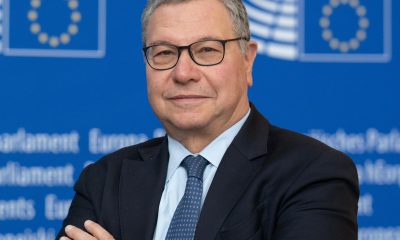
Trade and Economic Security Commissioner Maroš Ševčovič (pictured) said: “Our steel sector is of strategic importance to the EU economy, and the Commission’s commitment to supporting - and, when necessary, protecting - it is absolute. By launching this consultation, we are inviting those who know the sector best to share their valuable insights. We will continue to stand firm against the damaging effects of unfair trading practices - now and in the future - to safeguard Europe’s industrial strength.”
More information
Share this article:
EU Reporter publishes articles from a variety of outside sources which express a wide range of viewpoints. The positions taken in these articles are not necessarily those of EU Reporter. Please see EU Reporter’s full Terms and Conditions of publication for more information EU Reporter embraces artificial intelligence as a tool to enhance journalistic quality, efficiency, and accessibility, while maintaining strict human editorial oversight, ethical standards, and transparency in all AI-assisted content. Please see EU Reporter’s full A.I. Policy for more information.



ECR MEPs question the European Commission on cardiovascular health and diet promoting the Mediterranean diet as an alternative to ultra-processed foods as key to tackling obesity

Albania's Vlora airport standoff tests investor confidence as EU accession clock ticks

Iran’s regime in crisis: Negotiations, internal divisions and growing resistance

Why a Brussels–Nicosia–Eastern Mediterranean strategic affairs platform would benefit the European Union

Commission approves €659 million German state aid for four new semiconductor facilities

Kazakhstan seeks regional AI leadership as economic partnership with China enters new phase

EU law on nitrates pollution remains effective, with scope for smarter implementation

Starmer’s problem? 'He is not a politician'

The EU’s Forced-Labour Regulation Faces a Credibility Test

European Statistical Monitor: July edition

Commission publishes state aid guidance on carbon contracts for difference

Commission greenlights Estonia's fourth payment request for €135.5 million under NextGenerationEU

Drones, dominance, and the Iranian impasse: The West's strategic blind spot

Kazakhstan's fixed capital investment tops 9.5 trillion tenge in H1 2026

Commission registers two European Citizens' Initiatives on education and housing

Kazakhstan and Belgium: Building a Partnership for the Future

Kazakhstan reforms under scrutiny at Brussels Press Club round table

Japan should face up to history and contribute more to regional peace

Ambassador calls for 'speeding up' of co-operation between EU and Kazakhstan

Timur Turlov at Smart Moves Summit 2025: How chess can transform global education

Shevtsova’s case: Out-of-court sanctions dismantling trust in Ukrainian cause

The future of European transport

Trump Vs Trueman

US 'no longer' an 'unconditional ally' for Europe - MEP
-
 Italy4 days ago
ECR MEPs question the European Commission on cardiovascular health and diet promoting the Mediterranean diet as an alternative to ultra-processed foods as key to tackling obesity
-
 Albania4 days ago
Albania's Vlora airport standoff tests investor confidence as EU accession clock ticks
-
 Iran5 days ago
Iran’s regime in crisis: Negotiations, internal divisions and growing resistance
-
 Euro-Mediterranean relations4 days ago
Why a Brussels–Nicosia–Eastern Mediterranean strategic affairs platform would benefit the European Union