Justice and Home Affairs
Justice and Home Affairs Council

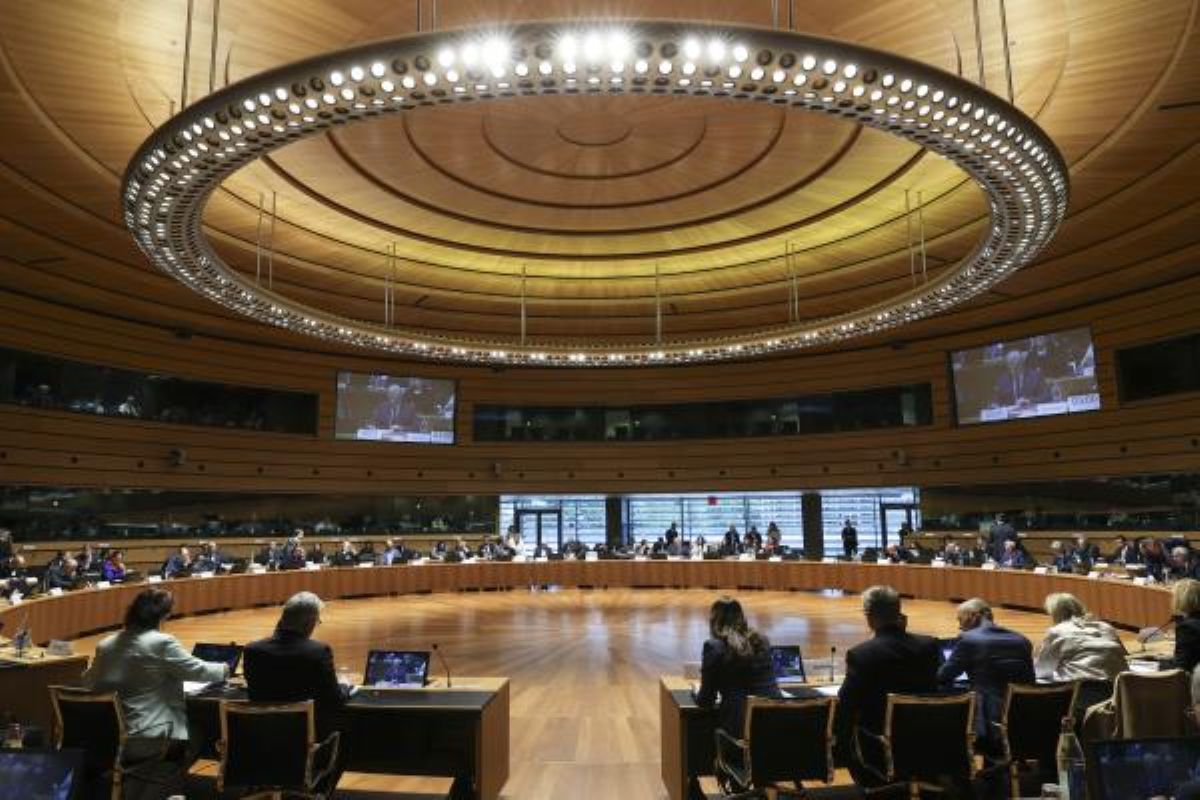
On 4 June, Justice and Home Affairs Ministers from EU member states and Schengen Associated Countries met at the JHA Council in Luxembourg.
Among other topics, Commissioner for Internal Affairs and Migration Magnus Brunner presented the main findings of the 5th Report on the state of Schengen, giving an overview of facts and figures on illegal border crossings, issuance of visas, functioning of border management IT systems, returns, law enforcement cooperation and information exchange.
Home affairs Ministers welcomed the political agreement reached between the European Parliament and the Council on 1 June 2026 on the Regulation establishing a new Common European System for Returns as a key component for a fully functioning Schengen area. They agreed that the Schengen Council cycle priorities set in June 2025 are still relevant and should continue to steer actions in 2026 and 2027. Ministers agreed to focus on strengthening external borders, increasing returns, internal security and progressively removing internal border controls.
Migration
Home affairs Ministers discussed the implementation of the asylum and migration pact ahead of its entry into application on 12 June. They also reviewed the progress on the roll-out of the new Eurodac system, which will become operational on the same day. The pact will make the common European asylum system more effective, with faster procedures and clearer rules regarding both sharing responsibility and solidarity among Member States.
Ministers exchanged views on the external dimension of migration, with a particular focus on the cooperation with Somalia on readmission of its citizens and on response to migrant smuggling networks, both in Somalia and in transit countries. Ministers were also briefed about the migratory pressure on the English Channel and the North Sea.
Ukraine
On the future legal status of displaced persons from Ukraine, given that the current temporary protection is valid until 4 March 2027, the Commission proposed an extension of temporary protection for another year, with an adjusted scope to exclude from temporary protection men of conscription age between 23 and 60, provided they are newcomers in the EU. A legislative proposal is expected soon.
Security
Ministers exchanged views on the implementation and follow-up of the drug strategy and adopted Conclusions on operationalizing the strategy. They highlighted the importance of the action plan against drug trafficking, which focuses on better cooperation between law enforcement, judiciary police, and customs, by addressing the challenge of synthetic drugs and drug precursors and by strengthening international cooperation and partnerships.
Ministers also discussed the impact of the current geopolitical environment on the EU and how to respond to challenges, with a focus on the situation in the Middle East and the conflict in Iran.
Find out more
Justice and Home Affairs Council
Share this article:
EU Reporter publishes articles from a variety of outside sources which express a wide range of viewpoints. The positions taken in these articles are not necessarily those of EU Reporter. Please see EU Reporter’s full Terms and Conditions of publication for more information EU Reporter embraces artificial intelligence as a tool to enhance journalistic quality, efficiency, and accessibility, while maintaining strict human editorial oversight, ethical standards, and transparency in all AI-assisted content. Please see EU Reporter’s full A.I. Policy for more information.



Setting a new benchmark in premium travel

Survey on an EU Blueprint for intellectual property licensing and spinoff creation

Burnham as PM? 'Wait and see'

Statement by the Ministry of Foreign Affairs of the Republic of Kazakhstan

Rule of law report strengthens EU democracy and fundamental rights

Kazakhstan and Belgium: Building a Partnership for the Future

Kazakhstan: Central Election Committee reviews the results of the nomination of candidates for the deputies of Kurultai

Ban on destruction of unsold clothes and shoes enters into application

The Digital Markets Act Is Hurting Europeans. It’s Time to Put Progress, Free Markets, and Competition First

From Ukraine to Suez: Why the Mediterranean has become the strategic centre of gravity

Commission sends Statements of Objections to several companies and trade associations in suspected construction chemicals cartel

Commission endorses Latvia’s €617 million Social Climate Plan to support vulnerable households and transport users in the clean transition

Commission fines AliExpress €550 million for breaching the Digital Services Act

Astana Hub unveils infrastructure to support AI innovation in health care

The security environment of the South Caucasus amid changing geopolitical realities

Why the US is losing its legitimacy as a global superpower and the trust of the comity of nations

Kazakhstan reforms under scrutiny at Brussels Press Club round table

Japan should face up to history and contribute more to regional peace

Ambassador calls for 'speeding up' of co-operation between EU and Kazakhstan

Timur Turlov at Smart Moves Summit 2025: How chess can transform global education

Shevtsova’s case: Out-of-court sanctions dismantling trust in Ukrainian cause

The future of European transport

Trump Vs Trueman

US 'no longer' an 'unconditional ally' for Europe - MEP
-
 Aviation/airlines4 days ago
Setting a new benchmark in premium travel
-
 Intellectual Property Rights4 days ago
Survey on an EU Blueprint for intellectual property licensing and spinoff creation
-
 Labour3 days ago
Burnham as PM? 'Wait and see'
-
 Kazakhstan4 days ago
Statement by the Ministry of Foreign Affairs of the Republic of Kazakhstan