Education
Blind leaders call for ratification of the Marrakesh treaty


At the European Parliament in Brussels on 17 December, blind leaders from across Europe urged the EU to give them an overdue Christmas present - ratification of the Marrakesh Treaty. The treaty - if ratified - would help them end the 'book famine' in which just a few per cent of books are available in accessible formats such as audio or large print.
They were joined in this appeal by several members of the European Parliament and the TransAtlantic Consumer Dialogue (TACD).
So far, six months after the treaty was agreed, the EU has still done nothing towards its ratification. If the treaty is not ratified, it can do nothing to help blind people get the books they need for education, instruction, and inclusion in society.
European Blind Union President Wolfgang Angermann, who led the EBU deputation, said: “Information is what we need for our decisions and choices in all aspects of life. So, access to information is a basic human right. After all the hard work put into obtaining this treaty, the blind and partially sighted community have waited long enough. It is scandalous that six months after agreeing to the Treaty text the EU has still not signed the Treaty and has not even decided on the legal procedure to be used in the ratification process by member states and the European Parliament. EBU urges all member states to urgently sign and ratify the Treaty. We ask the members of the European Parliament to continue to support our campaign – as they have done fantastically so far - to secure full and speedy EU ratification.”
MEP Eva Lichtenberger said: “This treaty is a major step forward for the rights of blind and partially sighted people. It will only be effective after ratification by a maximum number of countries. I offer my support to this campaign and push for the ratification of this treaty as speedily as possible and encourage all my colleagues to do the same.”
The participants welcomed Pierre Delsaux's reply, who represented the European Commission, when he assured that the Commission is in favour of the ratification process being taken forward before and separately from the intensive revision of EU copyright legislation that is expected during the forthcoming years.
Second campaign now under way
Obtaining the treaty required a hard campaign over several years, not least in the EU itself. However, the treaty will only be of any benefit if it comes into force. To do so, at least twenty countries must ratify it. Even then, for it to be useful, we need ratification to be as widespread as possible. Only organisations in countries which have ratified can send books to each other under the terms of the treaty. Right now, EBU is waiting for the European Commission to start the ratification process. It has shown no urgency, indeed it has shown reluctance, to do so.
Top of the Christmas wish-list
EBU delegates made one simple fact clear; they are not asking for Christmas charity and goodwill. EBU urges the EU to show humanity and respect the rights of blind people by ratifying the treaty NOW!
More about the Marrakesh treaty
At the centre of this treaty is an article giving permission for blind people’s organisations and libraries to share their collections of accessible titles with other same-language communities around the world. Examples of this include Spain and Argentina being able to share their combined collections of more than 150,000 titles right across Latin America as soon as the government of each recipient country ratifies and implements the treaty. In short, it provides a crucial legal framework for adoption of national copyright exceptions in countries that lack them. It also creates an international import/export regime for the exchange of accessible books across borders.
See here for a video of blind Father Christmas speaking at the European Parliament.
Share this article:
EU Reporter publishes articles from a variety of outside sources which express a wide range of viewpoints. The positions taken in these articles are not necessarily those of EU Reporter. Please see EU Reporter’s full Terms and Conditions of publication for more information EU Reporter embraces artificial intelligence as a tool to enhance journalistic quality, efficiency, and accessibility, while maintaining strict human editorial oversight, ethical standards, and transparency in all AI-assisted content. Please see EU Reporter’s full A.I. Policy for more information.



EU and South Africa kick off intergovernmental dialogue on Clean Trade and Investment Partnership

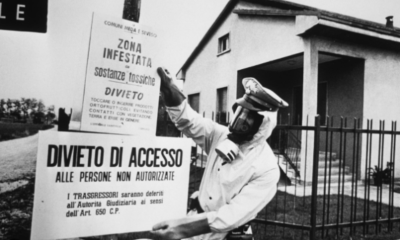
Seveso - 50 years on: EU strengthens its commitment to industrial safety in a changing landscape of risk

Why young jobseekers struggle to find roles abroad that fit their expertise

Commission opens formal investigation into possible gun jumping in XXXLutz's acquisition of Porta

Farmers, fair markets and consumers: new report highlights the role of EU competition rules in agriculture

Shared commitment to advance EOSC through new EOSC Nodes and EOSC projects

Falling in love with the Maldives

ECR MEPs question the European Commission on cardiovascular health and diet promoting the Mediterranean diet as an alternative to ultra-processed foods as key to tackling obesity

Kazakhstan seeks regional AI leadership as economic partnership with China enters new phase

Starmer’s problem? 'He is not a politician'

Why a Brussels–Nicosia–Eastern Mediterranean strategic affairs platform would benefit the European Union

Albania's Vlora airport standoff tests investor confidence as EU accession clock ticks
ECR MEPs question the European Commission on cardiovascular health and diet promoting the Mediterranean diet as an alternative to ultra-processed foods as key to tackling obesity

Kazakhstan's fixed capital investment tops 9.5 trillion tenge in H1 2026

Commission adopts simpler rules for EU agri-food promotion policy

Commission approves €659 million German state aid for four new semiconductor facilities

Kazakhstan reforms under scrutiny at Brussels Press Club round table

Japan should face up to history and contribute more to regional peace

Ambassador calls for 'speeding up' of co-operation between EU and Kazakhstan

Timur Turlov at Smart Moves Summit 2025: How chess can transform global education

Shevtsova’s case: Out-of-court sanctions dismantling trust in Ukrainian cause

The future of European transport

Trump Vs Trueman

US 'no longer' an 'unconditional ally' for Europe - MEP
-
 South Africa4 days ago
EU and South Africa kick off intergovernmental dialogue on Clean Trade and Investment Partnership
-
 Disasters4 days ago
Seveso - 50 years on: EU strengthens its commitment to industrial safety in a changing landscape of risk
-
 Employment4 days ago
Why young jobseekers struggle to find roles abroad that fit their expertise
-
 European Commission4 days ago
Commission opens formal investigation into possible gun jumping in XXXLutz's acquisition of Porta