Science
Nitrogen management takes a major step forward in Europe


NitroScope project launches in Ghent
Nitrogen is a cornerstone of agricultural productivity, yet its excessive use continues to harm soil health, water quality, and climate. To address this challenge, the NitroScope project officially kicked off with a two-day meeting at Ghent University. The project aims to advance the quantification, management, and conservation of nitrogen fluxes across Europe, helping farmers and policymakers adopt more sustainable practices.
Achieving climate neutrality by 2050 is a central goal of the European Green Deal. However, soil-derived gaseous nitrogen emissions from agriculture are often overlooked due to challenges in monitoring.
Kick-off meeting overview
Hosted by the coordinating partner Ghent University, the meeting brought together representatives from 25 partner organizations across Europe, including universities, research centres, and industry leaders. Over 50 experts from 15 countries convened to align on a shared vision for monitoring and reducing nitrogen losses from European soils.
Throughout the two days, the consortium:
- Addressed the NitroScope objectives and methodologies, focusing on the reduction of nitrogen losses from agriculture and improving nitrogen use efficiency.
- Outlined the deployment of innovative sensing technologies, including multi-sensor soil platforms and remote sensing, across over 100 data collection sites and 5 pilot sites, representing Europe’s diverse pedo-climatic zones.
- Discussed multi-actor engagement strategies to involve farmers, advisors, and policymakers in monitoring nitrogen fluxes and co-developing sustainable management practices.
NitroScope objectives
NitroScope’s ambition is to provide systemic solutions for better quantification and management of nitrogen fluxes, from field to continental scale. The project will:
- Develop and validate sensor-based tools and models to monitor nitrate leaching and nitrous oxide emissions in real time.
- Create a European nitrogen database and cloud platform, ensuring open access and harmonisation of soil, crop, and emission data.
- Design farm management add-ons integrated into existing decision support systems to help farmers optimise fertiliser application with precise temporal and spatial accuracy.
- Update the European nitrogen budget, for the first time in over two decades, using new data and advanced modelling.
- Deliver policy recommendations supporting the EU Green Deal, the Soil Strategy for 2030, and the Nitrates Directive.
Kick off meeting outcomes
The kick off meeting established a comprehensive action plan, clarifying technical milestones, stakeholder engagement timelines, and communication activities. The partners also agreed on the strategy for the NitroScope five pilot sites, located in Belgium, Switzerland, Italy, Norway, and Greece, which will test precision nitrogen management and conservation practices tailored to local conditions.
“NitroScope will generate the most detailed picture yet of Europe’s nitrogen flows, helping farmers and decision-makers take concrete steps toward sustainable soil management,” said professor Abdul Mouazen at Ghent University, and coordinator of NitroScope. “By combining cutting-edge science with practical tools, we aim to make nitrogen efficiency a reality across Europe”.
Next steps
In the coming months, NitroScope partners will begin deploying sensors, establishing farm networks, and setting up the project’s cloud-based database. Early findings on nitrogen flux patterns and management practices are expected in mid-2026, contributing to Europe’s transition towards climate-smart and resilient agriculture.
Project consortium
Ghent University
Hahn-Schickard
Walloon Agricultural Research Center
Norwegian University of Life Sciences
Seinäjoki University of Applied Sciences
University of Helsinki
University of Tartu
Technical University of Crete
Agricultural University of Athens
Ca Colonna Società Agricola
FCiências.ID – Associação para a Investigação e Desenvolvimento de Ciências
Faculdade de Ciências da Universidade de Lisboa
Czech University of Life Sciences Prague
Institute of Soil Science and Plant Cultivation
University of Edinburgh
NGO Soil Protection
Institute for Development and Innovation
Prinsus
University of Kaiserslautern-Landau
EarthDaily Agro
Leibniz Institute of Vegetable and Ornamental Crops
Cesens Technologies
ena Development Consultants
University of Applied Sciences and Arts Northwestern Switzerland
Agroscope
Share this article:
EU Reporter publishes articles from a variety of outside sources which express a wide range of viewpoints. The positions taken in these articles are not necessarily those of EU Reporter. Please see EU Reporter’s full Terms and Conditions of publication for more information EU Reporter embraces artificial intelligence as a tool to enhance journalistic quality, efficiency, and accessibility, while maintaining strict human editorial oversight, ethical standards, and transparency in all AI-assisted content. Please see EU Reporter’s full A.I. Policy for more information.



EU and South Africa kick off intergovernmental dialogue on Clean Trade and Investment Partnership

Seveso - 50 years on: EU strengthens its commitment to industrial safety in a changing landscape of risk

Commission opens formal investigation into possible gun jumping in XXXLutz's acquisition of Porta

Why young jobseekers struggle to find roles abroad that fit their expertise

Farmers, fair markets and consumers: new report highlights the role of EU competition rules in agriculture

Shared commitment to advance EOSC through new EOSC Nodes and EOSC projects

Falling in love with the Maldives

ECR MEPs question the European Commission on cardiovascular health and diet promoting the Mediterranean diet as an alternative to ultra-processed foods as key to tackling obesity

Kazakhstan seeks regional AI leadership as economic partnership with China enters new phase

Starmer’s problem? 'He is not a politician'

Why a Brussels–Nicosia–Eastern Mediterranean strategic affairs platform would benefit the European Union

Albania's Vlora airport standoff tests investor confidence as EU accession clock ticks
ECR MEPs question the European Commission on cardiovascular health and diet promoting the Mediterranean diet as an alternative to ultra-processed foods as key to tackling obesity

Kazakhstan's fixed capital investment tops 9.5 trillion tenge in H1 2026

Commission adopts simpler rules for EU agri-food promotion policy

Commission approves €659 million German state aid for four new semiconductor facilities

Kazakhstan reforms under scrutiny at Brussels Press Club round table

Japan should face up to history and contribute more to regional peace

Ambassador calls for 'speeding up' of co-operation between EU and Kazakhstan

Timur Turlov at Smart Moves Summit 2025: How chess can transform global education

Shevtsova’s case: Out-of-court sanctions dismantling trust in Ukrainian cause

The future of European transport

Trump Vs Trueman

US 'no longer' an 'unconditional ally' for Europe - MEP
-
 South Africa4 days ago
EU and South Africa kick off intergovernmental dialogue on Clean Trade and Investment Partnership
-
 Disasters4 days ago
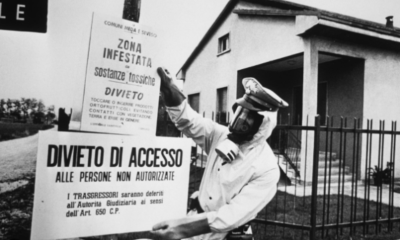
Seveso - 50 years on: EU strengthens its commitment to industrial safety in a changing landscape of risk
-
 European Commission4 days ago
Commission opens formal investigation into possible gun jumping in XXXLutz's acquisition of Porta
-
 Employment4 days ago
Why young jobseekers struggle to find roles abroad that fit their expertise