Energy
Oettinger on energy security: 'Gas can be used as a weapon and no longer be delivered'


Europe should ensure people and companies enjoy a secure supply of energy and this includes measures based on solidarity, said Energy Commissioner Günther Oettinger, addressing the European Parliament's energy committee on 24 September. In his last appearance as energy commissioner at the Parliament, Oettinger looked back at his tenure over the past five years and discussed future challenges regarding the EU's energy policy, including the continuing conflict between Russia and Ukraine.
Committee Chairman Jerzy Buzek, a Polish member of the EPP group, referred to the situation in Ukraine in his welcome statement: “The crisis in Ukraine reminds us that energy security of the EU does not end at the EU borders. It is a pan-European challenge.”
In his opening speech, Oettinger said that in the field of energy, many people think that relations with Russia are more important that relations with Ukraine, but "we have to overcome this". He added: “Gas can be used as a weapon and no longer be delivered. This is not yet the case, but we believe that Russia will do whatever they can to undermine Ukraine.” Oettinger said: “Perhaps Ukraine could purchase gas from Russia with co-finance from the EU in order to store more gas.”
The commissioner also pleaded for more collaboration on energy. The EU already has a legal basis to work on energy issues, but "we now have 28 fragmented systems", he said. Several MEPs shared his view that more should be done to combat this fragmentation and to link the energy sectors of countries within the EU.
MEPs
Martina Werner, a German member of the S&D group, said: “He has partly applied climate goals, but not fully. I’m especially critical of the directive on energy efficiency. We, the Socialists and Democrats, had hoped for much more.”
Dawid Bohdan Jackiewicz, a Polish member of the ECR group, asked whether new energy efficiency targets would hurt member states’ competitiveness and wondered how they would affect energy prices.
Share this article:
EU Reporter publishes articles from a variety of outside sources which express a wide range of viewpoints. The positions taken in these articles are not necessarily those of EU Reporter. Please see EU Reporter’s full Terms and Conditions of publication for more information EU Reporter embraces artificial intelligence as a tool to enhance journalistic quality, efficiency, and accessibility, while maintaining strict human editorial oversight, ethical standards, and transparency in all AI-assisted content. Please see EU Reporter’s full A.I. Policy for more information.



Bangladeshis waking up to reality of Yunus government

What the latest data reveals about labour market imbalances across Europe

From imitation to leadership: The production-based rise of Japan and China

Copernicus: Europe’s air quality improves despite persistent pollution episodes

Commission approves €402 million Spanish state aid for road transport companies facing increased fuel prices

Ensuring fairness and safety: €3 customs duty for low-value parcels

EU delivers emergency aid and organises a humanitarian flight in response to earthquakes in Venezuela

High Representative Kallas with Commissioners Kos and Brunner in Türkiye to advance bilateral cooperation

Kyrgyzstan launches Tamchy SFIT: a new international jurisdiction as a gateway to Eurasia

Kazakhstan’s dombyra: the two-stringed instrument that carries the soul of the steppe

Europe must double down on nuclear progress to achieve its long-term ambitions

Solana Company Partners with Kazakhstan on $6B Alatau Crypto Megacity

Astana's congress of world religions: A global platform for dialogue in an age of division

How Schuman lost Its way

Rating of American Express casino sites in the UK

PMI defends AI consultation tool as scrutiny grows over EU tobacco rules review

Kazakhstan reforms under scrutiny at Brussels Press Club round table

Japan should face up to history and contribute more to regional peace

Ambassador calls for 'speeding up' of co-operation between EU and Kazakhstan

Timur Turlov at Smart Moves Summit 2025: How chess can transform global education

Shevtsova’s case: Out-of-court sanctions dismantling trust in Ukrainian cause

The future of European transport

Trump Vs Trueman

US 'no longer' an 'unconditional ally' for Europe - MEP
-
 Bangladesh4 days ago
Bangladeshis waking up to reality of Yunus government
-
 Employment4 days ago
What the latest data reveals about labour market imbalances across Europe
-
 China4 days ago
From imitation to leadership: The production-based rise of Japan and China
-
 Air quality4 days ago
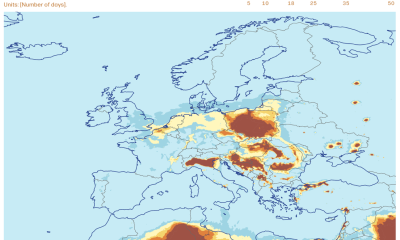
Copernicus: Europe’s air quality improves despite persistent pollution episodes