Energy
European Commission seeks local authorities’ help in addressing energy security


The Ukrainian gas crisis has placed renewed emphasis on the need to ensure stable and secure energy supplies for Europe’s citizens and its economy. Last May, the EU Commission issued the European Energy Security Strategy, identifying local authorities as crucial partners in shielding Europe from energy shocks, more particularly in the framework of the Covenant of Mayors. The high-level conference that took place on 9 October in Brussels provided some insight into how this is taking shape concretely.
The Commission yesterday reiterated its support to cities committed to the Covenant of Mayors movement, which now includes over 6, 000 signatories, some 70% of which having adopted a Sustainable Energy Action Plan. High level representatives from EU institutions, including Vice President of the European Commission Günther Oettinger, President of the Committee of the Regions Michel Lebrun and Chair of the European Parliament ITRE Committee Jerzy Buzek all joined to praise the Covenant of Mayors success, which has helped translate the 2020 EU climate and energy targets into local action across Europe.
‘Energy vulnerable’ member states
Invited speakers included city representatives from the six most ‘energy vulnerable’ member states, which depend on Russia as the single external supplier for their entire gas imports. As part of their commitment to the Covenant of Mayors, these cities have adopted action plans that identify a series of measures aimed at improving self-sufficiency by changing the way they use and source energy. According to preliminary analysis from the European Commission’s Joint Research Centre, implementation of the energy savings measures from the Covenant of Mayors action plans in these countries could save up to 58% of natural gas consumption!
By way of example, elected representatives from Helsinki and Riga told conference attendees how fuel-switching in district heating (DH) networks have contributed to reducing natural gas dependence within their territories. Impressive results were shared by the city of Tartu (Estonia), where the DH network is powered 92% by locally-sourced energy, such as wood chips and waste heat.
Financing the transition
The second session of the conference focused on the financing of the actions foreseen in the cities’ plans, with particular emphasis on innovative funding mechanisms, including crowdfunding, revolving funds and the combination of grants and loans. Among the numerous examples presented, an inspiring success story was shared by Dirk Vansintjan from Ecopower about an energy cooperative which started modestly with discussions “around the kitchen table” and now includes some 50, 000 members and supplies 1.5% of the Flemish households with green electricity.
In his concluding remarks, Director General for Energy Dominique Ristori provided perspectives of the way ahead, pointing to the Covenant as forming an integral part of a new area, where smart technologies will give consumers incentives to use their rights and engage actively in the energy transition. Local and regional authorities are, therefore, key stakeholders, alongside the EU Member States, for Europe's energy security in the short-, medium- and long-term.
Download conference’s information pack
************
The Covenant of Mayors is the mainstream European movement involving local and regional authorities, voluntarily committing to increasing energy efficiency and decentralized energy production on their territories. By their commitment, Covenant Signatories aim to meet and exceed the European Union 20% CO2 reduction objective by 2020. For more information, click here.
Share this article:
EU Reporter publishes articles from a variety of outside sources which express a wide range of viewpoints. The positions taken in these articles are not necessarily those of EU Reporter. Please see EU Reporter’s full Terms and Conditions of publication for more information EU Reporter embraces artificial intelligence as a tool to enhance journalistic quality, efficiency, and accessibility, while maintaining strict human editorial oversight, ethical standards, and transparency in all AI-assisted content. Please see EU Reporter’s full A.I. Policy for more information.



EU and South Africa kick off intergovernmental dialogue on Clean Trade and Investment Partnership

Why young jobseekers struggle to find roles abroad that fit their expertise

Commission opens formal investigation into possible gun jumping in XXXLutz's acquisition of Porta

Seveso - 50 years on: EU strengthens its commitment to industrial safety in a changing landscape of risk

Farmers, fair markets and consumers: new report highlights the role of EU competition rules in agriculture

Shared commitment to advance EOSC through new EOSC Nodes and EOSC projects

Falling in love with the Maldives

ECR MEPs question the European Commission on cardiovascular health and diet promoting the Mediterranean diet as an alternative to ultra-processed foods as key to tackling obesity

Kazakhstan seeks regional AI leadership as economic partnership with China enters new phase

Starmer’s problem? 'He is not a politician'

Why a Brussels–Nicosia–Eastern Mediterranean strategic affairs platform would benefit the European Union

Albania's Vlora airport standoff tests investor confidence as EU accession clock ticks
ECR MEPs question the European Commission on cardiovascular health and diet promoting the Mediterranean diet as an alternative to ultra-processed foods as key to tackling obesity

Kazakhstan's fixed capital investment tops 9.5 trillion tenge in H1 2026

Commission adopts simpler rules for EU agri-food promotion policy

Commission approves €659 million German state aid for four new semiconductor facilities

Kazakhstan reforms under scrutiny at Brussels Press Club round table

Japan should face up to history and contribute more to regional peace

Ambassador calls for 'speeding up' of co-operation between EU and Kazakhstan

Timur Turlov at Smart Moves Summit 2025: How chess can transform global education

Shevtsova’s case: Out-of-court sanctions dismantling trust in Ukrainian cause

The future of European transport

Trump Vs Trueman

US 'no longer' an 'unconditional ally' for Europe - MEP
-
 South Africa4 days ago
EU and South Africa kick off intergovernmental dialogue on Clean Trade and Investment Partnership
-
 Employment4 days ago
Why young jobseekers struggle to find roles abroad that fit their expertise
-
 European Commission4 days ago
Commission opens formal investigation into possible gun jumping in XXXLutz's acquisition of Porta
-
 Disasters4 days ago
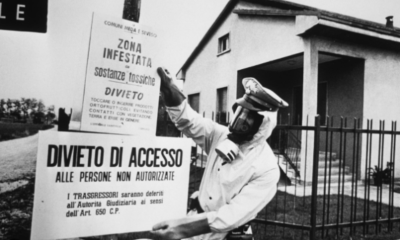
Seveso - 50 years on: EU strengthens its commitment to industrial safety in a changing landscape of risk