Energy
#HinkleyPoint: EDF puts cork back in champagne bottle


The Électricité de France (EDF) board gathered on 28 July to make the long-anticipated ‘final investment decision’ on the Hinkley Point C (HPC) nuclear power plant. After long discussions, the EDF board announced that the project would go ahead.
According to EDF: "Hinkley will coincide with perfect continuity with the start-up of the EPR at Flamanville, scheduled for the end of 2018. HPC is a unique asset for French and British industries, as it will benefit the whole of the nuclear sectors in both countries and will support employment at major companies and smaller enterprises in the industry.”
In their statement announcing the investment, EDF said that the HPC project is a major element of the group's CAP 2030 strategy. EDF declared: “The two EPR (European Pressurized Reactor) reactors at Hinkley Point will strengthen EDF's presence in Britain, a country where its subsidiary, EDF Energy, already operates 15 nuclear reactors and is the largest electricity supplier by volume.”
Only a few hours after this statement, the new minister with responsibility for energy Greg Clark made a statement that the government would need to carefully consider all the component parts of the project and take a final decision in the early autumn.
The Hinkley project has been dogged with controversy from the outset. Two power plants based on the new EPR technology have run into difficulties. The Finnish Olkiluoto 3 and French Flamanville plant have experienced costly delays and there have also been safety concerns.
In a further press release, EDF provided an update on its strategic partnership with AREVA. The board agreed to a memorandum in which EDF will be fully immunized against risks and costs related to the achievement of the Olkiluoto 3 project.
There have also been significant safety concerns; last year, Areva informed the French nuclear regulator Autorité de sûreté nucléaire (ASN) that anomalies had been detected in the reactor vessel steel, causing "lower than expected mechanical toughness values".
And the controversy does not end there; a day before the decision, one of the board members, Gérard Magnin, resigned. He said that he was unhappy with the choice to proceed with Hinkley and disappointed by EDF’s poor commitment to renewable energies. EDF is largely owned by the state and Magnin was one of the state appointees to the board. There have also been other high-profile resignations over the past few months, including the resignation of EDF’s Chief Finance Officer Thomas Piquemal. Union officials have also been critical of the investment.
There was also an ongoing legal challenge to the decision by the outgoing Barroso-led European Commission, which approved the UK government's guarantee to pay almost twice the current energy price. At the time, Molly Scott Cato said that it was a scandal that one of the final acts of the Barroso Commission was to turn a blind eye to the illegality of the Hinkley deal as some kind of quid pro quo for Germany’s renewable energy support scheme: “The tragic irony is that this deal, and the precedent it creates, is a massive setback for renewable energy in the UK, with small producers unable to compete on these terms.”
Interviews with Rebecca Harms MEP of European Group Against Nuclear Energy and lawyer Dr Dorte Fouquet
The project recently secured investment from China - this has raised concerns about possible security threats, outlined in a recent paper by Chatham House.
The decision by the UK to delay a decision adds to the uncertainty concerning the UK’s relationship with Europe following the referendum. At least three EU member states have a direct interest in the project: Austria and Luxembourg, who are presenting a legal challenge, and France, which is the largest stakeholder in EDF. There will be strong political pressure on both sides and the decision could have a direct impact on the UK’s Brexit negotiations.
Share this article:
EU Reporter publishes articles from a variety of outside sources which express a wide range of viewpoints. The positions taken in these articles are not necessarily those of EU Reporter. Please see EU Reporter’s full Terms and Conditions of publication for more information EU Reporter embraces artificial intelligence as a tool to enhance journalistic quality, efficiency, and accessibility, while maintaining strict human editorial oversight, ethical standards, and transparency in all AI-assisted content. Please see EU Reporter’s full A.I. Policy for more information.





Security realignment inevitable in Middle East after Netanyahu-Trump's war

Better enforcement of passenger rights: New EU agreement strengthens protection across all modes of transport

EU deploys emergency assistance to Venezuela following earthquakes

Shen Yun - The Abuses and Human Rights Violations

The Third International Maqom Art Forum and the New Uzbekistan

EU steps up support for Ukraine's defence, recovery and reconstruction at the Ukraine Recovery Conference 2026

Dismantling 'high walls' for a shared European-Asian future

Bangladeshis waking up to reality of Yunus government

Europe must double down on nuclear progress to achieve its long-term ambitions

Solana Company Partners with Kazakhstan on $6B Alatau Crypto Megacity

Astana's congress of world religions: A global platform for dialogue in an age of division

How Schuman lost Its way

Rating of American Express casino sites in the UK

PMI defends AI consultation tool as scrutiny grows over EU tobacco rules review

Civil society from across the EU gathers in Cork to reinforce Europe’s sustainability agenda

The Iran war changed Pakistan's strategic value, not its political trajectory

Kazakhstan reforms under scrutiny at Brussels Press Club round table

Japan should face up to history and contribute more to regional peace

Ambassador calls for 'speeding up' of co-operation between EU and Kazakhstan

Timur Turlov at Smart Moves Summit 2025: How chess can transform global education

Shevtsova’s case: Out-of-court sanctions dismantling trust in Ukrainian cause

The future of European transport

Trump Vs Trueman

US 'no longer' an 'unconditional ally' for Europe - MEP
-
 Middle East5 days ago
Security realignment inevitable in Middle East after Netanyahu-Trump's war
-
 Transport5 days ago
Better enforcement of passenger rights: New EU agreement strengthens protection across all modes of transport
-
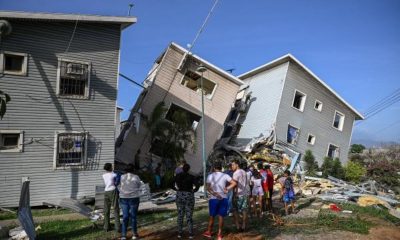 Earthquake5 days ago
EU deploys emergency assistance to Venezuela following earthquakes
-
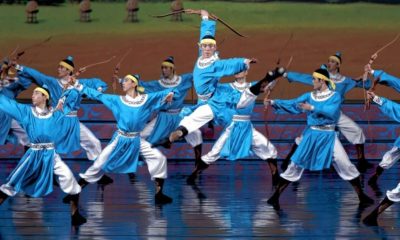 Human Rights5 days ago
Shen Yun - The Abuses and Human Rights Violations