Energy
#EnergyTransition: Ambitious targets and impossible goals

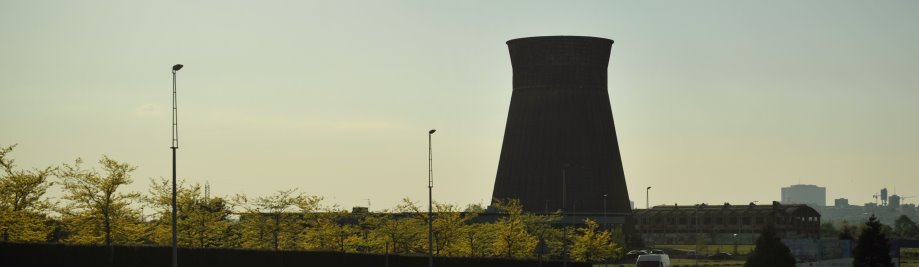
In November Nicolas Hulot gave up the goal of the reduction of nuclear power share to 50% by 2025. For the masses this seemed to be a breach of election promises, but promises only bind those who believe in them. Nuclear experts knew from the beginning that such a reduction of nuclear share by 2025 was technically impossible. We cannot shut down between 17 and 20 reactors within such a short time. This is exactly what the report of the "Energies 2050" Commission was saying. This commission, which I was chairing at the time, was intended to examine several energy scenarios in France (nuclear scenarios, in particular). Our report was submitted in February 2012 to the Energy Minister Eric Besson, writes Jacques Percebois, Emeritus Professor at Montpellier University, Director of the Energy Economics and Law Research Center (CREDEN).
On the other hand, the goal stated by Jean-Bernard Lévy to "build 30, 35, or 40 new EPR" by 2050 seems very ambitious to me, but not impossible if two conditions are met:
- Several NPPs shutdown; over this period it becomes possible since if we extend the reactors' life for 20 years, by 2050 they will all have reached or exceeded the 60 years functioning limit.
- if the EPR being under construction is a technical and economic success, which has yet to be proved. The question is whether the option selected will be the EPR or a new type of reactors (eg SMR standing for small modular reactors).
In addition to the EPR and SMR, there is another type of Generation IV reactors, which was already developed in France under the name «Superphénix», but was later abandoned. Today this model only works in Russia in Beloyarsk. For now, there is the ASTRID project in France - a sodium-cooled fast experimental reactor. It is an improved version of the former breeder «Superphénix». The advantage of this project is the possibility of using the plutonium as nuclear fuel and thus reducing the dependence on the uranium supply. The prototype, however, will not be ready until 2030. France, no longer having fast-neutron reactors, is experimenting on its breeder via the cooperation with Russia and the countries discuss the prospects of this technology in the framework of the Generation IV International Forum.
Regarding renewables, the target of doubling their capacity is also an ambitious one, but not impossible. In fact, the main uncertainty in the development of renewables is linked to changing electricity demand. This demand is relatively low today but it can increase with new uses like the electric vehicle.
France, in its turn, is a virtuous country in relation to CO2 emissions, on the ground that its electricity production is highly (more than 92%) decarbonized, basing on nuclear, hydro, solar and wind sources. Currently, the government wants to increase the tax on CO2 discharge and strengthen the standards for greenhouse gas emissions in the building and transport sectors. In my opinion, it's a very good choice. The problem is that in the European Union market the CO2 emissions quota is too low (7 euros per tonne of gases). If we succeed in setting a CO2 floor price, the significant achievements could be made, but Germany and Poland are to hamper the progress towards this goal because they heavily depend on coal.
I am certain that only one country of the EU will abolish the use nuclear power for cultural reasons - Germany. But I do not think Switzerland will completely abandon nuclear energy.
In November 2016 in Switzerland the referendum on the new NPPs construction renunciation and the existing plants dismantling by 2050 was held. This time the initiative was rejected by the population, but in May 2017 the same initiative passed. This indicates that the referendum is not an immaculate option because public opinion changes quickly and is not always based on scientific knowledge. That is the spirit of our the times: we criticize nuclear power but if tomorrow there is an electric blackout in Europe (especially in Switzerland), the population will change its mind again. The main problem of politics is that decision-makers shouldn't follow the opinion polls to develop a long-term policy but should pursue the general good.
Share this article:

EU Reporter publishes articles from a variety of outside sources which express a wide range of viewpoints. The positions taken in these articles are not necessarily those of EU Reporter. Please see EU Reporter’s full Terms and Conditions of publication for more information EU Reporter embraces artificial intelligence as a tool to enhance journalistic quality, efficiency, and accessibility, while maintaining strict human editorial oversight, ethical standards, and transparency in all AI-assisted content. Please see EU Reporter’s full A.I. Policy for more information.






The Iran war changed Pakistan's strategic value, not its political trajectory

PMI defends AI consultation tool as scrutiny grows over EU tobacco rules review

Civil society from across the EU gathers in Cork to reinforce Europe’s sustainability agenda

Democracy cannot be selective: Why Europe must apply the same standards abroad that it demands at home

Rating of American Express casino sites in the UK

How Schuman lost Its way

Astana's congress of world religions: A global platform for dialogue in an age of division

Solana company partners with Kazakhstan on $6B Alatau Crypto Megacity

Europe’s job market is shifting, and EURES is ready to lead the way into 2030

From a remote island to shelves around the world: The story of Azorean canned fish

Can digital sovereignty survive an open trading system?

Can the EU resist US pressure on medicine prices?

Energy Union: New Spain-Portugal electricity interconnection inaugurated

Timing of the publication of the EU ETS auction calendar

Commissioner Šuica travels to Cairo to strengthen euro-mediterranean parliamentary cooperation and youth engagement

Commission seeks feedback on targeted amendment of EMFAF

Kazakhstan reforms under scrutiny at Brussels Press Club round table

Japan should face up to history and contribute more to regional peace

Ambassador calls for 'speeding up' of co-operation between EU and Kazakhstan

Timur Turlov at Smart Moves Summit 2025: How chess can transform global education

Shevtsova’s case: Out-of-court sanctions dismantling trust in Ukrainian cause

The future of European transport

Trump Vs Trueman

US 'no longer' an 'unconditional ally' for Europe - MEP
-
 Iran5 days ago
The Iran war changed Pakistan's strategic value, not its political trajectory
-
 European Commission5 days ago
PMI defends AI consultation tool as scrutiny grows over EU tobacco rules review
-
 United Nations5 days ago
Civil society from across the EU gathers in Cork to reinforce Europe’s sustainability agenda
-
 Democracy5 days ago
Democracy cannot be selective: Why Europe must apply the same standards abroad that it demands at home