Biofuels
Renewable energy: EU has cost-effective potential to use more #renewables


On 19 February, Climate Action and Energy Commissioner Miguel Arias Cañete and the Director-General of the International Renewable Energy Agency (IRENA) Adnan Amin will launch in Brussels a new report on renewable energy prospects in the European Union.
Prepared by the International Renewable Energy Agency (IRENA), the report identifies cost-effective renewable energy options across all EU countries, sectors, and technologies, in order to meet – and even exceed – the proposed 27% renewables target for 2030. It also provides an open platform for EU countries to assess the impacts of their national renewable energy plans at an EU level, provides insights into the environmental and economic impacts of further deployment of renewables in the EU, and highlights the role that renewables could play in the long-term decarbonisation of the European energy system.
The report also shows that all individual member states have the potential to deploy more renewables cost effectively, especially by generating more solar and wind energy. Moreover, in the heating and cooling sector, which accounts for about half of the EU's energy demand, more than two thirds of the renewables options identified in the report are cheaper than the conventional alternative.
The report makes a number of recommendations aimed at helping the EU decarbonize its economy and limit global warming to well below 2°, in line with the Paris Agreement, as well as bringing substantial health benefits for citizens. In its 'Clean Energy for All Europeans' package the Commission made proposals to stimulate investment in the clean energy transition by putting energy efficiency first, achieving global leadership in renewable energies and providing a fair deal for consumers.
Share this article:
EU Reporter publishes articles from a variety of outside sources which express a wide range of viewpoints. The positions taken in these articles are not necessarily those of EU Reporter. Please see EU Reporter’s full Terms and Conditions of publication for more information EU Reporter embraces artificial intelligence as a tool to enhance journalistic quality, efficiency, and accessibility, while maintaining strict human editorial oversight, ethical standards, and transparency in all AI-assisted content. Please see EU Reporter’s full A.I. Policy for more information.



EU and South Africa kick off intergovernmental dialogue on Clean Trade and Investment Partnership

Seveso - 50 years on: EU strengthens its commitment to industrial safety in a changing landscape of risk

Why young jobseekers struggle to find roles abroad that fit their expertise

Commission opens formal investigation into possible gun jumping in XXXLutz's acquisition of Porta

ECR MEPs question the European Commission on cardiovascular health and diet promoting the Mediterranean diet as an alternative to ultra-processed foods as key to tackling obesity

Farmers, fair markets and consumers: new report highlights the role of EU competition rules in agriculture

Shared commitment to advance EOSC through new EOSC Nodes and EOSC projects

Falling in love with the Maldives

STATEMENT by the Ministry of Foreign Affairs of the Republic of Kazakhstan

Kazakhstan seeks regional AI leadership as economic partnership with China enters new phase

Starmer’s problem? 'He is not a politician'

Why a Brussels–Nicosia–Eastern Mediterranean strategic affairs platform would benefit the European Union

Albania's Vlora airport standoff tests investor confidence as EU accession clock ticks
ECR MEPs question the European Commission on cardiovascular health and diet promoting the Mediterranean diet as an alternative to ultra-processed foods as key to tackling obesity

Kazakhstan's fixed capital investment tops 9.5 trillion tenge in H1 2026

Commission adopts simpler rules for EU agri-food promotion policy

Kazakhstan reforms under scrutiny at Brussels Press Club round table

Japan should face up to history and contribute more to regional peace

Ambassador calls for 'speeding up' of co-operation between EU and Kazakhstan

Timur Turlov at Smart Moves Summit 2025: How chess can transform global education

Shevtsova’s case: Out-of-court sanctions dismantling trust in Ukrainian cause

The future of European transport

Trump Vs Trueman

US 'no longer' an 'unconditional ally' for Europe - MEP
-
 South Africa5 days ago
EU and South Africa kick off intergovernmental dialogue on Clean Trade and Investment Partnership
-
 Disasters5 days ago
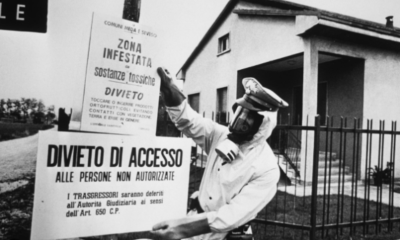
Seveso - 50 years on: EU strengthens its commitment to industrial safety in a changing landscape of risk
-
 Employment5 days ago
Why young jobseekers struggle to find roles abroad that fit their expertise
-
 European Commission5 days ago
Commission opens formal investigation into possible gun jumping in XXXLutz's acquisition of Porta