Climate change
EU gears up for 2030 with more emissions reductions


The European Commission, assisted by the European Environment Agency, today (28 October) releases its annual Progress Report assessing the headway on climate action. According to latest estimates, EU greenhouse gas emissions in 2013 fell by 1.8% compared to 2012 and reached the lowest levels since 1990. So not only is the EU well on track to reach the 2020 target, it is also well on track to overachieve it.
The Progress Report also for the first time provides data on the use of fiscal revenues from auctioning allowances in the EU Emission Trading System (ETS). This new source of revenues for member states amounted to €3.6 billion in 2013. From this, around €3bn will be used for climate and energy related purposes - significantly more than the 50% level recommended in the EU ETS Directive.
Climate Action Commissioner Connie Hedegaard said: "Delivering on 2020 climate goals shows that Europe is ready to step up its act. And better, still: it shows that the EU is delivering substantial cuts. The policies work. Therefore, the EU leaders last week decided to continue the ambition and reach at least 40% by 2030. This will require significant investments. That's why it is encouraging that Member States have decided to use most of their current ETS revenues to invest in climate and energy and continue the transformation to a low-carbon economy."
These revenues complement the funds from the EU's NER 300 programme which is devoting €2.1bn to support 39 large-scale demonstration projects for low carbon technologies around Europe.
Background
The Kyoto and EU 2020 Progress Report is an annual report from the Commission to the European Parliament and the Council. It is based on the data reported by member states under the Monitoring Mechanism Regulation. The report provides information about the progress made by the European Union and its member states towards their greenhouse gas emissions targets. The decrease in emissions of 1.8% in 2013 compared to 2012 implies that total EU emissions are around 19% below 19901.
Since 2013 auctioning is the default method of allocating allowances within the EU-ETS. Auction revenues accrue to member states. The EU-ETS Directive stipulates that at least half of the revenues from the auctioning of allowances should be used to combat climate change in the EU or other countries.
Most countries have used these investments in fields like energy efficiency, renewables or sustainable transport. For instance, France, the Czech Republic and Lithuania use all their auctioning revenues in projects to improve the energy efficiency of buildings. Bulgaria, Portugal and Spain use most of their revenues to develop renewable energy. Poland uses most of its revenues that are dedicated to climate change in support of energy efficiency and renewable energy. In Germany, most of the revenues are directed to a specific climate and energy fund, which supports a wide range of projects including research and sustainable transport. The UK focuses in particular on energy efficiency, renewables, research and financial assistance to low-income households in relation to energy expenses. The reported amounts represent only a proportion of total climate and energy-related spending in member states' budgets.
For more information, click here.
Share this article:
EU Reporter publishes articles from a variety of outside sources which express a wide range of viewpoints. The positions taken in these articles are not necessarily those of EU Reporter. Please see EU Reporter’s full Terms and Conditions of publication for more information EU Reporter embraces artificial intelligence as a tool to enhance journalistic quality, efficiency, and accessibility, while maintaining strict human editorial oversight, ethical standards, and transparency in all AI-assisted content. Please see EU Reporter’s full A.I. Policy for more information.



EU and South Africa kick off intergovernmental dialogue on Clean Trade and Investment Partnership

Seveso - 50 years on: EU strengthens its commitment to industrial safety in a changing landscape of risk

Why young jobseekers struggle to find roles abroad that fit their expertise

Commission opens formal investigation into possible gun jumping in XXXLutz's acquisition of Porta

Shared commitment to advance EOSC through new EOSC Nodes and EOSC projects

Farmers, fair markets and consumers: new report highlights the role of EU competition rules in agriculture

Falling in love with the Maldives

ECR MEPs question the European Commission on cardiovascular health and diet promoting the Mediterranean diet as an alternative to ultra-processed foods as key to tackling obesity

STATEMENT by the Ministry of Foreign Affairs of the Republic of Kazakhstan

Kazakhstan seeks regional AI leadership as economic partnership with China enters new phase

Starmer’s problem? 'He is not a politician'

Why a Brussels–Nicosia–Eastern Mediterranean strategic affairs platform would benefit the European Union

Albania's Vlora airport standoff tests investor confidence as EU accession clock ticks
ECR MEPs question the European Commission on cardiovascular health and diet promoting the Mediterranean diet as an alternative to ultra-processed foods as key to tackling obesity

Kazakhstan's fixed capital investment tops 9.5 trillion tenge in H1 2026

Commission adopts simpler rules for EU agri-food promotion policy

Kazakhstan reforms under scrutiny at Brussels Press Club round table

Japan should face up to history and contribute more to regional peace

Ambassador calls for 'speeding up' of co-operation between EU and Kazakhstan

Timur Turlov at Smart Moves Summit 2025: How chess can transform global education

Shevtsova’s case: Out-of-court sanctions dismantling trust in Ukrainian cause

The future of European transport

Trump Vs Trueman

US 'no longer' an 'unconditional ally' for Europe - MEP
-
 South Africa5 days ago
EU and South Africa kick off intergovernmental dialogue on Clean Trade and Investment Partnership
-
 Disasters5 days ago
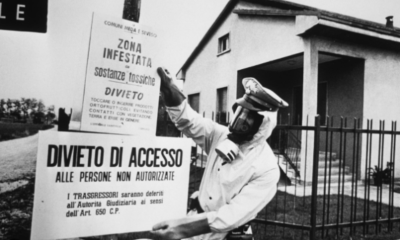
Seveso - 50 years on: EU strengthens its commitment to industrial safety in a changing landscape of risk
-
 Employment5 days ago
Why young jobseekers struggle to find roles abroad that fit their expertise
-
 European Commission5 days ago
Commission opens formal investigation into possible gun jumping in XXXLutz's acquisition of Porta