Data
EESC Plenary: Closing EU's Italian Presidency and welcoming Latvian Presidency on 21-22 January 2015

 On Wednesday 21 January at 15h, the EESC plenary will take stock of the achievements and results of the Italian presidency.
On Thursday 22 January at 10h, Zanda KALNIŅA-LUKAŠEVICA, Parliamentary Secretary of the Latvian Foreign Ministry, will present the working programme of the Latvian presidency of the EU. Representatives of Latvian civil society and EESC members Vitālijs GAVRILOVS (GRI), Pēteris KRĪGERS (GRII) and Andris GOBIŅŠ (GRIII) will take the floor to respond and share their views on the topic.
Following this debate, Vaira VĪĶE-FREIBERGA, former President of the Republic of Latvia, will address the EESC plenary on economic growth and solidarity in Europe.
Please register here to attend: [email protected]
EESC Plenary Session – 21 and 22 January 2015
Charlemagne building (European Commission), De Gasperi room (3rd floor), Brussels
Watch the plenary session here - The full agenda is available here
Broad dissemination of information technologies in all areas of society and the economy, culture and education will provide enormous development opportunities, but it is necessary to support IT-related research and development in the technical, economic and social sciences. In this opinion, the EESC regrets the substantial reduction in funding for the financing of digital infrastructure under the Connecting Europe Facility (CEF) and strongly advocates drawing appropriate conclusions. A new investment plan presented by Commission President Jean-Claude Juncker in December 2014, aimed at mobilising at least €315 billion in the form of additional public and private investment in key areas such as digital infrastructure, is in this context a welcome policy response.
The abolition of the milk-quota system is a fundamental change for milk farmers. To avoid a shift in milk production from small farms to bigger farms – with smaller farmers abandoning dairying – and to support smaller farmers especially in disadvantaged areas, the EESC strongly suggests using Pillar II provisions of the CAP 2014-2020 and the Milk Package to ensure that dairy farms can stay in business.
This own-initiative opinion is partly based on a fact-finding mission to civil society organisations in Turkey in 2014. The recommendations of the opinion provide guidelines to the other EU institutions on how to better support Turkish civil society organisations and improve their working conditions. Particular attention should be paid in the EU-Turkey dialogue to the effective implementation of basic rights, including freedom of expression, media freedom, freedom of association and assembly, women's rights, trade union right and the rights of minorities (religious, cultural and sexual).
Promoting deeper EU relations with the five Central Asian countries (Kazakhstan, Kyrgyzstan, Tajikistan, Turkmenistan, and Uzbekistan) is one of the foreign policy priorities of the Latvian EU presidency. Priority areas for economic cooperation are, among others, energy and transport. An opportunity for EU engagement lies in the field of education and media presence. Considering the geostrategic position and importance of these five countries, the EESC highly recommends reinstating the post of EU Special Representative.
EESC Press Unit
E-mail: [email protected]
Siana Glouharova - Tel: +32 2 546 9276 / +32 473 53 40 02
Share this article:
EU Reporter publishes articles from a variety of outside sources which express a wide range of viewpoints. The positions taken in these articles are not necessarily those of EU Reporter. Please see EU Reporter’s full Terms and Conditions of publication for more information EU Reporter embraces artificial intelligence as a tool to enhance journalistic quality, efficiency, and accessibility, while maintaining strict human editorial oversight, ethical standards, and transparency in all AI-assisted content. Please see EU Reporter’s full A.I. Policy for more information.



ECR MEPs question the European Commission on cardiovascular health and diet promoting the Mediterranean diet as an alternative to ultra-processed foods as key to tackling obesity

Falling in love with the Maldives

Kurmuk gold project highlights Africa’s changing investment landscape

Albania's Vlora airport standoff tests investor confidence as EU accession clock ticks

Iran’s regime in crisis: Negotiations, internal divisions and growing resistance

EU steps up international support for Palestinians with major initiative for Gaza's early recovery and stronger international coordination

Commission adds exemptions to rules on removability of portable batteries

Natura 2000 Network offers opportunities for sustainable tourism across Europe

Kazakhstan and Belgium: Building a Partnership for the Future

New court ruling questions 'proportionality' of Mayor Erion Veliaj’s detention

Rome–Washington Axis: Italian Diplomat Zanardi Landi to Help Save Bosnia

Burnham as PM? 'Wait and see'

Ban on destruction of unsold clothes and shoes enters into application

Survey on an EU Blueprint for intellectual property licensing and spinoff creation

Rule of law report strengthens EU democracy and fundamental rights

EU launches Ukraine defence industrial partnership, Drone Deal and disburses €1 billion for drones *

Kazakhstan reforms under scrutiny at Brussels Press Club round table

Japan should face up to history and contribute more to regional peace

Ambassador calls for 'speeding up' of co-operation between EU and Kazakhstan

Timur Turlov at Smart Moves Summit 2025: How chess can transform global education

Shevtsova’s case: Out-of-court sanctions dismantling trust in Ukrainian cause

The future of European transport

Trump Vs Trueman

US 'no longer' an 'unconditional ally' for Europe - MEP
-
 Italy4 days ago
ECR MEPs question the European Commission on cardiovascular health and diet promoting the Mediterranean diet as an alternative to ultra-processed foods as key to tackling obesity
-
 Tourism5 days ago
Falling in love with the Maldives
-
 China5 days ago
Kurmuk gold project highlights Africa’s changing investment landscape
-
 Albania4 days ago
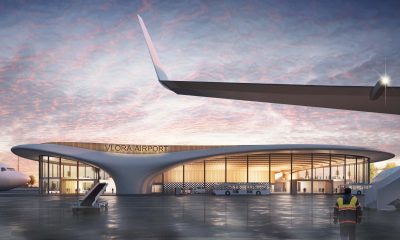
Albania's Vlora airport standoff tests investor confidence as EU accession clock ticks