Environment
Pesticide-free towns: Belgium on the move

Opinion by Pesticide Action Network Europe (PAN Europe)
Today (10 June), Pesticide Action Network Europe (PAN Europe) has together with Local Governments for Sustainability (ICLEI), Velt, Inter-Environment Bruxelles, Greenpeace Belgium, Inter-Environnement Wallonie, Natagora, Adalia, Pôle de Gestion Differenciée and Apis bruoc Sella from all three regions of Belgium, has organized the first ever conference on pesticide-free towns, assisting towns on the move.
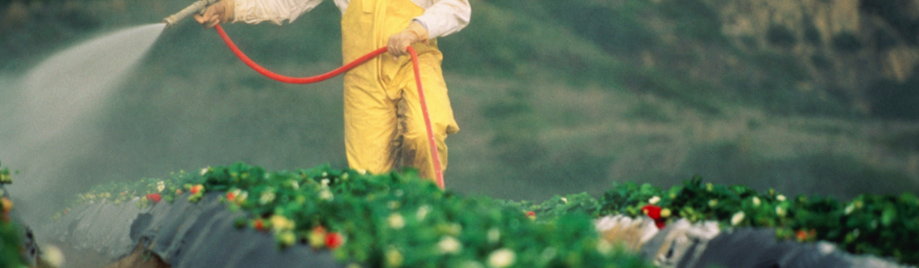
Pesticides are not only used to produce food but also in places where people live and work including: in parks, schools, playgrounds, on sidewalks, sport clubs, cemeteries etc. Thus, people, including young children, babies and even pets are exposed to these toxic chemicals during their daily activities against their will.
In recent years, a positive movement regarding pesticide use in towns is happening, as more and more member states are deciding to make public areas pesticides free, including all three Belgium regions (Flanders, Wallonia and the Region of Brussels), France and Netherlands, following the objective which was set already 20 years ago in Denmark.
PAN Europe welcomes this development which we are following very closely (see footnote 1) and as we are Brussels based we have found it completely logical to contribute to this years organic week (2) by organizing jointly with a number of Belgium NGOs (3) the first ever high-level symposium on ‘pesticide free town – Belgium on the move’, allowing exchanges of experiences between the different Belgium regions, but also sharing experience with France and the Netherlands.
Around 100 participants, mainly political and administrative representatives from Belgium towns and municipalities, took part in today’s event held in IBGE in Brussels, presenting front running towns and municipalities giving a special emphasis to more technical matter on a topic that keeps on coming back in the debate: alternatives ways of fighting invasive species in areas where pesticides no longer can be used (4).
Peter Defranceschi, head of ICLEI Brussels Office said: "It's impressive how committed national and local governments and citizens are to pesticides free transformation. From a small Italian municipality where most of the inhabitants voted against pesticides on health grounds to the 'Bee Plan' in Genk to national targets, the pesticide free movement is visibly growing in Europe."
Rien Klippel, Waterschap Zeeland, Netherlands, added: "Belgium towns could help solving the Dutch problems: When pesticide use in Belgium goes down, it will be easier in the Netherlands to overcome its drinking water problems"
Footnotes
(1) For an overview of progress on pesticides free towns in Belgium, France, and Denmark, click here.
(2) Click here.
(3) The other NGOs are: Local Governments for Sustainability (ICLEI), Velt, Inter-Environment Bruxelles, Greenpeace Belgium, Inter-Environnement Wallonie, Natagora, Adalia, Pole de Gestion Differenciée and Apis bruoc Sella.
(4) All presentations are available here.
Language specific information
English
Flemish/Netherlands
French
Share this article:
EU Reporter publishes articles from a variety of outside sources which express a wide range of viewpoints. The positions taken in these articles are not necessarily those of EU Reporter. Please see EU Reporter’s full Terms and Conditions of publication for more information EU Reporter embraces artificial intelligence as a tool to enhance journalistic quality, efficiency, and accessibility, while maintaining strict human editorial oversight, ethical standards, and transparency in all AI-assisted content. Please see EU Reporter’s full A.I. Policy for more information.



The South Caucasus at a historic turning point: Between lasting peace and renewed confrontation
The security environment of the South Caucasus amid changing geopolitical realities

Commission registers two European Citizens' Initiatives on education and housing

Kazakhstan and Belgium: Building a Partnership for the Future

Why the US is losing its legitimacy as a global superpower and the trust of the comity of nations

Commission endorses Latvia’s €617 million Social Climate Plan to support vulnerable households and transport users in the clean transition

Commission sends Statements of Objections to several companies and trade associations in suspected construction chemicals cartel

EU and Portugal team up to keep brightest tech talents at home

JoinCare explores scientific exchange during visit to Japan’s National Institute of Infectious Diseases

New episode – DGT podcast: Languages and Technology

Become a European Commission trainee – applications are now open

Commission outlines measures to strengthen Europe's banking sector and support growth

British political shifts and the future of UK-China ties
The South Caucasus at a historic turning point: Between lasting peace and renewed confrontation

As Ireland chairs the EU Presidency, what impact has over fifty years of EU membership had on Ireland

The Digital Markets Act Is Hurting Europeans. It’s Time to Put Progress, Free Markets, and Competition First

Kazakhstan reforms under scrutiny at Brussels Press Club round table

Japan should face up to history and contribute more to regional peace

Ambassador calls for 'speeding up' of co-operation between EU and Kazakhstan

Timur Turlov at Smart Moves Summit 2025: How chess can transform global education

Shevtsova’s case: Out-of-court sanctions dismantling trust in Ukrainian cause

The future of European transport

Trump Vs Trueman

US 'no longer' an 'unconditional ally' for Europe - MEP
-
 South Caucasus1 day ago
The South Caucasus at a historic turning point: Between lasting peace and renewed confrontation
-
South Caucasus2 days ago
The security environment of the South Caucasus amid changing geopolitical realities
-
 European Citizens' Initiative4 days ago
Commission registers two European Citizens' Initiatives on education and housing
-
 Belgium5 days ago
Kazakhstan and Belgium: Building a Partnership for the Future