CO2 emissions
Commission welcomes the adoption of the first global #CO2 standard for aircraft


Yesterday (March 3), the Council of the International Civil Aviation Organisation - the United Nations agency responsible for international aviation - formally adopted the first ever CO2 standard for aircraft.
The EU and its member states have been among the strongest and most active advocates of such standard, that will make an important contribution to the sustainability of the aviation sector. It will be gradually introduced as of 2020, with different stringency and applicably dates based on the weight of the aircraft and whether it concerns a "new type" aircraft or a "in-production aircraft". Alongside the future Global Market Based Measure, this standard will help tackle the emissions of the aviation sector, which is a priority area of the Aviation Strategy for Europe.
EU Commissioner for Transport Violeta Bulc said "I welcome the adoption of the first ever CO2 standard for aircraft, as it could help save up to 650 million tonnes of CO2 by 2040 and contribute to a greener aviation sector. The EU was one of the strongest proponents of this standard and I am happy to see that our efforts and advocacy have paid off. Work is also on track to develop the Global Market Based Measure that was agreed last October. Europe will continue to play an active role in these discussions so that sustainability truly becomes part of the way we fly!"
Share this article:
EU Reporter publishes articles from a variety of outside sources which express a wide range of viewpoints. The positions taken in these articles are not necessarily those of EU Reporter. Please see EU Reporter’s full Terms and Conditions of publication for more information EU Reporter embraces artificial intelligence as a tool to enhance journalistic quality, efficiency, and accessibility, while maintaining strict human editorial oversight, ethical standards, and transparency in all AI-assisted content. Please see EU Reporter’s full A.I. Policy for more information.





European operation dismantles €10 million illicit cigarette network in Spain

Energy Union Task Force takes stock of oil and gas security of supply in the EU

Srebrenica's lesson is prevention. Why isn't the world applying It to Kashmir?

AIFC to host Astana Finance Days 2026 in September

ALROSA Re-elects Supervisory Board with Minimal Changes

EU launches a Team Gaza Initiative to support early recovery in Gaza with an initial amount of nearly €900 million

Joint statement by High Representative/Vice-President Kallas and Commissioner Kos on the 31st anniversary of the Srebrenica genocide

EU clarifies rules to allow continued waste recovery shipments to Switzerland

Starmer’s problem? 'He is not a politician'

Why a Brussels–Nicosia–Eastern Mediterranean strategic affairs platform would benefit the European Union

Albania's Vlora airport standoff tests investor confidence as EU accession clock ticks

ECR MEPs question the European Commission on cardiovascular health and diet promoting the Mediterranean diet as an alternative to ultra-processed foods as key to tackling obesity

Kazakhstan's fixed capital investment tops 9.5 trillion tenge in H1 2026

Commission adopts simpler rules for EU agri-food promotion policy

Commission approves €659 million German state aid for four new semiconductor facilities

EU law on nitrates pollution remains effective, with scope for smarter implementation

Kazakhstan reforms under scrutiny at Brussels Press Club round table

Japan should face up to history and contribute more to regional peace

Ambassador calls for 'speeding up' of co-operation between EU and Kazakhstan

Timur Turlov at Smart Moves Summit 2025: How chess can transform global education

Shevtsova’s case: Out-of-court sanctions dismantling trust in Ukrainian cause

The future of European transport

Trump Vs Trueman

US 'no longer' an 'unconditional ally' for Europe - MEP
-
 Cigarettes5 days ago
European operation dismantles €10 million illicit cigarette network in Spain
-
 Energy market4 days ago
Energy Union Task Force takes stock of oil and gas security of supply in the EU
-
 Kashmir5 days ago
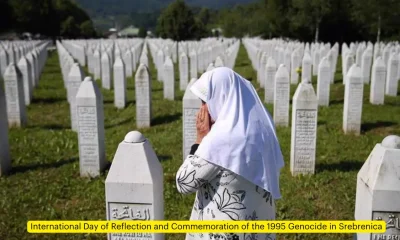
Srebrenica's lesson is prevention. Why isn't the world applying It to Kashmir?
-
 Kazakhstan4 days ago
AIFC to host Astana Finance Days 2026 in September