Climate change
Reducing #CarbonEmissions - EU targets and measures

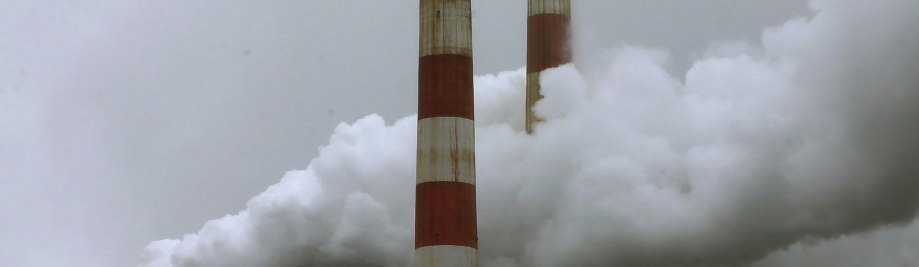
 The EU is committed to drastically cutting harmful greenhouse gas emissions ©AP Images/European Union-EP
Read what measures the European Union is taking to meet targets to reduce carbon emissions in different sectors in order to prevent climate change.
To prevent dangerous climate change, the EU has committed to cut its greenhouse gas emissions by at least 40% below 1990 levels by 2030 under the Paris Agreement .
In November 2018, the European Commission presented a long-term strategy for the EU to achieve a climate-neutral economy by 2050, including eight possible pathways.
Ahead of a European Council meeting in May, where EU leaders are expected to adopt the strategy, the European Parliament adopted a resolution outlining its recommendations on 14 March 2019.
MEPs called for the EU to raise the 2030 emission reduction target and reiterated the Parliament’s position to allocate at least 35% of the EU's expenditure on research to support climate objectives.
Check out this infographic on the EU progress toward its climate change goals.
To reach its climate goal, the European Union has come up with ambitious legislation.
An Emissions Trading System for industry
The EU's Emissions Trading System (ETS) aims to reduce the industry's carbon emissions by obliging companies to hold a permit for each tonne of CO2 they emit. Companies have to buy them through auctions. There are some incentives to boost innovation in the sector.
The European Emissions Trading System is the world's first major carbon market and remains the largest one. It regulates about 45% of total EU greenhouse gas emissions and covers approximately 11,000 power stations and manufacturing plants in the EU. The goal is to reduce emissions by 43% compared to 2005.
Find out more about how the EU’s Emissions Trading System works and how it is currently being reformed.
Tackling carbon emissions from other sectors
Sectors not covered by the Emissions Trading System – such as transport, agriculture, buildings and waste management – still account for nearly 60% of the EU’s overall emissions. Emissions from these sectors will be cut by 30% by 2030 compared to 2005.
This will be done through agreed national emission targets which are calculated based on countries' gross domestic product per capita. Lower-income EU countries will be provided with support.
Find out member states’ targets and how less wealthier EU countries will be supported.
Managing forests for climate change
EU forests absorb the equivalent of 10.9% of total EU greenhouse gas emissions each year. The EU wants to use this power to fight climate change.
New legislation aims to prevent emissions caused by deforestation and oblige each EU country to compensate changes in land use, which lead to emissions of CO2, by better managing or increasing their forests.
Check out this infographic to learn how the EU uses forests to offset carbon emissions.
Reducing car emissions
Cars and vans produce 15% of EU’s CO2 emissions. The EU is working on legislation to toughen car emissions standards. The Parliament is also calling for measures to facilitate the shift to electric and hybrid vehicles.
Learn more about the new CO2 targets for cars.
Share this article:
EU Reporter publishes articles from a variety of outside sources which express a wide range of viewpoints. The positions taken in these articles are not necessarily those of EU Reporter. Please see EU Reporter’s full Terms and Conditions of publication for more information EU Reporter embraces artificial intelligence as a tool to enhance journalistic quality, efficiency, and accessibility, while maintaining strict human editorial oversight, ethical standards, and transparency in all AI-assisted content. Please see EU Reporter’s full A.I. Policy for more information.






ECR MEPs question the European Commission on cardiovascular health and diet promoting the Mediterranean diet as an alternative to ultra-processed foods as key to tackling obesity

Falling in love with the Maldives

Kurmuk gold project highlights Africa’s changing investment landscape

Albania's Vlora airport standoff tests investor confidence as EU accession clock ticks

Iran’s regime in crisis: Negotiations, internal divisions and growing resistance

EU steps up international support for Palestinians with major initiative for Gaza's early recovery and stronger international coordination

Commission adds exemptions to rules on removability of portable batteries

Natura 2000 Network offers opportunities for sustainable tourism across Europe

Kazakhstan and Belgium: Building a Partnership for the Future

New court ruling questions 'proportionality' of Mayor Erion Veliaj’s detention

Rome–Washington Axis: Italian Diplomat Zanardi Landi to Help Save Bosnia

Burnham as PM? 'Wait and see'

Ban on destruction of unsold clothes and shoes enters into application

Survey on an EU Blueprint for intellectual property licensing and spinoff creation

Rule of law report strengthens EU democracy and fundamental rights

EU launches Ukraine defence industrial partnership, Drone Deal and disburses €1 billion for drones *

Kazakhstan reforms under scrutiny at Brussels Press Club round table

Japan should face up to history and contribute more to regional peace

Ambassador calls for 'speeding up' of co-operation between EU and Kazakhstan

Timur Turlov at Smart Moves Summit 2025: How chess can transform global education

Shevtsova’s case: Out-of-court sanctions dismantling trust in Ukrainian cause

The future of European transport

Trump Vs Trueman

US 'no longer' an 'unconditional ally' for Europe - MEP
-
 Italy4 days ago
ECR MEPs question the European Commission on cardiovascular health and diet promoting the Mediterranean diet as an alternative to ultra-processed foods as key to tackling obesity
-
 Tourism5 days ago
Falling in love with the Maldives
-
 China5 days ago
Kurmuk gold project highlights Africa’s changing investment landscape
-
 Albania4 days ago
Albania's Vlora airport standoff tests investor confidence as EU accession clock ticks